Cassava (yuca)
Also called yuca, manioc, mandioca
- What it is
- A long, starchy tropical root with bark-like brown skin and white flesh. Not the same plant as the yucca in gardens.
- Tastes like
- Mild, buttery and slightly sweet, denser and chewier than potato.
- Use it for
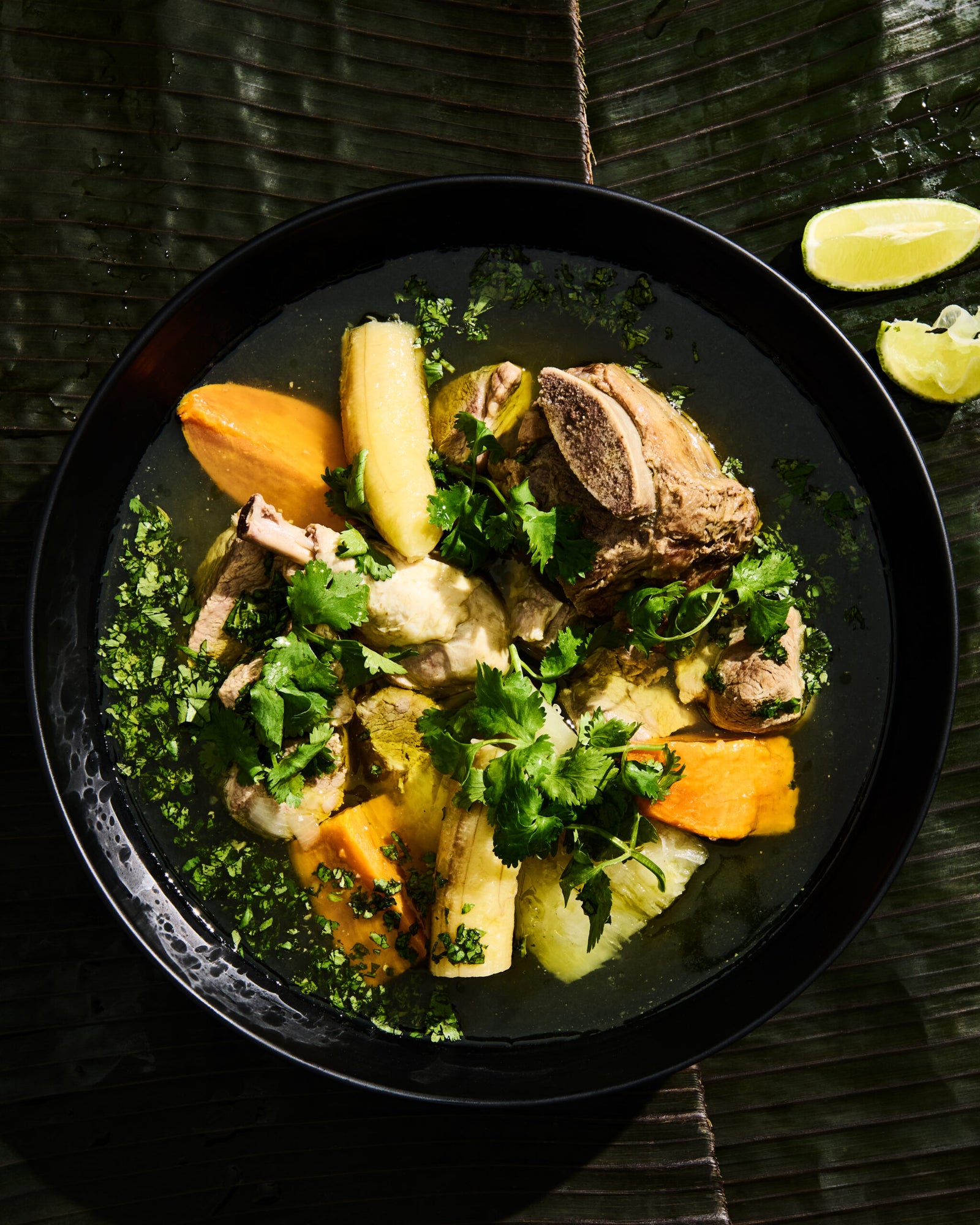
- Yuca con mojo, yuca fries, sancocho, bammy, enyucado, and Brazilian and West African dishes.
Out of it? Swap in
- Russet or Yukon Gold potatoesSame role in a stew or fries. Lighter and less chewy, and cooks faster.
- Frozen peeled yucaThe easiest real thing. Most Latin freezer sections have it, already peeled and cut.
Diet & allergens
No major allergens
StoreWhole roots in a cool, dry spot; peeled pieces covered in water in the fridge, or frozen.
KeepsWhole roots only 3–5 days; peeled, 2–3 days in water; frozen for months.
Toss whenThe flesh has gray-blue or black streaks, or smells sour.
BuyingPick firm roots with no soft spots. Grocers often wax them; snap off the end and look for clean, white flesh.
Nana's tip: Always peel it and cook it through; raw cassava isn't safe to eat. Pull out the woody string down the center after boiling.