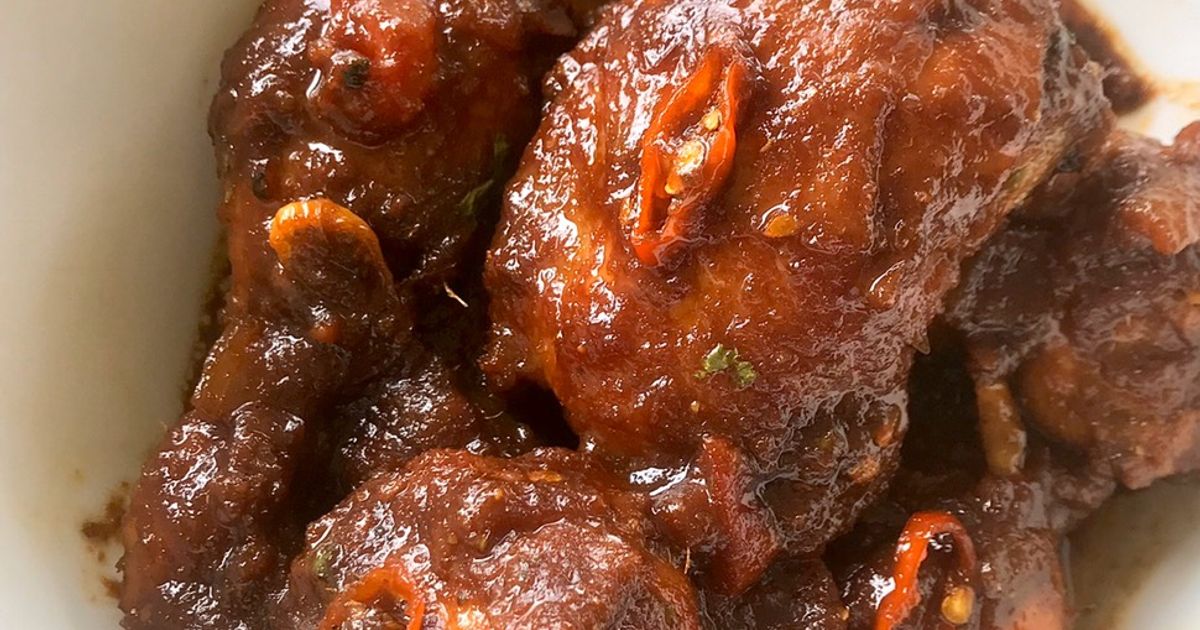
Sweet soy-sauce boiled vegetables with chicken
- Cook
- 40 min
- Total
- 40 min
Ingredients
- 1 chicken breast (200g), bite size cut
- 1 konjac (jelly-like food made from potatoes)
- 1 carrot ☆
- 1/4 kabocha ☆
- 5 cm piece lotus root ☆
- 1 burdock root ☆
- 1 onion About yellow onion →
- 1 tsp hondashi
- 200 cc water
- 2 TBSP sugar
- 2 TBSP cooking sake
- 2 TBSP soy-sauce
- 1 TBSP mirin About mirin →
Steps
-
1
In a boiling water, put konjac for 3 minutes to remove the smell. After the boil, cut them to bite size by using spoon. (this way, the flavor will sink easier)
-
2
Peel lotus root and cut into 1/2 inch then 1/4 shape. Put them into cold water to remove the harshness.
-
3
Cut all the other vegetables into bite sizes except onion.
-
4
Cut onion 1/4 because it will melt. Other root vegetables won’t melt.
-
5
Cut chicken into bite sizes. Put down with paper towel to remove any water. Season with salt.
-
6
In a large pan, medium-high heat, drizzle oil and sauté chicken until it’s golden brown. 5 minutes.
-
7
Mix ☆vegetables into the pan. Input the ones they are hard to get sautéed like kabocha, lotus root, carrots, konjac and burdock root. The last one is onion.
-
8
After it’s all mixed add water and hondashi broth. Remove any scums from the soup after boiling.
-
9
Now, add sugar and cooking sake. Turn the heat to medium-low. Cover the face of the vegetables with aluminum foil. Cover with lid as well and cook for 10 minutes.
-
10
Add soy sauce and cook for 7 minutes, same way as above. You should not have not much sauce left after 7 minutes. Check the pot often. If the heat is too high, you might burn it.
-
11
Turn the heat to high and pour over mirin to have it shine, one minute.
More about this recipe
Nutrition
1 of 6 servings · about 114 g Whole recipe · about 685 g · Good estimate
| % DV* | ||
|---|---|---|
| Total Fat | 2.9 g | 4% |
| Saturated Fat | 1.3 g | 7% |
| Trans Fat | 0.003 g | |
| Cholesterol | 36 mg | 12% |
| Sodium | 74 mg | 3% |
| Total Carbohydrate | 19 g | 7% |
| Dietary Fiber | 1.6 g | 6% |
| Total Sugars | 8.4 g | |
| Protein | 8.9 g | 18% |
| Vitamin D | 0.04 mcg | 0% |
| Calcium | 24 mg | 2% |
| Iron | 0.67 mg | 4% |
| Potassium | 279 mg | 6% |
* % Daily Value is based on a 2,000-calorie diet.
- Carbs 55%
- Fat 19%
- Protein 26%
Vitamins & minerals
| Vitamin A | 106 mcg | 12% |
|---|---|---|
| Vitamin C | 2.8 mg | 3% |
| Vitamin D | 0.04 mcg | 0% |
| Vitamin E | 0.53 mg | 4% |
| Vitamin K | 2.7 mcg | 2% |
| Thiamin (B1) | 0.087 mg | 7% |
| Riboflavin (B2) | 0.11 mg | 9% |
| Niacin (B3) | 3.9 mg | 24% |
| Pantothenic acid (B5) | 0.68 mg | 14% |
| Vitamin B6 | 0.38 mg | 22% |
| Folate | 27.5 mcg DFE | 7% |
| Vitamin B12 | 0.11 mcg | 4% |
| Choline | 34 mg | 6% |
| Calcium | 24 mg | 2% |
| Iron | 0.67 mg | 4% |
| Potassium | 279 mg | 6% |
| Magnesium | 25 mg | 6% |
| Phosphorus | 105 mg | 8% |
| Zinc | 0.42 mg | 4% |
| Copper | 0.069 mg | 8% |
| Manganese | 0.13 mg | 5% |
| Selenium | 8.9 mcg | 16% |
Fats & carbs in detail
| Monounsaturated fat | 0.81 g | |
|---|---|---|
| Polyunsaturated fat | 0.3 g | |
| Omega-3 | 0.042 g | 3% |
| Omega-6 | 0.24 g | 1% |
| Starch | 0.15 g | |
| Net carbs | 17.4 g | |
| Omega-6 : Omega-3 ratio | 5.7 : 1 |
Amino acids (protein building blocks)
| Histidine | 0.31 g | |
|---|---|---|
| Isoleucine | 0.41 g | |
| Leucine | 0.69 g | |
| Lysine | 0.79 g | |
| Methionine | 0.21 g | |
| Cystine | 0.1 g | |
| Phenylalanine | 0.35 g | |
| Tyrosine | 0.3 g | |
| Threonine | 0.39 g | |
| Tryptophan | 0.11 g | |
| Valine | 0.44 g |
How we calculated this
| Ingredient | Counted as | g | kcal |
|---|---|---|---|
| 1 chicken breast (200g), bite size cut | Chicken, broiler or fryers, breast, skinless, boneless, meat only, raw | 200 | 240 |
| 1 konjac (jelly-like food made from potatoes) | Not found — no matching food | ||
| 1 carrot ☆ | Carrots, raw | 61 | 25 |
| 1/4 kabocha ☆ | Not found — no matching food | ||
| 5 cm piece lotus root ☆ | Cookies, butter, commercially prepared, enriched | 60 | 280 |
| 1 burdock root ☆ | Burdock root, raw | 156 | 112 |
| 1 onion | Onions, raw | 110 | 44 |
| 1 tsp hondashi | Not found — no matching food | ||
| 200 cc water | Water | 0 | |
| 2 TBSP sugar | Sugars, granulated | 25 | 97 |
| 2 TBSP cooking sake | Alcoholic beverage, rice (sake) | 29 | 39 |
| 2 TBSP soy-sauce | Sauce, pasta, spaghetti/marinara, ready-to-serve | 30 | 15 |
| 1 TBSP mirin | Alcoholic beverage, rice (sake) | 15 | 20 |
Matched to the USDA FoodData Central database (SR Legacy). Amounts are converted with USDA portion weights where they exist, otherwise typical sizes. Open in the analyzer to adjust a match →
Estimated from the ingredient list — brands, exact sizes and cooking losses vary. Not medical advice.
Allergens
-
Alcohol
In: 2 TBSP cooking sake; 1 TBSP mirin
Not a true allergy, but listed for people who must avoid it.
-
Carrot
In: 1 carrot ☆
-
Poultry meat › Chicken
In: 1 chicken breast (200g), bite size cut
Chicken, turkey, duck and goose meat (separate from egg allergy).
-
Onion & garlic family › Onion & shallot
In: 1 onion
Onions, shallots, garlic, leeks, scallions and chives, including powders.
-
Nightshades › Potato
In: 1 konjac (jelly-like food made from potatoes)
Tomato, potato, peppers (sweet and hot), eggplant, tomatillo and goji. Sweet potatoes are not nightshades.
-
Rice
In: 2 TBSP cooking sake
-
Soy › Soy sauce & tamari (brewed)
In: 2 TBSP soy-sauce
Fermented soy sauces. Much of the protein is broken down in brewing.
Found by reading the ingredient names. Brands and "may contain" warnings vary, so always check the label.
Questions about this recipe
- Can I make this ahead of time?
- Yes, you can prepare it in advance; the flavors often deepen overnight. Just gently reheat it in a pan with a splash of water to restore the glaze.
- How should I store or freeze the leftovers?
- Store leftovers in an airtight container in the fridge for up to 4 days. While you can freeze it, the texture of the kabocha and konjac may become too soft.
- What can I use if I can't find burdock root or lotus root?
- Parsnips are a good earthy substitute for burdock root, and sliced water chestnuts or extra carrots can replace the crunch of lotus root.
- How do I tell when the vegetables are finished cooking?
- The vegetables are done when the hardest pieces, like the carrots and kabocha, are tender when pierced with a fork and the sauce has reduced to a thick glaze.
- What side dishes would go well with this?
- This dish pairs perfectly with a bowl of steamed white rice and a side of pickled vegetables or a light miso soup.
My notes
Log in to keep private notes on recipes.
Learn while you cook
Learn library →- Why It Works · 4 min read Browning: Maillard vs. Caramelization Browning is two different reactions — Maillard (proteins plus sugars, from about 280°F) and caramelization (sugar alone…
- Ingredient Deep-Dives · 8 min read The Onion Family Yellow onions for cooking, red for raw, shallots for sauces; the finer you cut garlic or onion, the stronger it gets, a…
Words in this recipe
- Sauté
- To cook quickly in a small amount of fat over fairly high heat, tossing or stirring. Learn more
Handy for this recipe Safe Cooking TemperaturesSubstitution Finder