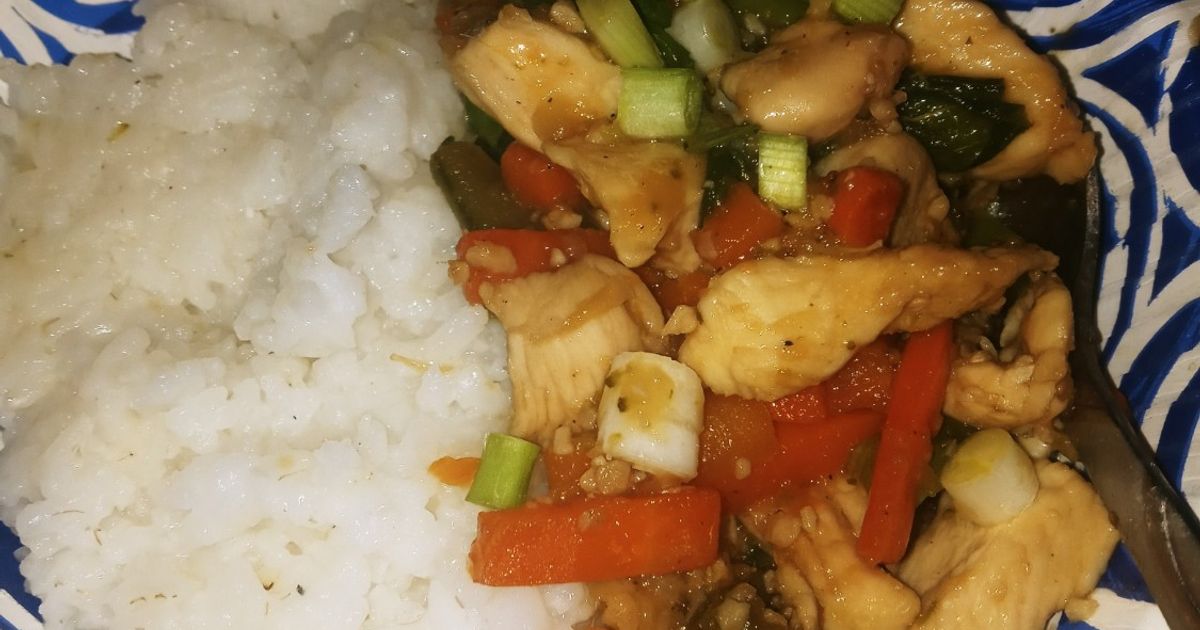
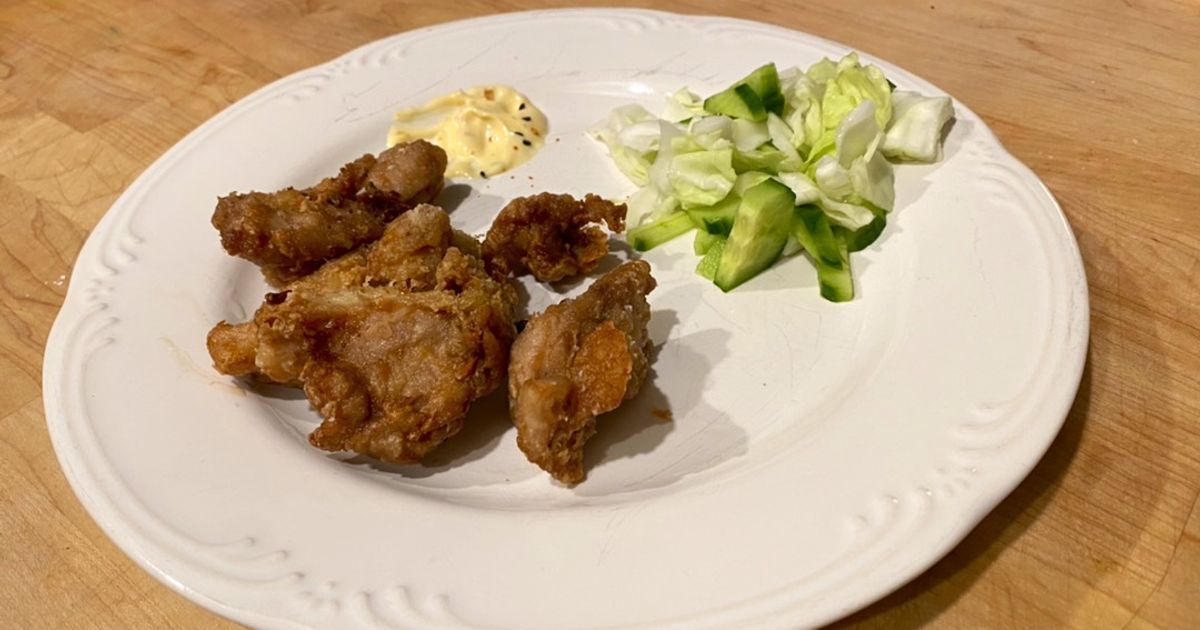
Japanese style fried chicken with Soy sauce, ginger and garlic
- Cook
- 40 min
- Total
- 40 min
Ingredients
- 2-4 chicken thighs
- ☆3 TBSP soy sauce About soy sauce →
- ☆2 TBSP sake
- ☆2 TBSP sugar
- ☆1 inch ginger - grated About fresh ginger →
- ☆4 clove garlic - minced About garlic →
- ☆dash of salt About table salt →
- ☆dash of pepper
- ☆1 egg About eggs →
- ☆1 TBSP sesame oil About toasted sesame oil →
- ☆1/4 cup katsuobushi flakes
- 1/2 cup potato starch About potato starch →
- 1/2 cup flour
- 1 lemon About lemon →
Steps
-
1
Cut chicken into bite-sized pieces.
-
2
Put chicken in a large ziplock bag add all the ingredients of ☆ and mix them very well. Leave it for at least 10 minutes to over night.
-
3
Drain the sauce by using the strainer.
-
4
In a ziplock bag, add potato starch and flour together and add the marinated chicken.
-
5
In a large pan, heat 2 inches of oil to 180°C. Cook the chicken until golden brown, 6 minutes. You might want to cook them in 2 batches. You can also tell if it’s done or not by holding a piece of chicken while still in the oil with your chopsticks. If the chicken is not vibrating, it’s done.
-
6
Zest lemon and sprinkle it all over the cooked chicken. Squeeze lemon juice if you prefer. Dip in Japanese mayonnaise if you prefer.
More about this recipe
Nutrition
1 of 4 servings · about 192 g Whole recipe · about 769 g · High confidence
| % DV* | ||
|---|---|---|
| Total Fat | 21 g | 27% |
| Saturated Fat | 5.3 g | 27% |
| Trans Fat | 0.087 g | |
| Cholesterol | 136 mg | 45% |
| Sodium | 838 mg | 36% |
| Total Carbohydrate | 38.7 g | 14% |
| Dietary Fiber | 2.2 g | 8% |
| Total Sugars | 7.5 g | |
| Protein | 21.9 g | 44% |
| Vitamin D | 0.32 mcg | 2% |
| Calcium | 43 mg | 3% |
| Iron | 2.2 mg | 12% |
| Potassium | 524 mg | 11% |
* % Daily Value is based on a 2,000-calorie diet.
- Carbs 36%
- Fat 44%
- Protein 20%
Vitamins & minerals
| Vitamin A | 40.2 mcg | 4% |
|---|---|---|
| Vitamin C | 9.5 mg | 11% |
| Vitamin D | 0.32 mcg | 2% |
| Vitamin E | 0.46 mg | 3% |
| Vitamin K | 2.8 mcg | 2% |
| Thiamin (B1) | 0.26 mg | 22% |
| Riboflavin (B2) | 0.31 mg | 24% |
| Niacin (B3) | 6.5 mg | 40% |
| Pantothenic acid (B5) | 0.6 mg | 12% |
| Vitamin B6 | 0.59 mg | 35% |
| Folate | 62.1 mcg DFE | 16% |
| Vitamin B12 | 0.7 mcg | 29% |
| Choline | 90 mg | 16% |
| Calcium | 43 mg | 3% |
| Iron | 2.2 mg | 12% |
| Potassium | 524 mg | 11% |
| Magnesium | 47 mg | 11% |
| Phosphorus | 253 mg | 20% |
| Zinc | 1.8 mg | 16% |
| Copper | 0.15 mg | 16% |
| Manganese | 0.37 mg | 16% |
| Selenium | 28 mcg | 51% |
Fats & carbs in detail
| Monounsaturated fat | 8.6 g | |
|---|---|---|
| Polyunsaturated fat | 5.2 g | |
| Omega-3 | 0.2 g | 13% |
| Omega-6 | 4.7 g | 28% |
| Starch | 0 g | |
| Net carbs | 36.5 g | |
| Omega-6 : Omega-3 ratio | 23.5 : 1 |
Amino acids (protein building blocks)
| Histidine | 0.58 g | |
|---|---|---|
| Isoleucine | 0.95 g | |
| Leucine | 1.7 g | |
| Lysine | 1.7 g | |
| Methionine | 0.53 g | |
| Cystine | 0.27 g | |
| Phenylalanine | 0.88 g | |
| Tyrosine | 0.75 g | |
| Threonine | 0.92 g | |
| Tryptophan | 0.24 g | |
| Valine | 1 g |
How we calculated this
| Ingredient | Counted as | g | kcal |
|---|---|---|---|
| 2-4 chicken thighs | Chicken, broilers or fryers, thigh, meat and skin, raw | 390 | 862 |
| ☆3 TBSP soy sauce | Soy sauce made from soy and wheat (shoyu) | 48 | 25 |
| ☆2 TBSP sake | Alcoholic beverage, rice (sake) | 29 | 39 |
| ☆2 TBSP sugar | Sugars, granulated | 25 | 97 |
| ☆1 inch ginger - grated | Ginger root, raw | 6 | 5 |
| ☆4 clove garlic - minced | Garlic, raw | 12 | 18 |
| ☆dash of salt | Salt, table | 1 | 0 |
| ☆dash of pepper | Spices, pepper, black | 0 | 1 |
| ☆1 egg | Egg, whole, raw, fresh | 44 | 63 |
| ☆1 TBSP sesame oil | Oil, sesame, salad or cooking | 14 | 120 |
| ☆1/4 cup katsuobushi flakes | Not found — no matching food | ||
| 1/2 cup potato starch | Potato flour | 80 | 286 |
| 1/2 cup flour | Wheat flour, white, all-purpose, enriched, bleached | 62 | 228 |
| 1 lemon | Lemons, raw, without peel | 58 | 17 |
Matched to the USDA FoodData Central database (SR Legacy). Amounts are converted with USDA portion weights where they exist, otherwise typical sizes. Open in the analyzer to adjust a match →
Estimated from the ingredient list — brands, exact sizes and cooking losses vary. Not medical advice.
Allergens
-
Alcohol
In: ☆2 TBSP sake
Not a true allergy, but listed for people who must avoid it.
-
Poultry meat › Chicken
In: 2-4 chicken thighs
Chicken, turkey, duck and goose meat (separate from egg allergy).
-
Egg
In: ☆1 egg
Whole eggs, yolks, whites and egg-based sauces like mayonnaise, aioli and hollandaise.
-
Onion & garlic family › Garlic
In: ☆4 clove garlic - minced
Onions, shallots, garlic, leeks, scallions and chives, including powders.
-
Ginger
In: ☆1 inch ginger - grated
-
Citrus › Lemon & lime
In: 1 lemon
-
Nightshades › Potato
In: 1/2 cup potato starch
Tomato, potato, peppers (sweet and hot), eggplant, tomatillo and goji. Sweet potatoes are not nightshades.
-
Rice
In: ☆2 TBSP sake
-
Sesame
In: ☆1 TBSP sesame oil
Sesame seeds and oil, tahini, halva; za'atar and furikake usually contain sesame.
-
Soy › Soy sauce & tamari (brewed)
In: ☆3 TBSP soy sauce
Fermented soy sauces. Much of the protein is broken down in brewing.
-
Fish › Tuna
In: ☆1/4 cup katsuobushi flakes
Finned fish. Fish sauce, Worcestershire and Caesar dressing usually contain anchovy.
-
Gluten › Wheat
In: ☆3 TBSP soy sauce; 1/2 cup flour
Wheat, barley, rye and oats (oats are often cross-contaminated). Celiac disease and wheat allergy are different — pick just Wheat if only wheat is the problem.
Found by reading the ingredient names. Brands and "may contain" warnings vary, so always check the label.
Questions about this recipe
- Can I prepare the chicken ahead of time?
- Yes, you can marinate the chicken in the ziplock bag for up to overnight to let the flavors develop.
- How should I store or reheat leftovers?
- Store in an airtight container in the fridge for up to 3 days; reheat in an oven or air fryer to maintain the crispiness.
- What can I use if I don't have katsuobushi flakes?
- You can omit them or substitute with a pinch of MSG or a small amount of fish sauce for that savory umami depth.
- How do I know when the chicken is fully cooked?
- The chicken is done when it is golden brown and no longer vibrates when held up with chopsticks in the oil.
- What side dishes go well with this Japanese fried chicken?
- Serve it with steamed white rice, a side of shredded cabbage, and Japanese mayonnaise for dipping.
My notes
Log in to keep private notes on recipes.
Learn while you cook
Learn library →- Techniques · 5 min read Emulsions An emulsion is fat broken into droplets small enough to hang in water — you need an emulsifier, a slow start, and the r…
- Ingredient Deep-Dives · 8 min read The Onion Family Yellow onions for cooking, red for raw, shallots for sauces; the finer you cut garlic or onion, the stronger it gets, a…
- Why It Works · 4 min read Browning: Maillard vs. Caramelization Browning is two different reactions — Maillard (proteins plus sugars, from about 280°F) and caramelization (sugar alone…
Words in this recipe
- Marinate
- To soak food in a seasoned, often acidic or salty liquid. It mostly flavors the surface; salt is what penetrates. Learn more
- Zest
- The colored outer layer of citrus skin, full of aromatic oils. Remove it with a Microplane or peeler, leaving the bitter pith behind. Learn more
Handy for this recipe Safe Cooking TemperaturesMeasurements & ConversionsSubstitution Finder