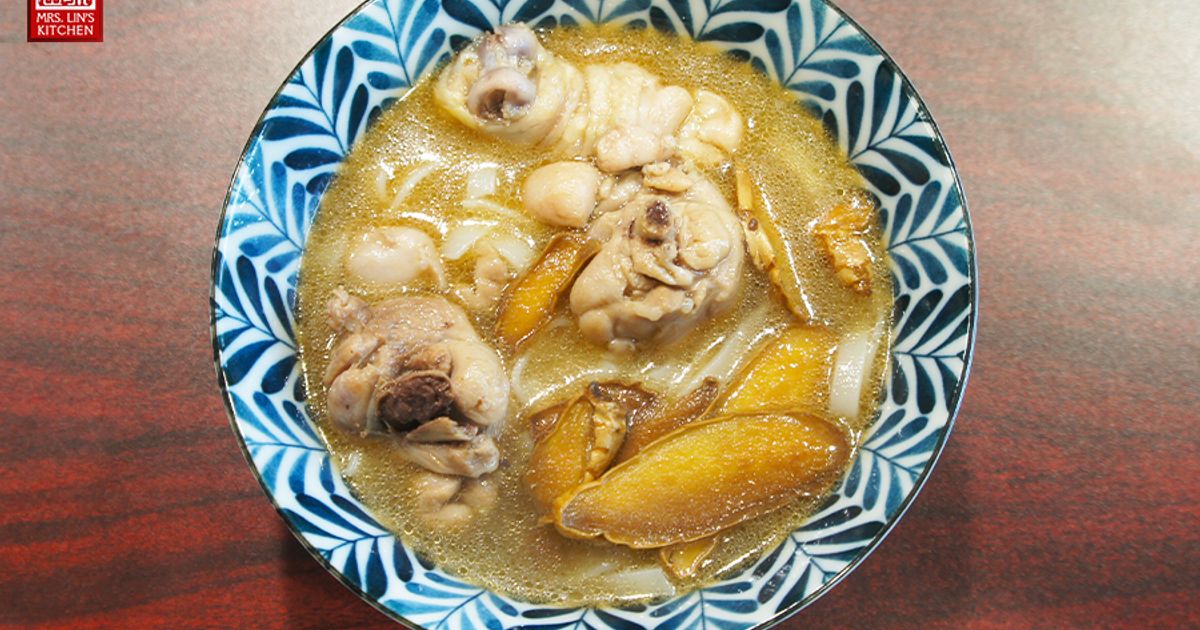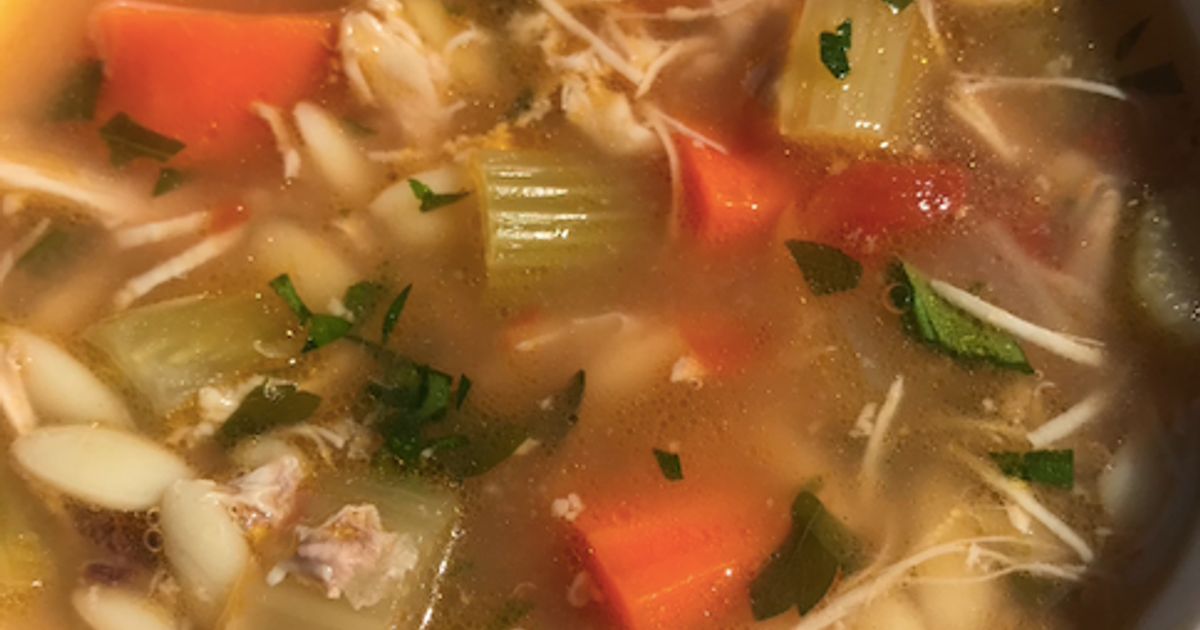
Taiwanese-Style Homemade Chicken Soup Stock
Ingredients
- 1/2 lb chicken bones
- 1 medium-size carrot
- 1/2 large daikon radish
- 2 leaves cabbage
- 2 stalks celery
- 3-4 pieces dried fruit, (apple, persimmon, peach, pineapple, etc.)
- 15 cups water
Steps
-
1
For daikon radish, carrot and celery, you will be cutting them into big chunks. Make sure you peel the daikon and carrot skin before cutting.
-
2
With cabbage leaves, you want to tear them into smaller pieces.
-
3
Fill a pot with water and bring to a boil. When water starts to boil, add the chicken bones and blanch for about 2 minutes. Blanching the bones before making the soup stock will help get rid of impurities from the bones.
-
4
When the time is up, turn off the heat. Drain out the water and rinse the chicken bones.
-
5
In a clean pot, add 15 cups of water and bring it to a boil.
-
6
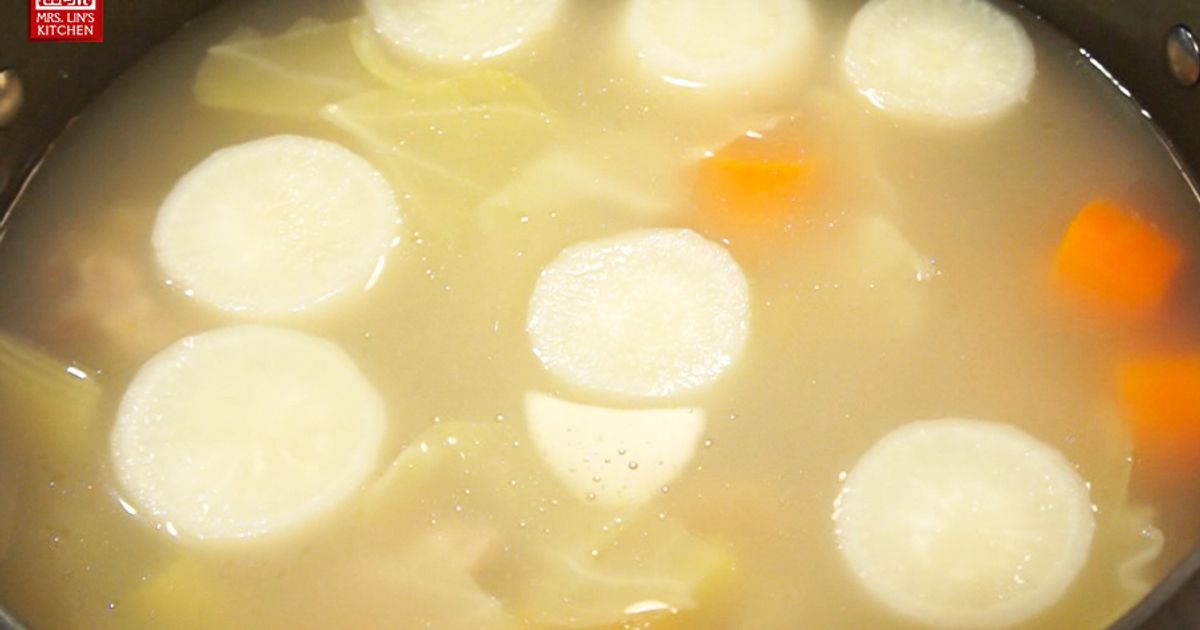
When water starts to boil, add the blanched chicken bones, daikon, carrot, celery, cabbage, and dried pineapple. Give the pot a quick stir. Bring everything to a boil.
-
7
Once it starts to boil, cover the pot and lower the heat to medium-high heat. Continue to cook for another 45 minutes.
-
8
You can add some salt to taste or leave it as is and season it later when you use the soup stock for other recipes. Make sure to take out the bones and veggies before storing your soup stock. You can keep it in the refrigerator for up to a week. Or freeze the soup stock so it can last longer.
More about this recipe
Nutrition
1 of 5 servings · about 94 g Whole recipe · about 470 g · servings estimated · Good estimate
| % DV* | ||
|---|---|---|
| Total Fat | 38.4 g | 49% |
| Saturated Fat | 0.018 g | 0% |
| Trans Fat | 0 g | |
| Cholesterol | 0 mg | 0% |
| Sodium | 31 mg | 1% |
| Total Carbohydrate | 2.5 g | 1% |
| Dietary Fiber | 1 g | 4% |
| Total Sugars | 1.3 g | |
| Protein | 3.5 g | 7% |
| Vitamin D | 0 mcg | 0% |
| Calcium | 18 mg | 1% |
| Iron | 2.2 mg | 12% |
| Potassium | 125 mg | 3% |
* % Daily Value is based on a 2,000-calorie diet.
- Carbs 3%
- Fat 93%
- Protein 4%
Vitamins & minerals
| Vitamin A | 108 mcg | 12% |
|---|---|---|
| Vitamin C | 5.3 mg | 6% |
| Vitamin D | 0 mcg | 0% |
| Vitamin E | 0.16 mg | 1% |
| Vitamin K | 16.7 mcg | 14% |
| Thiamin (B1) | 0.038 mg | 3% |
| Riboflavin (B2) | 0.026 mg | 2% |
| Niacin (B3) | 0.32 mg | 2% |
| Pantothenic acid (B5) | 0.12 mg | 2% |
| Vitamin B6 | 0.049 mg | 3% |
| Folate | 16.1 mcg DFE | 4% |
| Vitamin B12 | 0 mcg | 0% |
| Choline | 4 mg | 1% |
| Calcium | 18 mg | 1% |
| Iron | 2.2 mg | 12% |
| Potassium | 125 mg | 3% |
| Magnesium | 6 mg | 1% |
| Phosphorus | 62 mg | 5% |
| Zinc | 0.083 mg | 1% |
| Copper | 0.017 mg | 2% |
| Manganese | 0.06 mg | 3% |
| Selenium | 0.15 mcg | 0% |
Fats & carbs in detail
| Monounsaturated fat | 0.012 g | |
|---|---|---|
| Polyunsaturated fat | 0.035 g | |
| Omega-3 | 0.001 g | 0% |
| Omega-6 | 0.034 g | 0% |
| Starch | 0.17 g | |
| Net carbs | 1.5 g | |
| Omega-6 : Omega-3 ratio | 34.0 : 1 |
Amino acids (protein building blocks)
| Histidine | 0.01 g | |
|---|---|---|
| Isoleucine | 0.018 g | |
| Leucine | 0.025 g | |
| Lysine | 0.024 g | |
| Methionine | 0.005 g | |
| Cystine | 0.012 g | |
| Phenylalanine | 0.016 g | |
| Tyrosine | 0.01 g | |
| Threonine | 0.032 g | |
| Tryptophan | 0.005 g | |
| Valine | 0.02 g |
How we calculated this
| Ingredient | Counted as | g | kcal |
|---|---|---|---|
| 1/2 lb chicken bones | Caribou, bone marrow, raw (Alaska Native) | 227 | 1783 |
| 1 medium-size carrot | Carrots, raw | 61 | 25 |
| 1/2 large daikon radish | Radishes, raw | 4 | 1 |
| 2 leaves cabbage | Cabbage, raw | 50 | 12 |
| 2 stalks celery | Celery, raw | 128 | 18 |
| 3-4 pieces dried fruit, (apple, persimmon, peach, pineapple, etc.) | Not found — couldn't tell how much | ||
| 15 cups water | Water | 0 |
Matched to the USDA FoodData Central database (SR Legacy). Amounts are converted with USDA portion weights where they exist, otherwise typical sizes. Open in the analyzer to adjust a match →
Estimated from the ingredient list — brands, exact sizes and cooking losses vary. Not medical advice.
Allergens
-
Apple
In: 3-4 pieces dried fruit, (apple, persimmon, peach, pineapple, etc.)
-
Carrot
In: 1 medium-size carrot
-
Celery
In: 2 stalks celery
Celery stalks, leaves, seeds and celeriac (a major allergen in Europe).
-
Poultry meat › Chicken
In: 1/2 lb chicken bones
Chicken, turkey, duck and goose meat (separate from egg allergy).
-
Stone fruits › Peach & nectarine
In: 3-4 pieces dried fruit, (apple, persimmon, peach, pineapple, etc.)
Peaches, nectarines, apricots, plums and cherries (the Prunus family). Often linked to birch-pollen allergy. Almond is a botanical relative; choose it under Tree nuts if needed.
-
Pineapple
In: 3-4 pieces dried fruit, (apple, persimmon, peach, pineapple, etc.)
-
Sulfites
In: 3-4 pieces dried fruit, (apple, persimmon, peach, pineapple, etc.)
Sulfites are preservatives found in wine, wine and balsamic vinegar, dried fruit and pickled foods.
Found by reading the ingredient names. Brands and "may contain" warnings vary, so always check the label.
Questions about this recipe
- Can I make this stock in advance?
- Yes, you can prepare the stock ahead of time and store it in the refrigerator for up to a week.
- How should I store or freeze the soup stock?
- Remove all bones and vegetables first, then store the liquid in the fridge or freeze it for longer preservation.
- What can I use if I don't have dried pineapple or other dried fruits?
- You can swap for any other dried fruit like apple, persimmon, or peach to maintain the recipe's flavor profile.
- How do I know when the stock is finished cooking?
- The stock is ready once it has simmered on medium-high heat for 45 minutes after the initial boil.
- What are the best ways to use this stock?
- This versatile stock is ideal for various Asian-style noodle dishes and soup recipes.
My notes
Log in to keep private notes on recipes.
Learn while you cook
Learn library →Words in this recipe
- Blanch
- To boil briefly, then usually plunge into ice water. Sets color, loosens skins, and par-cooks vegetables before freezing or finishing.
Handy for this recipe Safe Cooking TemperaturesSubstitution Finder