Ingredients
- 2 cups white rice About rice →
- 2 chicken breasts
- 1/2 onion About yellow onion →
- 2 tbsp olive oil About extra-virgin olive oil →
- 4 eggs About eggs →
- Salt to taste About table salt →
- (Optional) chopped green onion About scallion →
- (Optional) Trader Joe's Nori Komi Furikake Japanese Multi-Purpose Seasoning
- 40 ml soy sauce About soy sauce →
- 40 ml mirin About mirin →
- 160 ml water
Steps
-
1
Wash the white rice and cook it in instant pot for 5 minutes with 1:1 water ratio.
-
2
Cut the chicken breasts into small cubes.
-
3
Slice the onion.
-
4
Mix the soy sauce, miran and water.
-
5
Crack 4 eggs on a separate bowl. Break the egg yolk and slightly mix the eggs. No need to beat them well.
-
6
Heat up a pan on medium heat and add olive oil. Add chicken breast cubes. When chicken is fully cooked, take it out and set aside for later.
-
7
Add sliced onions and sauce mixture. Cook the sauce on high heat until boil, then continue cooking on medium heat until the onions are soft.
-
8
Add chicken back to the pan. Add half of the eggs to the pan and cook for 1 minute. Add the other half of the eggs and cook for another 30 seconds. Remove the pan from the heat before the eggs are fully cooked.
-
9
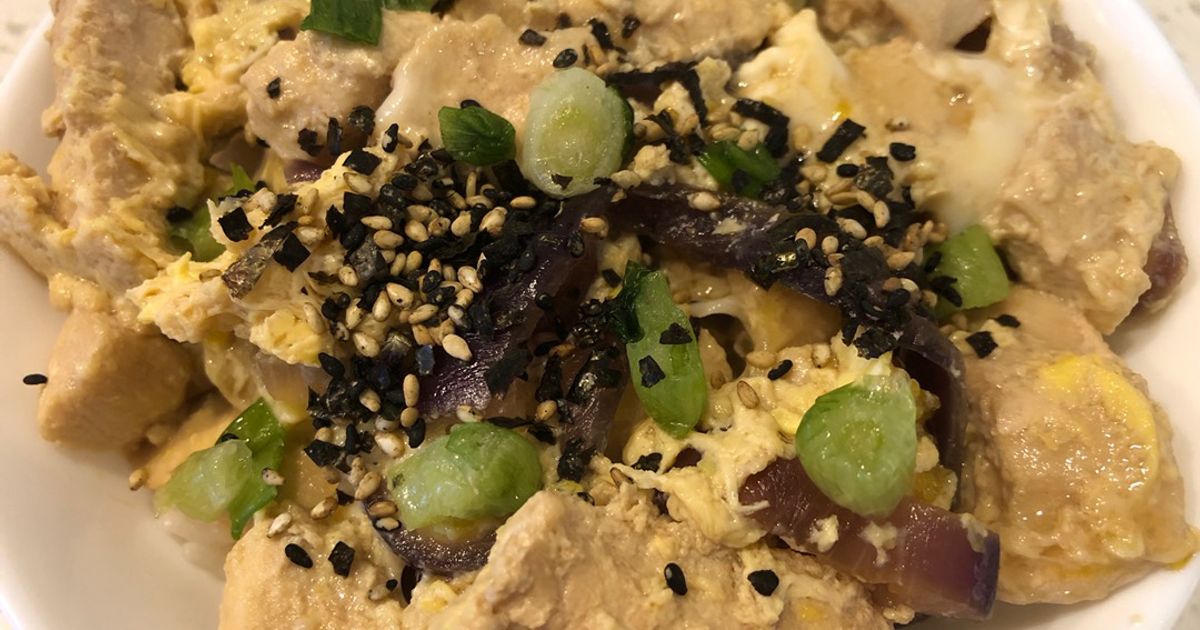
Put the chicken & egg mixture on top of rice. (Optional) Sprinkle some chopped green onions and TJ’s Japanese Seasoning on top.
-
10
Delicious oyakodon ready to serve!
More about this recipe
Nutrition
1 of 3 servings · about 418 g Whole recipe · about 1254 g · High confidence
| % DV* | ||
|---|---|---|
| Total Fat | 20.2 g | 26% |
| Saturated Fat | 4.3 g | 22% |
| Trans Fat | 0.035 g | |
| Cholesterol | 351 mg | 117% |
| Sodium | 962 mg | 42% |
| Total Carbohydrate | 102 g | 37% |
| Dietary Fiber | 2 g | 7% |
| Total Sugars | 1.2 g | |
| Protein | 58.4 g | 117% |
| Vitamin D | 1.2 mcg | 6% |
| Calcium | 86 mg | 7% |
| Iron | 7.3 mg | 41% |
| Potassium | 921 mg | 20% |
* % Daily Value is based on a 2,000-calorie diet.
- Carbs 50%
- Fat 22%
- Protein 28%
Vitamins & minerals
| Vitamin A | 110 mcg | 12% |
|---|---|---|
| Vitamin C | 1.4 mg | 2% |
| Vitamin D | 1.2 mcg | 6% |
| Vitamin E | 3.1 mg | 20% |
| Vitamin K | 5.8 mcg | 5% |
| Thiamin (B1) | 0.92 mg | 76% |
| Riboflavin (B2) | 0.68 mg | 52% |
| Niacin (B3) | 23 mg | 143% |
| Pantothenic acid (B5) | 4.9 mg | 99% |
| Vitamin B6 | 1.8 mg | 107% |
| Folate | 527 mcg DFE | 132% |
| Vitamin B12 | 0.9 mcg | 38% |
| Choline | 332 mg | 60% |
| Calcium | 86 mg | 7% |
| Iron | 7.3 mg | 41% |
| Potassium | 921 mg | 20% |
| Magnesium | 102 mg | 24% |
| Phosphorus | 674 mg | 54% |
| Zinc | 3.5 mg | 32% |
| Copper | 0.4 mg | 44% |
| Manganese | 1.6 mg | 67% |
| Selenium | 78.3 mcg | 142% |
Fats & carbs in detail
| Monounsaturated fat | 10.2 g | |
|---|---|---|
| Polyunsaturated fat | 3.1 g | |
| Omega-3 | 0.22 g | 14% |
| Omega-6 | 2.6 g | 15% |
| Starch | 0 g | |
| Net carbs | 100 g | |
| Omega-6 : Omega-3 ratio | 11.8 : 1 |
Amino acids (protein building blocks)
| Histidine | 1.9 g | |
|---|---|---|
| Isoleucine | 2.8 g | |
| Leucine | 4.8 g | |
| Lysine | 4.8 g | |
| Methionine | 1.5 g | |
| Cystine | 0.79 g | |
| Phenylalanine | 2.6 g | |
| Tyrosine | 2.1 g | |
| Threonine | 2.5 g | |
| Tryptophan | 0.73 g | |
| Valine | 3.2 g |
How we calculated this
| Ingredient | Counted as | g | kcal |
|---|---|---|---|
| 2 cups white rice | Rice, white, long-grain, regular, raw, enriched | 370 | 1350 |
| 2 chicken breasts | Chicken, broiler or fryers, breast, skinless, boneless, meat only, raw | 544 | 653 |
| 1/2 onion | Onions, raw | 55 | 22 |
| 2 tbsp olive oil | Oil, olive, salad or cooking | 27 | 239 |
| 4 eggs | Egg, whole, raw, fresh | 176 | 252 |
| Salt to taste | Not counted — no amount (to taste / garnish) | ||
| (Optional) chopped green onion | Not counted — no amount (to taste / garnish) | ||
| (Optional) Trader Joe's Nori Komi Furikake Japanese Multi-Purpose Seasoning | Not counted — no amount (to taste / garnish) | ||
| 40 ml soy sauce | Soy sauce made from soy and wheat (shoyu) | 43 | 23 |
| 40 ml mirin | Alcoholic beverage, rice (sake) | 39 | 53 |
| 160 ml water | Water | 0 |
Matched to the USDA FoodData Central database (SR Legacy). Amounts are converted with USDA portion weights where they exist, otherwise typical sizes. Open in the analyzer to adjust a match →
Estimated from the ingredient list — brands, exact sizes and cooking losses vary. Not medical advice.
Allergens
-
Alcohol
In: 40 ml mirin
Not a true allergy, but listed for people who must avoid it.
-
Poultry meat › Chicken
In: 2 chicken breasts
Chicken, turkey, duck and goose meat (separate from egg allergy).
-
Egg
In: 4 eggs
Whole eggs, yolks, whites and egg-based sauces like mayonnaise, aioli and hollandaise.
-
Onion & garlic family › Leek, scallion & chives
In: (Optional) chopped green onion
Onions, shallots, garlic, leeks, scallions and chives, including powders.
-
Onion & garlic family › Onion & shallot
In: 1/2 onion
Onions, shallots, garlic, leeks, scallions and chives, including powders.
-
Rice
In: 2 cups white rice
-
Sesame
In: (Optional) Trader Joe's Nori Komi Furikake Japanese Multi-Purpose Seasoning
Sesame seeds and oil, tahini, halva; za'atar and furikake usually contain sesame.
-
Soy › Soy sauce & tamari (brewed)
In: 40 ml soy sauce
Fermented soy sauces. Much of the protein is broken down in brewing.
-
Gluten › Wheat
In: 40 ml soy sauce
Wheat, barley, rye and oats (oats are often cross-contaminated). Celiac disease and wheat allergy are different — pick just Wheat if only wheat is the problem.
Found by reading the ingredient names. Brands and "may contain" warnings vary, so always check the label.
Questions about this recipe
- Can I make this ahead of time?
- It is best served immediately, as the eggs will overcook and the rice will absorb too much sauce if stored.
- How do I store or freeze leftovers?
- Store in an airtight container in the fridge for up to 2 days; freezing is not recommended due to the texture of the eggs.
- What can I use if I don't have mirin?
- You can substitute mirin with a mixture of equal parts honey or sugar and water.
- How do I tell when the dish is done?
- Remove the pan from heat when the eggs are mostly set but still slightly creamy and soft.
- What should I serve with Oyakodon?
- Pair it with a side of miso soup, pickled vegetables (tsukemono), or a fresh cucumber salad.
My notes
Log in to keep private notes on recipes.
Learn while you cook
Learn library →- Techniques · 6 min read Cooking Rice & Grains Rinse most rice, measure water by the grain (white 1:1½, brown 1:2), cook covered on the lowest heat, then rest 10 minu…
- Ingredient Deep-Dives · 8 min read The Onion Family Yellow onions for cooking, red for raw, shallots for sauces; the finer you cut garlic or onion, the stronger it gets, a…
- Ingredient Deep-Dives · 8 min read Eggs Buy large Grade A, keep them cold on a shelf, bring them to room temperature for baking, and cook egg dishes to 160°F.
Handy for this recipe Safe Cooking TemperaturesSubstitution Finder