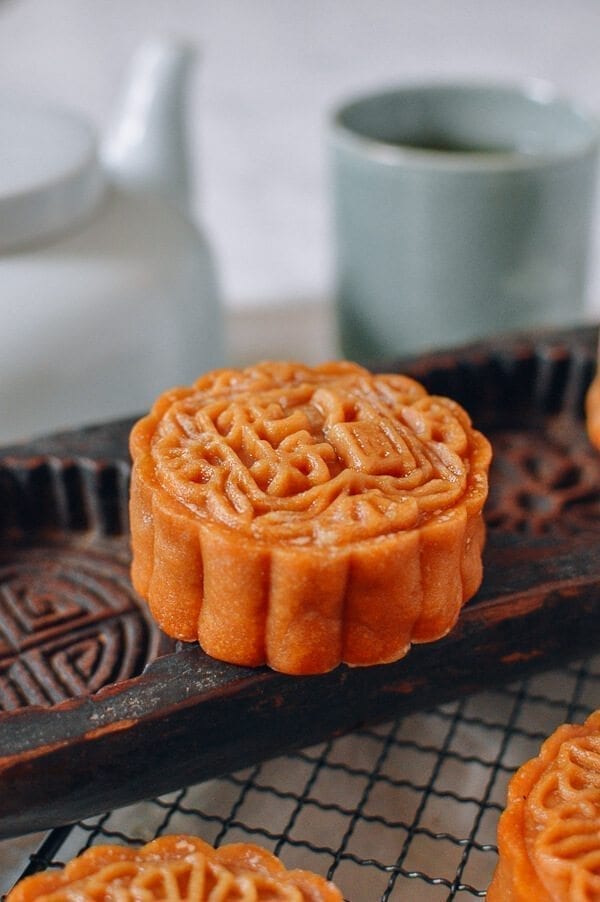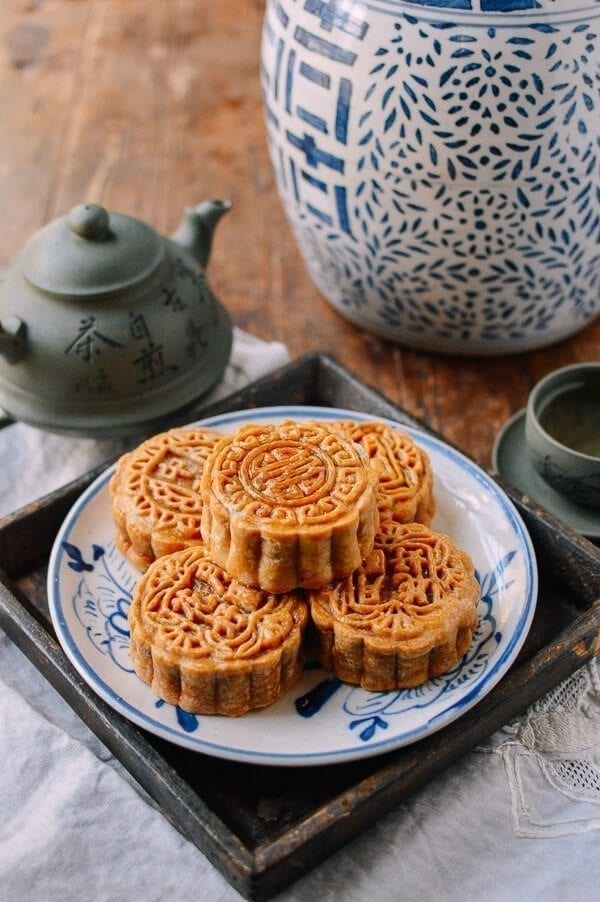
Ham and Nut Mooncakes (Wu Ren Yue Bing 五仁月饼)
Printed from nanasfogon.com/recipe/ham-nut-mooncake-recipe · Original: https://thewoksoflife.com/ham-nut-mooncake-recipe/
- Prep
- 2880 min
- Cook
- 120 min
- Total
- 50 hr
Ingredients
- ½ pound granulated sugar About granulated sugar →
- ½ cup water
- Juice of half a lemon About lemon →
- 140 ml inverted sugar syrup (which you bought or made in Part I) About simple syrup →
- ⅓ cup peanut oil or corn oil About neutral oil →
- 1 teaspoon lye water (available at your Chinese grocery store)
- 1 ⅔ cups all-purpose flour (about 250 grams, plus more for dusting) About all-purpose flour →
- 100 grams jinhua ham (京华火腿)
- 2 tablespoons ham juice (from steaming the ham––see instructions below)
- 100 grams walnuts (toasted)
- 100 grams cashews (toasted)
- 100 grams pecans (toasted)
- 75 grams pumpkin seeds (toasted)
- 60 grams sunflower seeds (toasted)
- 60 grams sesame seeds (toasted) About sesame seeds →
- 200 grams sweet rice flour Can't find it? 3 parts regular rice flour to 1 part tapioca starch
- ⅓ cup peanut oil (or corn oil, about 75 ml) About neutral oil →
- 50 grams dried currants
- 150 grams granulated sugar About granulated sugar →
- ½ teaspoon salt About table salt →
- ¼ teaspoon five spice powder About five-spice powder →
- 2 tablespoons Chinese bai jiu 白酒
- ½ cup water (about 120 ml)
- no additional ingredients needed for this step
- 1 egg yolk About eggs →
- 3 tablespoons water
Out of something?
- Lemon juice
- for 1 tbsp, use 1 tbsp lime juice, or 2 tsp white wine vinegar. Lime is more floral; vinegar is sharper and has no citrus aroma.
- Flour
- For thickening: for 1 tbsp, use 1/2 tbsp potato starch or cornstarch, mixed into cold liquid first. Clearer, glossier sauce. Add at the end and don't boil long: starches thin out if overcooked.
- For dredging: for 1 cup, use 1 cup potato starch, rice flour or matzo cake meal. Starch gives a thinner, crisper coating; matzo cake meal browns like flour. Rice is kitniyot for Ashkenazim.
- Sweet rice flour
- For thickening: for 1 tbsp, use 1/2 tbsp potato starch or cornstarch, mixed into cold liquid first. Clearer, glossier sauce. Add at the end and don't boil long: starches thin out if overcooked.
- For dredging: for 1 cup, use 1 cup potato starch, rice flour or matzo cake meal. Starch gives a thinner, crisper coating; matzo cake meal browns like flour. Rice is kitniyot for Ashkenazim.
Steps
-
1
PART I: Inverted sugar syrup
-
2
Heat the sugar and water in a saucepan over medium heat. Stir to dissolve the sugar. Once it’s boiling, add the lemon juice, stir, and immediately turn the heat down to low.
-
3
Keep the lid off, and let the syrup simmer for about 60 to 70 minutes until the sugary liquid turns a light amber color. Do not stir during this timeframe! By now, the liquid might look too watery, but it will thicken once it’s cooled. Try not to overcook it, because it will become thick like caramel. (Just in case you do overcook the syrup, and it’s too thick, add a few drops of hot water to thin it out. Keep adding the hot water until you get the right consistency.)
-
4
Now, pour the syrup into a heatproof container, and cool completely before storing it in the refrigerator.
-
5
PART II: The dough
-
6
First, mix the inverted sugar syrup, oil, and lye water together. Then add the flour to the mixture, using a rubber spatula to fold and combine everything into a soft dough.
-
7
Do not overwork the dough. This step should only take about a minute or two. Cover the dough in an airtight container or wrap it in plastic wrap. Let it rest in the refrigerator for at least an hour to make it easier to work with. You can also refrigerate the dough overnight if you’d like to make it ahead of time.
-
8
PART III: The ham and nut filling
-
9
Steam the ham in a heatproof bowl for 15 minutes. You will end up with some liquid in the bowl after it’s done steaming. Save this liquid and set it aside. Finely chop the ham.
-
10
If you’re using pre-toasted nuts, you can save some time. If not, toast the raw nuts in a preheated oven at 325 degrees F for 5-10 minutes with each batch. Roast the walnuts, cashews, and pecans together, and roast the pumpkin seeds, sunflower seeds, and sesame seeds in a separate batch. My tip is that once you smell a nutty aroma after 3-4 minutes, stand in front of the oven until the nuts are toasted to your liking. Don’t walk away from the oven, because the nuts can burn quickly! Once cool enough to handle, chop the walnuts, cashews, and pecans, and add them to a large mixing bowl along with the toasted pumpkin, sunflower, and sesame seeds.
-
11
In a clean, dry wok, toast the sweet rice flour for 15 to 20 minutes over medium low heat until it turns a light brown color. Stir often, and adjust the heat accordingly to prevent burning.
-
12
In a small pot, heat up the oil until it’s lightly smoking. Turn off the heat, and let it cool. Believe it or not, cooking the oil this way adds fragrance and flavor to the mooncakes!
-
13
To your mixing bowl full of chopped nuts and seeds, add the chopped ham, currants, sugar, salt, and five spice powder. Mix well. Now add in the liquids: the water from steaming the ham, the bai jiu, the “cooked” peanut oil, and the water. Stir everything to combine.
-
14
Lastly, slowly add in the toasted sweet rice flour to bind all the ingredients together. The final mixture should be somewhat dry and slightly crumbly, but you should be able to squeeze everything together tightly and form a ball. If you need to, add a little bit more peanut oil to moisten the mixture.
-
15
Weigh and divide the mixture into 18 equal pieces. Form each piece into a ball, and set aside for assembling the mooncakes.
-
16
Part IV: Assembling the mooncakes
-
17
After the dough is done resting, divide it into 18 equal pieces. My mooncake mold holds 100 grams, which means that each mooncake should weigh about 100 grams after assembly. You should be able to use these guidelines when assembling the mooncakes:
-
18
Each dough ball is around 25 to 30 grams. Set aside a smaller dough ball for scraps and mending, which I will get to. Shape each piece into a ball.
-
19
Each ball of filling should be around 65 to 70 grams.
-
20
Let’s start assembling the mooncakes by preparing the mooncake mold. My mooncake mold came with four pattern plates––one plate should be attached to the mold itself. Wrap another one with clear plastic, because you’ll use it to press the mooncake from the bottom. Now, dust the inside of the mold with plenty of flour, and shake off the excess. You’ll need to repeat this process before pressing every mooncake to avoid sticking.
-
21
Dust the balls of dough with flour. Take one ball of dough, and roll it out on a floured surface into a 4-inch round. Put one piece of filling in the center. Carefully lift it up (I use a dough cutter to scrape it up from my work surface), and gently press out the air bubbles without breaking the dough. Next, make sure the opening is facing up, and slowly pinch the dough closed around the filling, keeping the distribution of the dough as even as possible.
-
22
The dough feels like Play-doh, so it’s easy to break, but it’s also easy to squish back together. These instructions might sound confusing, but follow along with the pictures, and keep in mind that the chief goal here is to close the dough around the filling without any air pockets. Now dust the assembled ball with additional flour.
-
23
Place the ball of dough and filling inside the mooncake mold with the mold opening facing up. Next, press in the bottom piece (with the clear plastic-wrapped plate that you prepared). With some pressure, gently press it inward.
-
24
Quickly put the mold down, and press the mooncake out with the top pressure bar. The bottom piece will come out no problem, but use your other hand to VERY GENTLY guide the mooncake out of the mold. When/if a small piece of dough gets stuck and does not come out, get a small piece of your scrap dough to patch up the area. Then clean the mold, and dust it well with flour again. Next, gently flatten all sides of the mooncake to make it smaller, so it can go back in the mooncake mold for re-shaping. Use slightly more flour for dusting if this becomes a persistent issue. Place the mooncakes on a baking sheet as you make them.
-
25
PART V: Baking the mooncakes
-
26
Preheat the oven to 325 degrees F, and put the baking rack in the middle of the oven when you’re almost finished assembling the mooncakes. Once the oven is preheated, gently mist the mooncakes with a food-grade spray bottle (if you have one) filled with water. If you don’t have one, you can just use your hands. Dip your fingers into a bowl of water, and fling the water on your fingers onto the mooncakes a couple of times. This prevents the dough from cracking in the hot oven.
-
27
Then, immediately put the mooncakes in the oven, and bake for 5 minutes. (Remember to set the timer!) Now, prepare the egg wash by whisking together an egg yolk with 3 tablespoons of water.
-
28
After the mooncakes have been baking for 5 minutes, take them out of the oven and immediately lower the oven temperature to 300 degrees. Using a natural-bristle pastry brush, lightly brush each mooncake with egg wash, and put them back in the oven.
-
29
Bake them for another 15 minutes (set a timer!). When the time has elapsed, take them out, and let them cool completely. When the mooncakes first come out of the oven, the dough will look dry like bread, and not oily like what you are used to when opening packaged mooncakes. This is normal.
-
30
Store the completely cooled mooncakes in an airtight container for a day or two, and the outside will get that sheen that you recognize and love.
Flavor map
How Nana pairs flavors →This one is nutty, sweet and savory.
Goes well with
 After
Baked BBQ Pork Buns (Char Siu Bao)
84% flavor match
The lemon keeps it light after a rich meal; a classic American finish: pecan.
 After
Meatless Essentials: The Best Black Bean Burger
83% flavor match
A classic American finish: pecan; sunflower seed with pumpkin seed is a natural match.
 Pour
Lunar New Year’s Lychee Punch
69% flavor match
Simple syrup loves gin; same Chinese roots.
 Pour
Japanese Thirst Killer
62% flavor match
Simple syrup and angostura bitter are a classic pair.
Log in to tell Nana which pairings are good. Your votes improve the map.
More about this recipe
Nutrition
1 of 18 servings · about 102 g Whole recipe · about 1840 g · High confidence
| % DV* | ||
|---|---|---|
| Total Fat | 23.4 g | 30% |
| Saturated Fat | 3.5 g | 18% |
| Trans Fat | 0 g | |
| Cholesterol | 15 mg | 5% |
| Sodium | 82 mg | 4% |
| Total Carbohydrate | 51.8 g | 19% |
| Dietary Fiber | 2.5 g | 9% |
| Total Sugars | 25.9 g | |
| Protein | 7.5 g | 15% |
| Vitamin D | 0.051 mcg | 0% |
| Calcium | 56 mg | 4% |
| Iron | 2.6 mg | 14% |
| Potassium | 206 mg | 4% |
* % Daily Value is based on a 2,000-calorie diet.
- Carbs 46%
- Fat 47%
- Protein 7%
Vitamins & minerals
| Vitamin A | 21.9 mcg | 2% |
|---|---|---|
| Vitamin C | 1.4 mg | 2% |
| Vitamin D | 0.051 mcg | 0% |
| Vitamin E | 2.7 mg | 18% |
| Vitamin K | 2.5 mcg | 2% |
| Thiamin (B1) | 0.4 mg | 33% |
| Riboflavin (B2) | 0.19 mg | 14% |
| Niacin (B3) | 2.3 mg | 15% |
| Pantothenic acid (B5) | 0.36 mg | 7% |
| Vitamin B6 | 0.19 mg | 11% |
| Folate | 87.9 mcg DFE | 22% |
| Vitamin B12 | 0.069 mcg | 3% |
| Choline | 18 mg | 3% |
| Calcium | 56 mg | 4% |
| Iron | 2.6 mg | 14% |
| Potassium | 206 mg | 4% |
| Magnesium | 62 mg | 15% |
| Phosphorus | 157 mg | 13% |
| Zinc | 1.5 mg | 14% |
| Copper | 0.52 mg | 58% |
| Manganese | 0.86 mg | 37% |
| Selenium | 14.7 mcg | 27% |
Fats & carbs in detail
| Monounsaturated fat | 9.8 g | |
|---|---|---|
| Polyunsaturated fat | 8.6 g | |
| Omega-3 | 0.59 g | 37% |
| Omega-6 | 8 g | 47% |
| Starch | 1.3 g | |
| Net carbs | 49.3 g | |
| Omega-6 : Omega-3 ratio | 13.5 : 1 |
Amino acids (protein building blocks)
| Histidine | 0.21 g | |
|---|---|---|
| Isoleucine | 0.31 g | |
| Leucine | 0.55 g | |
| Lysine | 0.32 g | |
| Methionine | 0.16 g | |
| Cystine | 0.14 g | |
| Phenylalanine | 0.36 g | |
| Tyrosine | 0.23 g | |
| Threonine | 0.27 g | |
| Tryptophan | 0.1 g | |
| Valine | 0.37 g |
How we calculated this
| Ingredient | Counted as | g | kcal |
|---|---|---|---|
| ½ pound granulated sugar | Sugars, granulated | 227 | 878 |
| ½ cup water | Water | 0 | |
| Juice of half a lemon | Lemon juice, raw | 30 | 7 |
| 140 ml inverted sugar syrup (which you bought or made in Part I) | Syrups, table blends, pancake | 186 | 435 |
| ⅓ cup peanut oil or corn oil | Oil, peanut, salad or cooking | 72 | 636 |
| 1 teaspoon lye water (available at your Chinese grocery store) | Water | 0 | |
| 1 ⅔ cups all-purpose flour (about 250 grams, plus more for dusting) | Wheat flour, white, all-purpose, enriched, bleached | 208 | 758 |
| 100 grams jinhua ham (京华火腿) | Pork, fresh, ground, raw | 100 | 263 |
| 2 tablespoons ham juice (from steaming the ham––see instructions below) | Pork, fresh, ground, raw | 30 | 78 |
| 100 grams walnuts (toasted) | Nuts, walnuts, english | 100 | 654 |
| 100 grams cashews (toasted) | Nuts, cashew nuts, raw | 100 | 553 |
| 100 grams pecans (toasted) | Nuts, pecans | 100 | 691 |
| 75 grams pumpkin seeds (toasted) | Pumpkin, raw | 75 | 20 |
| 60 grams sunflower seeds (toasted) | Seeds, sunflower seed kernels, dried | 60 | 350 |
| 60 grams sesame seeds (toasted) | Seeds, sesame seeds, whole, dried | 60 | 344 |
| 200 grams sweet rice flour | Wheat flour, white, all-purpose, enriched, bleached | 200 | 728 |
| ⅓ cup peanut oil (or corn oil, about 75 ml) | Oil, peanut, salad or cooking | 72 | 636 |
| 50 grams dried currants | Currants, zante, dried | 50 | 145 |
| 150 grams granulated sugar | Sugars, granulated | 150 | 580 |
| ½ teaspoon salt | Salt, table | 3 | 0 |
| ¼ teaspoon five spice powder | Not found — no matching food | ||
| 2 tablespoons Chinese bai jiu 白酒 | Not found — no matching food | ||
| ½ cup water (about 120 ml) | Water | 0 | |
| 1 egg yolk | Egg, yolk, raw, fresh | 17 | 55 |
| 3 tablespoons water | Water | 0 |
Matched to the USDA FoodData Central database (SR Legacy). Amounts are converted with USDA portion weights where they exist, otherwise typical sizes. Open in the analyzer to adjust a match →
Estimated from the ingredient list — brands, exact sizes and cooking losses vary. Not medical advice.
Allergens
-
Tree nuts › Cashew
In: 100 grams cashews (toasted)
Almonds, cashews, walnuts, pecans, pistachios, hazelnuts and other nuts that grow on trees. Peanuts are a legume and listed separately.
-
Corn
In: ⅓ cup peanut oil or corn oil; ⅓ cup peanut oil (or corn oil, about 75 ml)
Corn and corn products: cornstarch, corn syrup, cornmeal, polenta, masa, corn oil.
-
Egg
In: 1 egg yolk
Whole eggs, yolks, whites and egg-based sauces like mayonnaise, aioli and hollandaise.
-
Fennel, anise & licorice
In: ¼ teaspoon five spice powder
-
Grape & raisin
In: 50 grams dried currants
-
Citrus › Lemon & lime
In: Juice of half a lemon
-
Peanut
In: ⅓ cup peanut oil or corn oil; ⅓ cup peanut oil (or corn oil, about 75 ml)
Peanuts are legumes, not tree nuts. Satay sauce and many "mixed nuts" contain them.
-
Tree nuts › Pecan
In: 100 grams pecans (toasted)
Almonds, cashews, walnuts, pecans, pistachios, hazelnuts and other nuts that grow on trees. Peanuts are a legume and listed separately.
-
Red meat (alpha-gal) › Pork
In: 100 grams jinhua ham (京华火腿); 2 tablespoons ham juice (from steaming the ham––see instructions below)
Mammalian meat and by-products. Alpha-gal syndrome, often from a tick bite, causes delayed reactions to beef, pork, lamb and gelatin; some people also react to dairy.
-
Pumpkin seed
In: 75 grams pumpkin seeds (toasted)
-
Rice
In: 200 grams sweet rice flour
-
Sesame
In: 60 grams sesame seeds (toasted)
Sesame seeds and oil, tahini, halva; za'atar and furikake usually contain sesame.
-
Sunflower seed
In: 60 grams sunflower seeds (toasted)
-
Tree nuts › Walnut
In: 100 grams walnuts (toasted)
Almonds, cashews, walnuts, pecans, pistachios, hazelnuts and other nuts that grow on trees. Peanuts are a legume and listed separately.
-
Gluten › Wheat
In: 1 ⅔ cups all-purpose flour (about 250 grams, plus more for dusting)
Wheat, barley, rye and oats (oats are often cross-contaminated). Celiac disease and wheat allergy are different — pick just Wheat if only wheat is the problem.
Found by reading the ingredient names. Brands and "may contain" warnings vary, so always check the label.
Questions about this recipe
- Can I make the dough and filling in advance?
- Yes, the dough can be refrigerated overnight. You can also prepare the filling ahead of time and store it in the fridge until you are ready to assemble.
- How do I store these mooncakes once they are baked?
- Store them in an airtight container at room temperature. Because of the cured ham and nuts, they stay fresh for several days, but you can freeze them for longer storage.
- What can I use if I can't find lye water or bai jiu?
- For lye water, a tiny pinch of baking soda dissolved in water is a common substitute. For bai jiu, you can use a dry sherry or a clear rice wine.
- How can I tell when the mooncakes are finished baking?
- They should be set and hold their shape, with the crust turning a light golden brown. Avoid overbaking, as they should remain slightly soft.
- What is the best way to serve these?
- These are rich and savory-sweet, making them perfect when paired with a hot pot of oolong or pu-erh tea to balance the flavors.
My notes
Log in to keep private notes on recipes.
Learn while you cook
Learn library →- Techniques · 5 min read Blooming Spices & Toasting Nuts Warm whole spices in fat for 30–60 seconds and ground ones for 15–30 seconds; toast nuts at 350°F until fragrant and a …
- Why It Works · 5 min read Why We Rest Meat & Dough Meat keeps cooking after it leaves the heat, so pull it early and let it rest; dough rests so gluten relaxes and flour …
- Ingredient Deep-Dives · 8 min read Xanthan Gum & Lecithin: The Missing Pieces Xanthan gum thickens a sauce and keeps it from separating, lecithin ties fat to water and keeps baked goods soft, and y…
Words in this recipe
- Simmer
- Liquid just below a boil, about 185 to 205°F, with small bubbles rising gently.
- Fold
- To combine a light, airy mixture (whipped cream, egg whites) into a heavier one with gentle cutting and turning strokes, keeping as much air as possible. Learn more
- Rest
- To let food sit after cooking (meat) or mixing (dough, batter) so juices redistribute or gluten relaxes. Learn more
- Egg wash
- Beaten egg, sometimes with water, milk or yolk only, brushed on dough for shine and color.
Handy for this recipe Safe Cooking TemperaturesMeasurements & ConversionsSubstitution Finder