Ingredients
- 1.5 ounces tamarind pulp ((plus ½ cup boiling water; or 6 tbsp/90ml tamarind concentrate) ) Can't find it? 1 tbsp lime juice + 1 tsp brown sugar for each 1 tbsp tamarind paste
- 3 tablespoons dark brown sugar (or palm sugar, if you can find it) About brown sugar →
- 3 tablespoons fish sauce About fish sauce →
- 2 tablespoons Thai black soy sauce ((look for the “Healthy Boy” brand) ) Can't find it? Regular soy sauce plus 1/2 tsp molasses for each tablespoon
- 1 teaspoon Thai sweet soy sauce (optional) Can't find it? Equal parts soy sauce and brown sugar, simmered 2 to 3 minutes until syrupy
- 1/4 teaspoon white pepper (to taste) Peppery, not chile heat. Swap: Black pepper, a bit less
- 8 ounces dried Pad Thai rice noodles
- 8 ounces chicken breast (thinly sliced)
- 1 teaspoon Thai thin soy sauce About soy sauce →
- 1 teaspoon cornstarch About cornstarch →
- 1 teaspoon water
- 1/4 cup dried shrimp (small, medium, large, or XL size; minced or processed into a coarse powder)
- 3 cloves garlic (sliced) About garlic →
- 2 large shallots (thinly sliced; can substitute red onion) About shallot →
- 2 tablespoons preserved Thai salted radish (preferred) or Chinese mustard stem
- 3 large eggs (beaten, preferably at room temperature) About eggs →
- 2 cups mung bean sprouts (washed and drained)
- 1 cup Chinese garlic chives (cut into 1-inch pieces) About garlic →
- 2 tablespoons roasted peanuts (finely chopped)
- 6 tablespoons vegetable oil (divided) About neutral oil →
- lime wedges (for serving) About lime →
Prep first
Get these done before you turn on the heat. Cooks call it mise en place.
Steps
-
1
First, make the sauce. Take the tamarind pulp (a block about 1 x 2 in (2.5 x 5 cm) and mix it with ½ cup boiling water (you can add a little more if needed to dissolve the paste). Break up the pulp in the hot water, and then press the mixture through a fine-meshed strainer. Discard the solids. To the liquid tamarind concentrate you just made, add the sugar, fish sauce, Thai black soy sauce, Thai sweet soy sauce (if using), and white pepper. Set aside.
-
2
Soak the pad thai noodles in hot water for about 20 minutes, and drain in a colander. If the noodles are in really long strands, you will want to cut them into 10- to 12-inch lengths to make stir-frying easier.
-
3
Marinate the sliced chicken by combining it with 1 teaspoon each of Thai thin soy sauce, cornstarch, and water. Set aside.
-
4
Next, prepare the dried shrimp, mincing them down into a coarse powder (we used a food processor). Prepare the garlic, shallots/red onion, preserved salted radish or Chinese mustard stems (zha cai), eggs, mung bean sprouts, garlic chives, and peanuts. You want to have everything ready to go before you turn on the stove.
-
5
Now you’re ready to cook! Heat 2 tablespoons of oil in your wok over high heat until just smoking. Add the chicken, and sear until golden and just cooked through. Remove from the wok and set aside.
-
6
Add another 3 tablespoons of oil to the wok. Over medium heat, add the shrimp powder. Fry until fragrant and crisp, 2 minutes. Add the garlic, and cook for 30 seconds. Add the shallots and preserved salted radish (or zha cai). Stir-fry for another 30 seconds.
-
7
Turn the heat up to high, and add the noodles and sauce. Stir-fry to combine, lifting the noodles with your wok spatula to spread them out and break them up.
-
8
Make a space on the side of the wok, pushing the noodles to one side. Drizzle 1 more tablespoon of oil in the open space, and pour in the beaten eggs. Use your spatula to fold them gently, scrambling them without breaking up the egg too much. When the eggs are about 70% done, stir-fry to distribute them into the noodles.
-
9
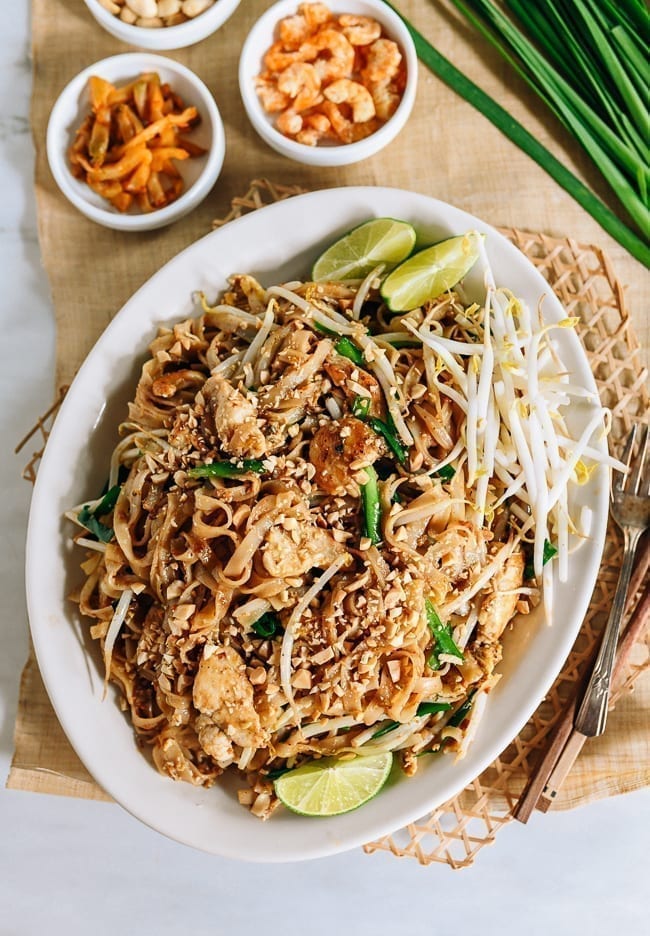
Next, add the bean sprouts and the chives. Stir-fry to combine, letting the chives wilt. Add the chicken back in, and stir-fry to combine until everything is incorporated. Plate, top with the crushed peanuts, and serve!
Flavor map
How Nana pairs flavors →This one is savory, garlicky and bright and tangy.
Goes well with
 Serve it with
Thai Beef Salad
74% flavor match
Thai basil with fish sauce is a natural match; they share peanut and fish sauce.
 Serve it with
Thai Glass Noodle Salad
74% flavor match
Both lean on peanut and fish sauce; rice noodle loves fish sauce.
 Start with
Indonesian Chicken Soup With Noodles, Turmeric and Ginger (Soto Ayam)
78% flavor match
Same Thai roots; lemongrass with fish sauce is a natural match.
 Finish with
Mango Lime Loaf Cake
83% flavor match
The lime keeps it light after a rich meal; a classic Thai finish: mango.
 Pour
Bourbon Citrus Crush
80% flavor match
A classic Thai pour: lemongrass; the lime cuts through a rich meal.
 Pour, alcohol-free
Diana Yen’s Strawberry Rose Smoothie, From Anita Shepherd
77% flavor match
The yogurt cuts through a rich meal; a classic Thai pour: coconut water.
Log in to tell Nana which pairings are good. Your votes improve the map.
More about this recipe
Nutrition
1 of 4 servings · about 330 g Whole recipe · about 1320 g · High confidence
| % DV* | ||
|---|---|---|
| Total Fat | 28.9 g | 37% |
| Saturated Fat | 5.3 g | 27% |
| Trans Fat | 0.13 g | |
| Cholesterol | 200 mg | 67% |
| Sodium | 1921 mg | 84% |
| Total Carbohydrate | 68.6 g | 25% |
| Dietary Fiber | 4.3 g | 16% |
| Total Sugars | 14.5 g | |
| Protein | 29 g | 58% |
| Vitamin D | 0.76 mcg | 4% |
| Calcium | 139 mg | 11% |
| Iron | 3.3 mg | 19% |
| Potassium | 723 mg | 15% |
* % Daily Value is based on a 2,000-calorie diet.
- Carbs 42%
- Fat 40%
- Protein 18%
Vitamins & minerals
| Vitamin A | 204 mcg | 23% |
|---|---|---|
| Vitamin C | 38.6 mg | 43% |
| Vitamin D | 0.76 mcg | 4% |
| Vitamin E | 3 mg | 20% |
| Vitamin K | 169 mcg | 141% |
| Thiamin (B1) | 0.22 mg | 18% |
| Riboflavin (B2) | 0.43 mg | 33% |
| Niacin (B3) | 7.8 mg | 49% |
| Pantothenic acid (B5) | 2 mg | 39% |
| Vitamin B6 | 0.83 mg | 49% |
| Folate | 116 mcg DFE | 29% |
| Vitamin B12 | 0.68 mcg | 28% |
| Choline | 188 mg | 34% |
| Calcium | 139 mg | 11% |
| Iron | 3.3 mg | 19% |
| Potassium | 723 mg | 15% |
| Magnesium | 114 mg | 27% |
| Phosphorus | 425 mg | 34% |
| Zinc | 2.3 mg | 21% |
| Copper | 0.31 mg | 34% |
| Manganese | 0.88 mg | 38% |
| Selenium | 40.5 mcg | 74% |
Fats & carbs in detail
| Monounsaturated fat | 7.8 g | |
|---|---|---|
| Polyunsaturated fat | 13.6 g | |
| Omega-3 | 1.5 g | 95% |
| Omega-6 | 11.8 g | 70% |
| Starch | 0.2 g | |
| Net carbs | 64.2 g | |
| Omega-6 : Omega-3 ratio | 7.8 : 1 |
Amino acids (protein building blocks)
| Histidine | 0.81 g | |
|---|---|---|
| Isoleucine | 1.3 g | |
| Leucine | 2.2 g | |
| Lysine | 2.1 g | |
| Methionine | 0.67 g | |
| Cystine | 0.35 g | |
| Phenylalanine | 1.2 g | |
| Tyrosine | 1 g | |
| Threonine | 1.2 g | |
| Tryptophan | 0.34 g | |
| Valine | 1.5 g |
How we calculated this
| Ingredient | Counted as | g | kcal |
|---|---|---|---|
| 1.5 ounces tamarind pulp ((plus ½ cup boiling water; or 6 tbsp/90ml tamarind concentrate) ) | Tamarinds, raw | 42 | 102 |
| 3 tablespoons dark brown sugar (or palm sugar, if you can find it) | Sugars, brown | 29 | 109 |
| 3 tablespoons fish sauce | Sauce, fish, ready-to-serve | 54 | 19 |
| 2 tablespoons Thai black soy sauce ((look for the “Healthy Boy” brand) ) | Soy sauce made from soy and wheat (shoyu) | 32 | 17 |
| 1 teaspoon Thai sweet soy sauce (optional) | Soy sauce made from soy and wheat (shoyu) | 5 | 3 |
| 1/4 teaspoon white pepper (to taste) | Spices, pepper, black | 1 | 2 |
| 8 ounces dried Pad Thai rice noodles | Rice noodles, dry | 227 | 826 |
| 8 ounces chicken breast (thinly sliced) | Chicken, broiler or fryers, breast, skinless, boneless, meat only, raw | 227 | 272 |
| 1 teaspoon Thai thin soy sauce | Soy sauce made from soy and wheat (shoyu) | 5 | 3 |
| 1 teaspoon cornstarch | Cornstarch | 3 | 10 |
| 1 teaspoon water | Water | 0 | |
| 1/4 cup dried shrimp (small, medium, large, or XL size; minced or processed into a coarse powder) | Crustaceans, shrimp, mixed species, raw (may contain additives to retain moisture) | 59 | 42 |
| 3 cloves garlic (sliced) | Garlic, raw | 9 | 13 |
| 2 large shallots (thinly sliced; can substitute red onion) | Shallots, raw | 60 | 43 |
| 2 tablespoons preserved Thai salted radish (preferred) or Chinese mustard stem | Radishes, raw | 14 | 2 |
| 3 large eggs (beaten, preferably at room temperature) | Egg, whole, raw, fresh | 150 | 214 |
| 2 cups mung bean sprouts (washed and drained) | Alfalfa seeds, sprouted, raw | 66 | 15 |
| 1 cup Chinese garlic chives (cut into 1-inch pieces) | Chives, raw | 237 | 71 |
| 2 tablespoons roasted peanuts (finely chopped) | Peanuts, all types, dry-roasted, without salt | 18 | 107 |
| 6 tablespoons vegetable oil (divided) | Oil, soybean, salad or cooking | 82 | 723 |
| lime wedges (for serving) | Not counted — no amount (to taste / garnish) |
Matched to the USDA FoodData Central database (SR Legacy). Amounts are converted with USDA portion weights where they exist, otherwise typical sizes. Open in the analyzer to adjust a match →
Estimated from the ingredient list — brands, exact sizes and cooking losses vary. Not medical advice.
Allergens
-
Fish › Anchovy
In: 3 tablespoons fish sauce
Finned fish. Fish sauce, Worcestershire and Caesar dressing usually contain anchovy.
-
Legumes › Beans: black, kidney, pinto, white…
In: 2 cups mung bean sprouts (washed and drained)
Beans, peas, lentils, chickpeas and their relatives, including lupin, fenugreek and guar gum. Peanut and soy are legumes too: checking the whole family avoids them as well.
-
Black & white pepper
In: 1/4 teaspoon white pepper (to taste)
-
Poultry meat › Chicken
In: 8 ounces chicken breast (thinly sliced)
Chicken, turkey, duck and goose meat (separate from egg allergy).
-
Corn
In: 1 teaspoon cornstarch
Corn and corn products: cornstarch, corn syrup, cornmeal, polenta, masa, corn oil.
-
Shellfish › Crustaceans
In: 1/4 cup dried shrimp (small, medium, large, or XL size; minced or processed into a coarse powder)
Shrimp, prawns, crab, lobster, crayfish.
-
Egg
In: 3 large eggs (beaten, preferably at room temperature)
Whole eggs, yolks, whites and egg-based sauces like mayonnaise, aioli and hollandaise.
-
Onion & garlic family › Garlic
In: 3 cloves garlic (sliced); 1 cup Chinese garlic chives (cut into 1-inch pieces)
Onions, shallots, garlic, leeks, scallions and chives, including powders.
-
Onion & garlic family › Leek, scallion & chives
In: 1 cup Chinese garlic chives (cut into 1-inch pieces)
Onions, shallots, garlic, leeks, scallions and chives, including powders.
-
Citrus › Lemon & lime
In: lime wedges (for serving)
-
Mustard
In: 2 tablespoons preserved Thai salted radish (preferred) or Chinese mustard stem
Mustard seeds, powder, prepared mustard and mustard greens.
-
Onion & garlic family › Onion & shallot
In: 2 large shallots (thinly sliced; can substitute red onion)
Onions, shallots, garlic, leeks, scallions and chives, including powders.
-
Peanut
In: 2 tablespoons roasted peanuts (finely chopped)
Peanuts are legumes, not tree nuts. Satay sauce and many "mixed nuts" contain them.
-
Rice
In: 8 ounces dried Pad Thai rice noodles
-
Shellfish › Crustaceans › Shrimp / prawns
In: 1/4 cup dried shrimp (small, medium, large, or XL size; minced or processed into a coarse powder)
Shrimp, prawns, crab, lobster, crayfish.
-
Soy › Soy sauce & tamari (brewed)
In: 2 tablespoons Thai black soy sauce ((look for the “Healthy Boy” brand) ); 1 teaspoon Thai sweet soy sauce (optional); 1 teaspoon Thai thin soy sauce
Fermented soy sauces. Much of the protein is broken down in brewing.
-
Legumes › Tamarind
In: 1.5 ounces tamarind pulp ((plus ½ cup boiling water; or 6 tbsp/90ml tamarind concentrate) )
Beans, peas, lentils, chickpeas and their relatives, including lupin, fenugreek and guar gum. Peanut and soy are legumes too: checking the whole family avoids them as well.
-
Gluten › Wheat
In: 2 tablespoons Thai black soy sauce ((look for the “Healthy Boy” brand) ); 1 teaspoon Thai sweet soy sauce (optional); 1 teaspoon Thai thin soy sauce
Wheat, barley, rye and oats (oats are often cross-contaminated). Celiac disease and wheat allergy are different — pick just Wheat if only wheat is the problem.
Found by reading the ingredient names. Brands and "may contain" warnings vary, so always check the label.
Questions about this recipe
- Can I make the Pad Thai sauce in advance?
- Yes, you can prepare the sauce ahead of time and store it in the refrigerator; just whisk it before adding it to the wok.
- How should I store and reheat leftovers?
- Store leftovers in an airtight container in the fridge for up to 3 days. Reheat gently in a pan with a splash of water to loosen the noodles.
- What can I use if I can't find preserved Thai salted radish?
- You can substitute it with Chinese mustard stems (zha cai) or omit it entirely if unavailable.
- How do I know when the noodles are perfectly cooked?
- The noodles are done when they have absorbed the sauce and become tender but still retain a slight chew (not mushy).
- What is the best way to serve this dish?
- Serve it immediately while hot, topped with crushed peanuts and accompanied by fresh lime wedges to squeeze over the top.
My notes
Log in to keep private notes on recipes.
Learn while you cook
Learn library →- Techniques · 5 min read Creaming & Folding Cream cool-room-temperature butter (65°F) with sugar for 3–5 minutes until pale and fluffy to build air; fold gently in…
- Techniques · 5 min read Searing Dry the surface, heat the pan until the oil shimmers, lay the food down and leave it alone until it releases on its own.
- Ingredient Deep-Dives · 8 min read The Onion Family Yellow onions for cooking, red for raw, shallots for sauces; the finer you cut garlic or onion, the stronger it gets, a…
Words in this recipe
- Marinate
- To soak food in a seasoned, often acidic or salty liquid. It mostly flavors the surface; salt is what penetrates. Learn more
- Sear
- To brown the surface of food with high, dry heat. Builds flavor; it does not 'seal in juices'. Learn more
- Fold
- To combine a light, airy mixture (whipped cream, egg whites) into a heavier one with gentle cutting and turning strokes, keeping as much air as possible. Learn more
Handy for this recipe Safe Cooking TemperaturesSubstitution Finder