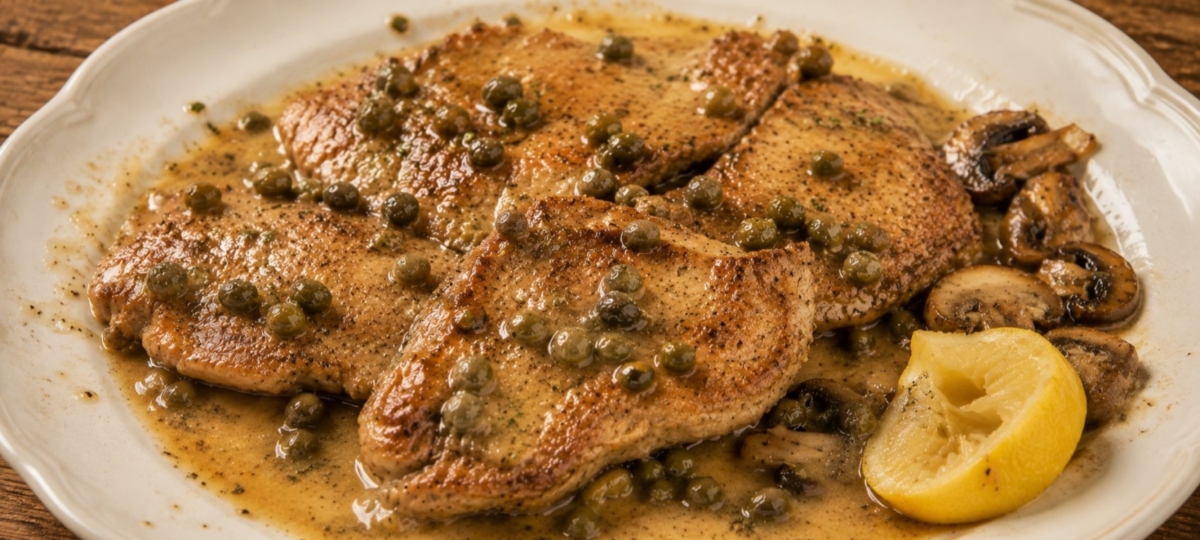
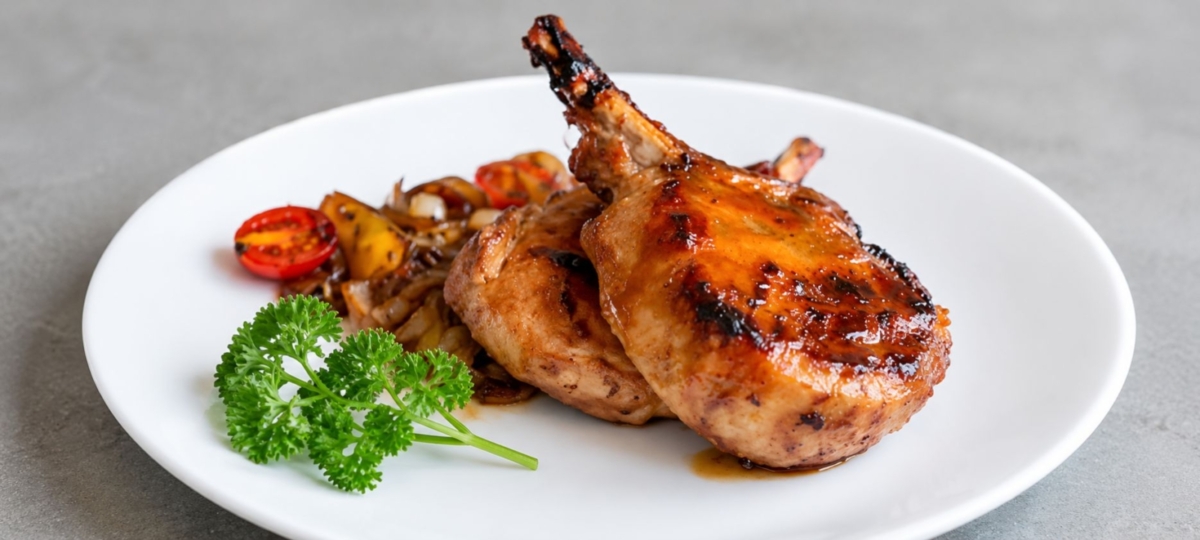
Pork Piccata
Printed from nanasfogon.com/recipe/pork-piccata-2-html · Original: https://www.justapinch.com/recipes/main-course/pork/pork-piccata-2.html
- Prep
- 10 min
- Cook
- 20 min
- Total
- 30 min
Nana's pick of 2 versions. Compare them →
Ingredients
Dairy-free version. Swapped:
butter → dairy-free plant butter (pareve)
Good for vegan, lactose-free and kosher meat meals. Check labels: some plant butters and creamers aren't certified parve or contain nuts or coconut.
- 1 1/2 pound(s) pork tenderloin cut into 1-1 1/4 inch pieces
- 1 scoop(s) salt About table salt →
- 1/2 teaspoon(s) freshly ground black pepper About black pepper →
- 1/4 cup(s) all-purpose flour About all-purpose flour →
- 3 tablespoon(s) olive oil About extra-virgin olive oil →
- 1 - shallot, minced About shallot →
- 2 clove(s) garlic, minced About garlic →
- 1/2 cup(s) dry white wine
- 1 - lemon, juiced About lemon →
- 1/2 cup(s) low sodium chicken broth About stock & broth →
- 3 tablespoon(s) butter, cut into tablespoons
- 3 tablespoon(s) capers, rinsed and drained About capers →
- fresh basil, torn About basil →
Out of something?
- Flour
- For thickening: for 1 tbsp, use 1/2 tbsp potato starch or cornstarch, mixed into cold liquid first. Clearer, glossier sauce. Add at the end and don't boil long: starches thin out if overcooked.
- For dredging: for 1 cup, use 1 cup potato starch, rice flour or matzo cake meal. Starch gives a thinner, crisper coating; matzo cake meal browns like flour. Rice is kitniyot for Ashkenazim.
- Shallot
- for 1 medium (2 tbsp minced), use 2 tbsp minced red onion, or the white parts of 2 scallions + a tiny bit of garlic. Red onion is sharper; rinse it if using raw.
- Garlic
- for 1 clove, use 1/8 tsp garlic powder, or 1/2 tsp jarred minced garlic. Powder is mellow and toasty, not pungent; fine in rubs and soups, poor in aioli or garlic bread.
- Dry white wine
- For cooking: for 1/2 cup, use 1/2 cup chicken or vegetable stock + 1–2 tsp white wine vinegar or lemon juice. Good in pan sauces and risotto. Missing wine's fruitiness.
- Butter
- Melted, in cakes & muffins: for 1 cup, use 3/4 cup neutral oil. Moister, more tender, keeps longer; no buttery flavor. Not for recipes that cream butter and sugar.
- For sautéing: for 1 tbsp, use 1 tbsp olive oil or neutral oil, or schmaltz in meat dishes. Less browning flavor. Schmaltz gives savory depth to onions, potatoes and kasha.
- Vegan, for baking: for 1 cup, use 1 cup refined coconut oil: solid for creaming, melted where melted butter is called for. Refined has no coconut taste. Coconut oil is 100% fat, so cookies spread more and pastry is crumblier; chill doughs well.
- Caper
- for 1 tbsp, use 1 tbsp chopped green olives. Briny, but meatier and less sharp.
- Basil
- for 1 tbsp chopped, use 1 tsp dried basil (cooked dishes); fresh parsley + a few mint leaves (raw). Dried basil is a different herb in practice. No good sub for pesto.
Prep first
Get these done before you turn on the heat. Cooks call it mise en place.
Steps
-
1
Place the pork pieces on a cutting board and cover them with plastic wrap or place them in a zipper storage bag. Pound the pieces to an even thickness of about 1/4 - 1/3 inch thick using a meat mallet.
-
2
Whisk the flour, salt, and black pepper. Dredge the pork in the flour mixture.
-
3
Heat 2 tablespoons of olive oil in a large skillet over medium heat. Pan-fry the pork until browned on both sides and cooked through. Plate the browned pork and cover loosely to keep warm. Carefully wipe the skillet clean.
-
4
Heat a tablespoon of olive oil in the skillet over medium-low heat. Cook the shallot until tender. Reduce the heat to low and add the garlic. Cook for 1 minute while stirring.
-
5
Add the wine and reduce by half. Add the lemon juice and chicken broth and simmer for 3 minutes.
-
6
Remove the pan from the heat and whisk in the butter, capers, and fresh basil or parsley.
-
7
Return the pork to the skillet. Drizzle the lemon butter wine sauce over the pork and serve.
Flavor map
How Nana pairs flavors →This one is savory, garlicky and bright and tangy.
Goes well with
 Serve it with
Pasta Salad With Marinated Tomatoes and Tuna
75% flavor match
Oregano loves basil; they share shallot and olive oil.
 Serve it with
Roasted Tomato Puttanesca
73% flavor match
Both lean on caper and basil; anchovy loves caper.
 Start with
Quick Minestrone
74% flavor match
Same Italian roots; parmesan and basil are a classic pair.
 Finish with
Olive Oil Cake
78% flavor match
The lemon keeps it light after a rich meal; a classic Italian finish: olive oil cake.
 Pour
Evergreen Spritz
81% flavor match
A classic Italian pour: spritz; the lemon cuts through a rich meal.
 Pour, alcohol-free
Razzle Dazzle
72% flavor match
The raspberry vinegar cuts through a rich meal; sherry suits an Italian meal.
Log in to tell Nana which pairings are good. Your votes improve the map.
More about this recipe
Nutrition
1 of 4 servings · about 297 g Whole recipe · about 1188 g · High confidence
| % DV* | ||
|---|---|---|
| Total Fat | 56.6 g | 73% |
| Saturated Fat | 22.2 g | 111% |
| Trans Fat | 0.35 g | |
| Cholesterol | 139 mg | 46% |
| Sodium | 3340 mg | 145% |
| Total Carbohydrate | 10.5 g | 4% |
| Dietary Fiber | 1.2 g | 4% |
| Total Sugars | 1.3 g | |
| Protein | 31.5 g | 63% |
| Vitamin D | 0 mcg | 0% |
| Calcium | 39 mg | 3% |
| Iron | 4.1 mg | 23% |
| Potassium | 631 mg | 13% |
* % Daily Value is based on a 2,000-calorie diet.
- Carbs 6%
- Fat 75%
- Protein 19%
Vitamins & minerals
| Vitamin A | 73.5 mcg | 8% |
|---|---|---|
| Vitamin C | 9 mg | 10% |
| Vitamin D | 0 mcg | 0% |
| Vitamin E | 1.8 mg | 12% |
| Vitamin K | 9.1 mcg | 8% |
| Thiamin (B1) | 0.22 mg | 18% |
| Riboflavin (B2) | 0.31 mg | 24% |
| Niacin (B3) | 6.2 mg | 39% |
| Pantothenic acid (B5) | 0.61 mg | 12% |
| Vitamin B6 | 0.69 mg | 41% |
| Folate | 37.6 mcg DFE | 9% |
| Vitamin B12 | 5.3 mcg | 221% |
| Choline | 7 mg | 1% |
| Calcium | 39 mg | 3% |
| Iron | 4.1 mg | 23% |
| Potassium | 631 mg | 13% |
| Magnesium | 42 mg | 10% |
| Phosphorus | 315 mg | 25% |
| Zinc | 6.8 mg | 61% |
| Copper | 0.17 mg | 19% |
| Manganese | 0.22 mg | 9% |
| Selenium | 31.5 mcg | 57% |
Fats & carbs in detail
| Monounsaturated fat | 25.9 g | |
|---|---|---|
| Polyunsaturated fat | 2.8 g | |
| Omega-3 | 0.54 g | 34% |
| Omega-6 | 2.2 g | 13% |
| Starch | 0 g | |
| Net carbs | 9.3 g | |
| Omega-6 : Omega-3 ratio | 4.0 : 1 |
Amino acids (protein building blocks)
| Histidine | 1.1 g | |
|---|---|---|
| Isoleucine | 1.4 g | |
| Leucine | 2.4 g | |
| Lysine | 2.5 g | |
| Methionine | 0.78 g | |
| Cystine | 0.35 g | |
| Phenylalanine | 1.2 g | |
| Tyrosine | 1 g | |
| Threonine | 1.3 g | |
| Tryptophan | 0.35 g | |
| Valine | 1.5 g |
How we calculated this
| Ingredient | Counted as | g | kcal |
|---|---|---|---|
| 1 1/2 pound(s) pork tenderloin cut into 1-1 1/4 inch pieces | Beef, rib, eye, small end (ribs 10-12), separable lean and fat, trimmed to 0" fat, choice, raw | 680 | 1864 |
| 1 scoop(s) salt | Salt, table | 30 | 0 |
| 1/2 teaspoon(s) freshly ground black pepper | Spices, pepper, black | 1 | 3 |
| 1/4 cup(s) all-purpose flour | Wheat flour, white, all-purpose, enriched, bleached | 31 | 114 |
| 3 tablespoon(s) olive oil | Oil, olive, salad or cooking | 40 | 358 |
| 1 - shallot, minced | Shallots, raw | 30 | 22 |
| 2 clove(s) garlic, minced | Garlic, raw | 6 | 9 |
| 1/2 cup(s) dry white wine | Alcoholic beverage, wine, table, red | 118 | 100 |
| 1 - lemon, juiced | Lemons, raw, without peel | 58 | 17 |
| 1/2 cup(s) low sodium chicken broth | Soup, chicken broth, ready-to-serve | 124 | 7 |
| 3 tablespoon(s) butter, cut into tablespoons | Butter, salted | 43 | 305 |
| 3 tablespoon(s) capers, rinsed and drained | Capers, canned | 26 | 6 |
| fresh basil, torn | Not counted — no amount (to taste / garnish) |
Matched to the USDA FoodData Central database (SR Legacy). Amounts are converted with USDA portion weights where they exist, otherwise typical sizes. Open in the analyzer to adjust a match →
Estimated from the ingredient list — brands, exact sizes and cooking losses vary. Not medical advice.
Allergens
-
Alcohol
In: 1/2 cup(s) dry white wine
Not a true allergy, but listed for people who must avoid it.
-
Red meat (alpha-gal) › Beef & veal
In: 1 1/2 pound(s) pork tenderloin cut into 1-1 1/4 inch pieces
Mammalian meat and by-products. Alpha-gal syndrome, often from a tick bite, causes delayed reactions to beef, pork, lamb and gelatin; some people also react to dairy.
-
Black & white pepper
In: 1/2 teaspoon(s) freshly ground black pepper
-
Poultry meat › Chicken
In: 1/2 cup(s) low sodium chicken broth
Chicken, turkey, duck and goose meat (separate from egg allergy).
-
Onion & garlic family › Garlic
In: 2 clove(s) garlic, minced
Onions, shallots, garlic, leeks, scallions and chives, including powders.
-
Citrus › Lemon & lime
In: 1 - lemon, juiced
-
Milk / dairy
In: 3 tablespoon(s) butter, cut into tablespoons
Cow's milk and anything made from it: butter, cream, cheese, yogurt, whey, casein, ghee.
-
Onion & garlic family › Onion & shallot
In: 1 - shallot, minced
Onions, shallots, garlic, leeks, scallions and chives, including powders.
-
Red meat (alpha-gal) › Pork
In: 1 1/2 pound(s) pork tenderloin cut into 1-1 1/4 inch pieces
Mammalian meat and by-products. Alpha-gal syndrome, often from a tick bite, causes delayed reactions to beef, pork, lamb and gelatin; some people also react to dairy.
-
Sulfites
In: 1/2 cup(s) dry white wine
Sulfites are preservatives found in wine, wine and balsamic vinegar, dried fruit and pickled foods.
-
Gluten › Wheat
In: 1/4 cup(s) all-purpose flour
Wheat, barley, rye and oats (oats are often cross-contaminated). Celiac disease and wheat allergy are different — pick just Wheat if only wheat is the problem.
Found by reading the ingredient names. Brands and "may contain" warnings vary, so always check the label.
Questions about this recipe
- Can I make this ahead of time?
- It is best served fresh, but you can cook the pork and sauce separately; just reheat the pork and toss it in the warmed sauce right before serving.
- How should I store or freeze leftovers?
- Store in an airtight container in the fridge for up to 3 days. This recipe does not freeze well due to the butter-based sauce.
- What can I use if I don't have white wine or capers?
- Substitute the wine with extra chicken broth and a splash of apple cider vinegar. For capers, use chopped brined green olives for a similar salty, tangy flavor.
- How do I tell when the pork is done?
- The pork is cooked through when it is browned on both sides and reaches an internal temperature of 145°F (63°C).
- What are the best side dishes to serve with this?
- The lemon-butter sauce pairs perfectly with mashed potatoes, buttered noodles, or a crisp side salad.
My notes
Log in to keep private notes on recipes.
Learn while you cook
Learn library →- Techniques · 5 min read Searing Dry the surface, heat the pan until the oil shimmers, lay the food down and leave it alone until it releases on its own.
- Ingredient Deep-Dives · 8 min read The Onion Family Yellow onions for cooking, red for raw, shallots for sauces; the finer you cut garlic or onion, the stronger it gets, a…
- Ingredient Deep-Dives · 7 min read Citrus Zest is for aroma and juice is for sour, so use both. Buy heavy fruit, keep it in the fridge, and add the juice at the end.
Words in this recipe
- Dredge
- To coat food lightly in flour, starch or crumbs before frying or browning. Shake off the excess.
- Pan-fry
- To cook in a moderate amount of fat, more than a sauté but not enough to submerge the food.
- Reduce
- To simmer a liquid so water evaporates, concentrating flavor and thickening it. Learn more
- Simmer
- Liquid just below a boil, about 185 to 205°F, with small bubbles rising gently.
Handy for this recipe Safe Cooking TemperaturesMeasurements & ConversionsSubstitution Finder