Maple Tamagoyaki
Printed from nanasfogon.com/recipe/tamagoyaki-maple · Original: https://www.epicurious.com/recipes/food/views/tamagoyaki-maple
- Cook
- 40 min
- Total
- 40 min
Ingredients
Dairy-free version. Swapped:
milk → unsweetened oat milk; melted butter → dairy-free plant butter (pareve)
Good for vegan, lactose-free and kosher meat meals. Check labels: some plant butters and creamers aren't certified parve or contain nuts or coconut.
- 5 eggs About eggs →
- 5 Tbsp. (75 ml) kombu and bonito dashi, milk, or chicken broth, room temperature Can't find it? 2 or 3 dried shiitake mushrooms per 4-inch piece of kombu
- 2 Tbsp. (30 ml) maple syrup About maple syrup →
- 2 tsp. (10 ml) soy sauce (preferably light-colored usukuchi shoyu), plus more for serving About soy sauce →
- 1½ Tbsp. melted butter or untoasted sesame oil About unsalted butter →
- 6 oz. (170 g) Daikon Oroshi (optional) About daikon →
- Microgreens, for garnish
- 8 oz. (230 g) daikon radish, peeled About daikon →
Out of something?
- Egg
- As a binder: for 1 large, use 1 tbsp ground flaxseed + 3 tbsp water, rested 10 minutes until gloppy. Binds cookies, muffins and quick breads. It won't lift a sponge cake or set a custard, and adds a nutty flavor and flecks.
- For moisture: for 1 large, use 1/4 cup unsweetened applesauce or mashed ripe banana. Denser, moister crumb; banana flavor shows. Best when the recipe calls for only 1–2 eggs.
- for 1 large, use 2 large egg yolks + 1 tbsp water. Richer, more tender, slightly denser. Handy when you have leftover yolks.
- Maple syrup
- for 1 cup, use 1 cup honey thinned with 2 tbsp water, or 1 cup brown sugar + 1/4 cup water simmered. No maple flavor. Add 1/2 tsp maple extract if you have it.
- Soy sauce
- Gluten-free: for 1 tbsp, use 1 tbsp tamari (check the label for wheat-free) or coconut aminos. Tamari is a bit richer; coconut aminos are sweeter and much less salty.
- Butter
- Melted, in cakes & muffins: for 1 cup, use 3/4 cup neutral oil. Moister, more tender, keeps longer; no buttery flavor. Not for recipes that cream butter and sugar.
- For sautéing: for 1 tbsp, use 1 tbsp olive oil or neutral oil, or schmaltz in meat dishes. Less browning flavor. Schmaltz gives savory depth to onions, potatoes and kasha.
- Vegan, for baking: for 1 cup, use 1 cup refined coconut oil: solid for creaming, melted where melted butter is called for. Refined has no coconut taste. Coconut oil is 100% fat, so cookies spread more and pastry is crumblier; chill doughs well.
Steps
-
1
In a medium bowl, combine 5 eggs, 5 Tbsp. (75 ml) kombu and bonito dashi, milk, or chicken broth, room temperature, 2 Tbsp. (30 ml) maple syrup, and 2 tsp. (10 ml) soy sauce. Whisk the eggs gently, being careful not to overwhip.
-
2
Heat a nonstick pan or a well-seasoned cast-iron skillet over medium-high heat. Use a pastry brush or soak a crumpled paper towel in 1½ Tbsp. melted butter or untoasted sesame oil and use it to spread the fat evenly in the pan, keeping the pastry brush or paper towel nearby for later use. Test the pan by putting a few drops of the batter into it; if the pan is hot enough, the batter will sizzle without burning. If the pan is too hot, lower the heat and let the pan cool a bit.
-
3
Pour one third of the batter into the pan and cook, spreading the batter quickly and evenly by tilting the pan back and forth. If you see any air bubbles form, use a fork or chopsticks to pierce them.
-
4
When the batter begins to set on the bottom, fold the tamagoyaki into thirds. Start by lifting the far end of the egg batter with a fork or chopsticks and rolling it toward you like a jelly roll.
-
5
Let the rolled egg set for 30 seconds, then push it into one edge of the pan. Re-grease the pan with the paper towel, moving the egg roll around to ensure full contact with the oil. You want to cook it on all sides.
-
6
Now pour another third of the egg batter into the pan, making sure to lift the first egg roll with your fork or chopsticks so the batter gets underneath it.
-
7
Cook this second batch of batter until almost set, then roll the second omelet over the first, to make layers. Repeat this step one more time with the remaining batter, incorporating the first roll into the second, and the second roll into the third. Transfer the tamagoyaki onto a clean cutting board.
-
8
You can use a bamboo mat to further shape the tamagoyaki, if you like. Let the tamagoyaki rest, wrapped, for 3 minutes.
-
9
To serve, unwrap the tamagoyaki and slice it crosswise into 1½"–2" (4–5 cm) pieces. Serve warm or at room temperature with 6 oz. (170 g) Daikon Oroshi, soy sauce, and microgreens. Do Ahead: Tamagoyaki will keep in the refrigerator for 2 to 3 days.
-
10
Grate 8 oz. (230 grams) daikon radish, peeled, by moving it against the grater in a circular motion. The grated daikon will be juicy. Drain the juice and lightly press to remove excess moisture. (Don’t throw away the juice; it’s spicy but high in vitamin C.)
Flavor map
How Nana pairs flavors →This one is savory, sweet and rich.
Goes well with
 Goes with
Zaru Soba (Cold Buckwheat Noodles)
79% flavor match
Mirin and dashi are a classic pair; both lean on daikon and soy sauce.
 Goes with
Japanese Slow Cooked Pork Belly
78% flavor match
Both lean on dashi and soy sauce; mirin and dashi are a classic pair.
 Goes with
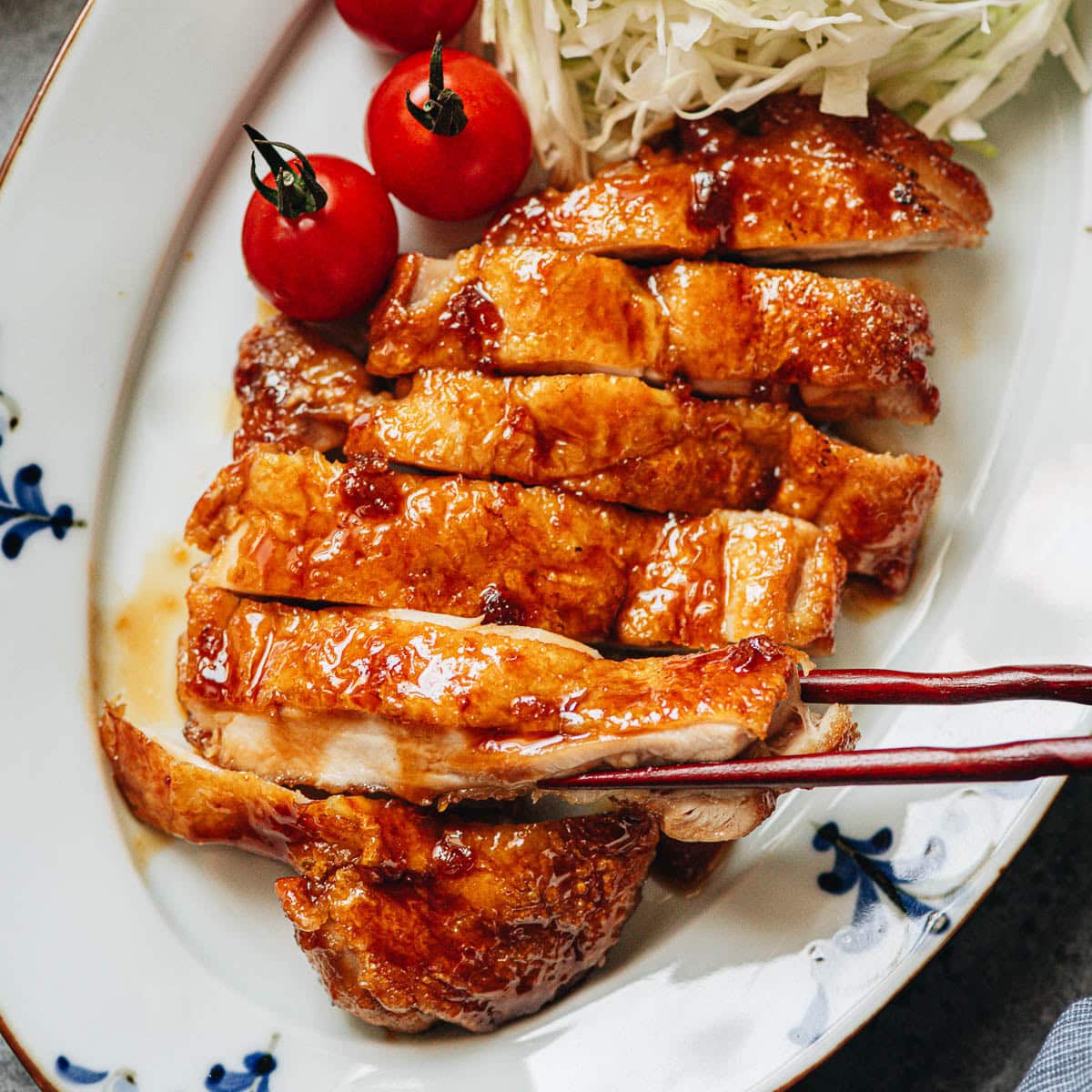
Teriyaki Chicken (日式照烧鸡肉)
77% flavor match
Both are savory and sweet; mirin and dashi are a classic pair.
 Also on the table
Ozoni (New Year Mochi Soup)
80% flavor match
Same Japanese roots; bonito flake with kombu is a natural match.
Log in to tell Nana which pairings are good. Your votes improve the map.
More about this recipe
Nutrition
1 of 4 servings · about 149 g Whole recipe · about 596 g · Good estimate
| % DV* | ||
|---|---|---|
| Total Fat | 9.7 g | 12% |
| Saturated Fat | 4.5 g | 22% |
| Trans Fat | 0.2 g | |
| Cholesterol | 216 mg | 72% |
| Sodium | 354 mg | 15% |
| Total Carbohydrate | 9.1 g | 3% |
| Dietary Fiber | 0.93 g | 3% |
| Total Sugars | 7.3 g | |
| Protein | 7.7 g | 15% |
| Vitamin D | 1.1 mcg | 6% |
| Calcium | 58 mg | 4% |
| Iron | 1.2 mg | 7% |
| Potassium | 245 mg | 5% |
* % Daily Value is based on a 2,000-calorie diet.
- Carbs 24%
- Fat 56%
- Protein 20%
Vitamins & minerals
| Vitamin A | 124 mcg | 14% |
|---|---|---|
| Vitamin C | 8.4 mg | 9% |
| Vitamin D | 1.1 mcg | 6% |
| Vitamin E | 0.71 mg | 5% |
| Vitamin K | 1.3 mcg | 1% |
| Thiamin (B1) | 0.041 mg | 3% |
| Riboflavin (B2) | 0.42 mg | 32% |
| Niacin (B3) | 0.3 mg | 2% |
| Pantothenic acid (B5) | 0.95 mg | 19% |
| Vitamin B6 | 0.14 mg | 8% |
| Folate | 40.6 mcg DFE | 10% |
| Vitamin B12 | 0.5 mcg | 21% |
| Choline | 167 mg | 30% |
| Calcium | 58 mg | 4% |
| Iron | 1.2 mg | 7% |
| Potassium | 245 mg | 5% |
| Magnesium | 17 mg | 4% |
| Phosphorus | 127 mg | 10% |
| Zinc | 1.1 mg | 10% |
| Copper | 0.074 mg | 8% |
| Manganese | 0.37 mg | 16% |
| Selenium | 17.4 mcg | 32% |
Fats & carbs in detail
| Monounsaturated fat | 3.1 g | |
|---|---|---|
| Polyunsaturated fat | 1.2 g | |
| Omega-3 | 0.091 g | 6% |
| Omega-6 | 0.99 g | 6% |
| Starch | 0 g | |
| Net carbs | 8.2 g | |
| Omega-6 : Omega-3 ratio | 10.9 : 1 |
Amino acids (protein building blocks)
| Histidine | 0.18 g | |
|---|---|---|
| Isoleucine | 0.39 g | |
| Leucine | 0.63 g | |
| Lysine | 0.53 g | |
| Methionine | 0.22 g | |
| Cystine | 0.16 g | |
| Phenylalanine | 0.41 g | |
| Tyrosine | 0.29 g | |
| Threonine | 0.33 g | |
| Tryptophan | 0.1 g | |
| Valine | 0.5 g |
How we calculated this
| Ingredient | Counted as | g | kcal |
|---|---|---|---|
| 5 eggs | Egg, whole, raw, fresh | 220 | 315 |
| 5 Tbsp. (75 ml) kombu and bonito dashi, milk, or chicken broth, room temperature | Soup, chicken broth, ready-to-serve | 78 | 5 |
| 2 Tbsp. (30 ml) maple syrup | Syrups, maple | 39 | 102 |
| 2 tsp. (10 ml) soy sauce (preferably light-colored usukuchi shoyu), plus more for serving | Soy sauce made from soy and wheat (shoyu) | 11 | 6 |
| 1½ Tbsp. melted butter or untoasted sesame oil | Butter, salted | 21 | 153 |
| 6 oz. (170 g) Daikon Oroshi (optional) | Not found — no matching food | ||
| Microgreens, for garnish | Not counted — no amount (to taste / garnish) | ||
| 8 oz. (230 g) daikon radish, peeled | Radishes, raw | 227 | 36 |
Matched to the USDA FoodData Central database (SR Legacy). Amounts are converted with USDA portion weights where they exist, otherwise typical sizes. Open in the analyzer to adjust a match →
Estimated from the ingredient list — brands, exact sizes and cooking losses vary. Not medical advice.
Allergens
-
Poultry meat › Chicken
In: 5 Tbsp. (75 ml) kombu and bonito dashi, milk, or chicken broth, room temperature
Chicken, turkey, duck and goose meat (separate from egg allergy).
-
Egg
In: 5 eggs
Whole eggs, yolks, whites and egg-based sauces like mayonnaise, aioli and hollandaise.
-
Milk / dairy
In: 5 Tbsp. (75 ml) kombu and bonito dashi, milk, or chicken broth, room temperature; 1½ Tbsp. melted butter or untoasted sesame oil
Cow's milk and anything made from it: butter, cream, cheese, yogurt, whey, casein, ghee.
-
Sesame
In: 1½ Tbsp. melted butter or untoasted sesame oil
Sesame seeds and oil, tahini, halva; za'atar and furikake usually contain sesame.
-
Soy › Soy sauce & tamari (brewed)
In: 2 tsp. (10 ml) soy sauce (preferably light-colored usukuchi shoyu), plus more for serving
Fermented soy sauces. Much of the protein is broken down in brewing.
-
Fish › Tuna
In: 5 Tbsp. (75 ml) kombu and bonito dashi, milk, or chicken broth, room temperature
Finned fish. Fish sauce, Worcestershire and Caesar dressing usually contain anchovy.
-
Gluten › Wheat
In: 2 tsp. (10 ml) soy sauce (preferably light-colored usukuchi shoyu), plus more for serving
Wheat, barley, rye and oats (oats are often cross-contaminated). Celiac disease and wheat allergy are different — pick just Wheat if only wheat is the problem.
Found by reading the ingredient names. Brands and "may contain" warnings vary, so always check the label.
Questions about this recipe
- Can I make the maple tamagoyaki ahead of time?
- Yes, it can be prepared in advance and stored in the refrigerator for 2 to 3 days.
- How should I store or reheat the leftovers?
- Keep them refrigerated in an airtight container; they can be served cold, at room temperature, or gently reheated.
- What can I use if I don't have dashi or light soy sauce?
- You can substitute dashi with milk or chicken broth, and use regular soy sauce instead of usukuchi shoyu.
- How do I know when the egg batter is ready to be rolled?
- The batter is ready to fold once the bottom has begun to set, but while the top is still slightly moist.
- What is the best way to serve this dish?
- Serve it warm or at room temperature accompanied by grated daikon radish (daikon oroshi), a drizzle of soy sauce, and microgreens.
My notes
Log in to keep private notes on recipes.
Learn while you cook
Learn library →- Techniques · 5 min read Creaming & Folding Cream cool-room-temperature butter (65°F) with sugar for 3–5 minutes until pale and fluffy to build air; fold gently in…
- Techniques · 5 min read Blooming Spices & Toasting Nuts Warm whole spices in fat for 30–60 seconds and ground ones for 15–30 seconds; toast nuts at 350°F until fragrant and a …
- Why It Works · 5 min read Why We Rest Meat & Dough Meat keeps cooking after it leaves the heat, so pull it early and let it rest; dough rests so gluten relaxes and flour …
Words in this recipe
- Fold
- To combine a light, airy mixture (whipped cream, egg whites) into a heavier one with gentle cutting and turning strokes, keeping as much air as possible. Learn more
- Rest
- To let food sit after cooking (meat) or mixing (dough, batter) so juices redistribute or gluten relaxes. Learn more
Handy for this recipe Safe Cooking TemperaturesSubstitution Finder