Doubanjiang
Also called spicy broad bean paste, chili bean paste, toban djan, Pixian doubanjiang
- What it is
- A Sichuan paste of fermented broad (fava) beans and chilies, aged until it turns deep red-brown.
- Tastes like
- Salty, funky and savory, with a slow chili heat and a deep, almost meaty fermented flavor.
- Use it for
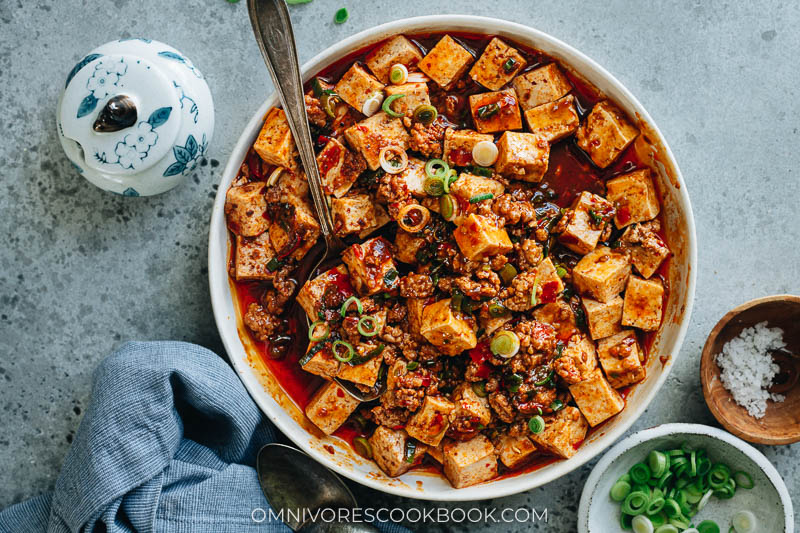
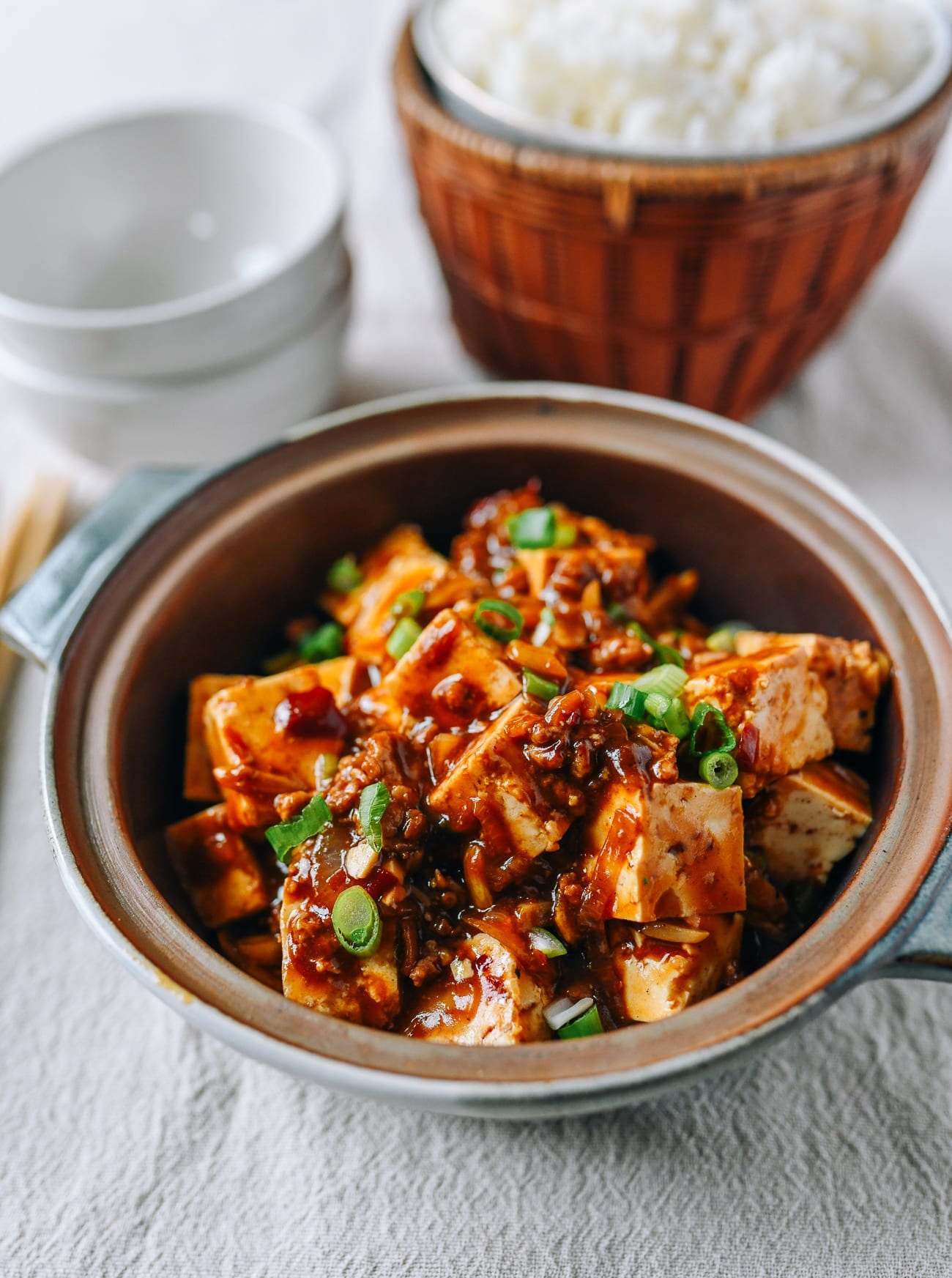
- Mapo tofu, twice-cooked pork, dry-fried green beans, hot pot broth, and Sichuan braised fish.
The kinds you'll see
- Pixian doubanjiang — The classic from Sichuan. Coarse, dark and very salty; the one most Sichuan recipes mean.
- Toban djan (Lee Kum Kee and other brands) — Smoother and milder. Easier to find and fine for most home cooking.
Out of it? Swap in
- 1 tbsp miso plus 1 tsp sriracha or chili garlic sauce for each 1 tbsp doubanjiangGets the salty, fermented, spicy balance. Less depth and no broad-bean flavor.
- Gochujang, a little less than called for, plus a pinch of saltSimilar heat and funk, but noticeably sweeter.
Diet & allergens
Fava / broad bean Wheat Gluten
StoreFridge, in its jar, surface pressed flat.
Keeps1 year or more in the fridge; it's very salty.
Toss whenThere's fuzzy mold, or it smells rotten rather than deeply fermented.
BuyingLook for "Pixian" on the label at an Asian market, usually in a plastic bag or a jar. The ingredient list should start with broad beans and chilies.
Nana's tip: Fry it in oil over medium-low heat for a minute before adding anything else. The oil turns brick red and the flavor blooms.