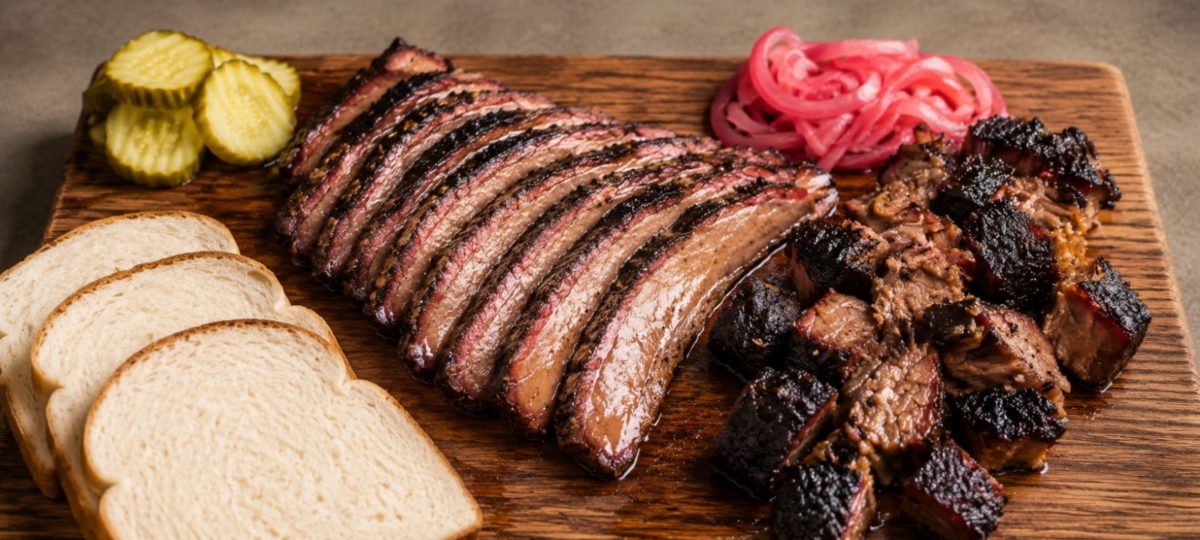
The dishes that taste best (a braise, a long-risen loaf, a jar of sour kraut) are slow. But “slow” is mostly the clock’s time, not yours. A brisket needs four hours in the oven and about twenty minutes of you. The trick is to start things early and let heat, cold and microbes do the work while you’re elsewhere.
How much time we actually spend
The U.S. government’s American Time Use Survey asks thousands of people to log their day. In 2025, Americans averaged about 43 minutes a day on food preparation and cleanup combined, counting everyone, including people who didn’t cook at all that day. About two in three people did some on an average day, and they spent a little over an hour.
That’s not much, and a good share of it is washing up. Which is exactly why slow cooking fits: it asks for minutes, spread out, not hours in one go.
A rule of thumb
The food-industry researcher Harry Balzer, who tracked American eating habits for decades, is credited with a blunt piece of advice that Michael Pollan made famous: eat whatever you like, as long as you cook it yourself. Fries, cake, fried chicken, all fine, if you make them.
The point isn’t that home cooking is magic. It’s that cooking from scratch takes effort, so you naturally make the special things less often, and you know what’s in them. Use it as a nudge, not a rulebook.
Where the time goes, and where it doesn’t
| Dish | Your hands-on time | Clock time | What does the work |
|---|---|---|---|
| Braised brisket or short ribs | 30 minutes | 3–4 hours + overnight chill | The oven, then the fridge |
| Pot of dried beans | 10 minutes | Overnight soak + 1–2 hours | Water, then a low simmer |
| Overnight no-knead bread | 15 minutes | 12–18 hours + 45 min bake | Yeast and time |
| Sauerkraut | 30 minutes | 2–4 weeks | Lactic acid bacteria |
| Chicken stock | 10 minutes | 3–4 hours | A bare simmer |
| Roasted tray of vegetables | 10 minutes | 35–45 minutes | The oven |
| Slow-cooker or overnight cholent | 20 minutes | 8–18 hours | Gentle, steady heat |
Notice the hands-on column. Most of it is under half an hour.
Ways to fit slow cooking into a busy week
1. The Sunday batch braise
Brown a big piece of chuck, brisket or a tray of chicken thighs, build a sauce, cover and slide it into a 300°F (150°C) oven, then go about your day. Chill it overnight, lift off the fat, and you have the base for three dinners: sliced with potatoes, shredded into tacos or sandwiches, stirred into pasta. See Braising.
2. Let the overnight do the work
- Soak beans before bed; cook them the next evening while you do homework or email.
- Mix a no-knead dough after dinner; shape and bake it the next afternoon.
- Marinate or dry-brine meat the night before.
- Start a ferment on the weekend; it’s ready in a week or two with no more work than a daily glance. See Fermentation 101.
3. The oven is your sous-chef
A hot oven needs no stirring. Roast two trays of vegetables at once, a sheet of chicken thighs on the rack below, and a pot of rice or grains in the oven beside them. One preheat, four parts of the week’s meals.
4. Cook once, eat twice (or three times)
Double anything that keeps: stews, soups, beans, grains, sauces. Cooking a double batch takes a few extra minutes; the second dinner takes none. Freeze half in flat bags.
5. Keep a “head start” shelf
A few things in the fridge make a weeknight meal take 15 minutes: a jar of cooked beans, a container of grains, a quart of stock, a tub of caramelized onions, a jar of kimchi or kraut. Build them on the weekend.
6. Shabbat already knows this
Many kosher kitchens have practiced slow cooking for generations: everything is cooked before sundown Friday, and a cholent or hamin sits on a blech or in a slow cooker until lunch the next day. See Cooking for Shabbat.
Food safety
Cool cooked food within 2 hours (1 hour if it’s over 90°F / 32°C out): divide it into shallow containers and refrigerate. Leftovers keep 3–4 days in the fridge, 2–6 months frozen depending on the food; reheat to 165°F (74°C). In a slow cooker, start with thawed meat and keep the lid on; if the power goes out while you’re away, throw the food out.
Common mistakes
| Problem | Why | Fix |
|---|---|---|
| “I don’t have time to braise” | Thinking of clock time as your time | Start it before a chore, errand or homework hour |
| Batch-cooked food gets boring | Same dish four nights | Cook a base (braised meat, beans), finish it differently each night |
| Weekend prep takes all Sunday | Too many separate dishes | Pick one braise, one tray of roasted veg, one grain |
| Leftovers forgotten in the fridge | No plan | Label with the date; eat or freeze by day 3 |