Tonkatsu
Ingredients
- 1 (1-lb.) loaf soft white bread, such as pain de mie or sandwich bread
- 1 head green cabbage
- 2 quarts canola or other neutral oil, for frying About neutral oil →
- 1 boneless pork loin (about 1½ lb.)
- Sea salt About sea salt →
- 1 garlic clove About garlic →
- ¼ cup all-purpose flour About all-purpose flour →
- 1 large egg, beaten About eggs →
- 2½ cups Nama Panko About panko →
- Snowy cabbage
- Tonkatsu sauce
- Japanese mustard
Steps
-
1
Make the nama panko
-
2
To make nama panko, use a sharp knife to trim the crusts as closely as possible. Cut the denuded loaf into cubes, roughly 1-inch square. In a food processor, pulse a handful of cubes at a time into shaggy breadcrumbs. Don’t overprocess: the larger pieces fry into delightful crunchy bits. Store your processed panko in an airtight container for up to 3 days in the refrigerator or up to a month in the freezer.
-
3
Make the snowy cabbage
-
4
To make snowy cabbage, peel away any brown and bruised leaves. Cut it in half lengthwise, from stem to tip, and trim the end of the stem, but keep the core intact to hold the leaves together as you cut. Using a mandoline, begin by slicing the cut edge the length of the cabbage. The slices should be very fine, and when they emerge from the blade, they should curl like thin ribbons of paper onto your hand. If the slices are rigid and too thick, adjust the mandoline a couple of turns thinner. This is not like making coleslaw (although a mandoline is handy for that, too). Once you’ve sliced to the core on one side, rotate the cabbage and slice from the other side. At the end, you should have only the core and a small wedge of cabbage left. Put the sliced cabbage in a bowl, cover it with cold water, and let it sit for ten minutes. Although the soak in cold water does wash away some of the sweetness, it also crisps it up and removes much of the sulfurous odor. Drain well and store the snowy cabbage, covered, in an airtight container in the refrigerator for up to a day.
-
5
Make the tonkatsu
-
6
In a large Dutch oven or heavy-bottomed pot over medium-high heat, heat the oil until it registers 310°F on an instant-read thermometer. Set a wire rack over a rimmed sheet pan.
-
7
Place the loin on a cutting board and trim the layer of fat covering the loin to no more than a ½-inch thickness; discard the fat or save for another use. Using a sharp knife, slice the loin into ½-inch thick cutlets, approximately 5 inches long and 3 inches wide at the thickest point. Lightly salt each cutlet on both sides. Cut the clove of garlic in half and rub each cutlet on both sides with the cut side of the garlic.
-
8
Place the flour, egg, and panko in three separate shallow dishes. Working with one piece of pork at a time, dredge the pork in the flour. Make sure the entire surface is covered and shake off any excess. Next, dip it in the egg mixture, turning to coat completely. Then drop the egg-dipped pork into the panko.
-
9
Cover the pork with the panko and press firmly on the top and sides so the panko adheres. Lightly shake off any excess and arrange on the sheet pan. Repeat with the remaining pieces of pork. It’s best to fry the katsu immediately when the panko is at its fluffiest. Otherwise, cover loosely with plastic wrap and refrigerate for up to 3 hours.
-
10
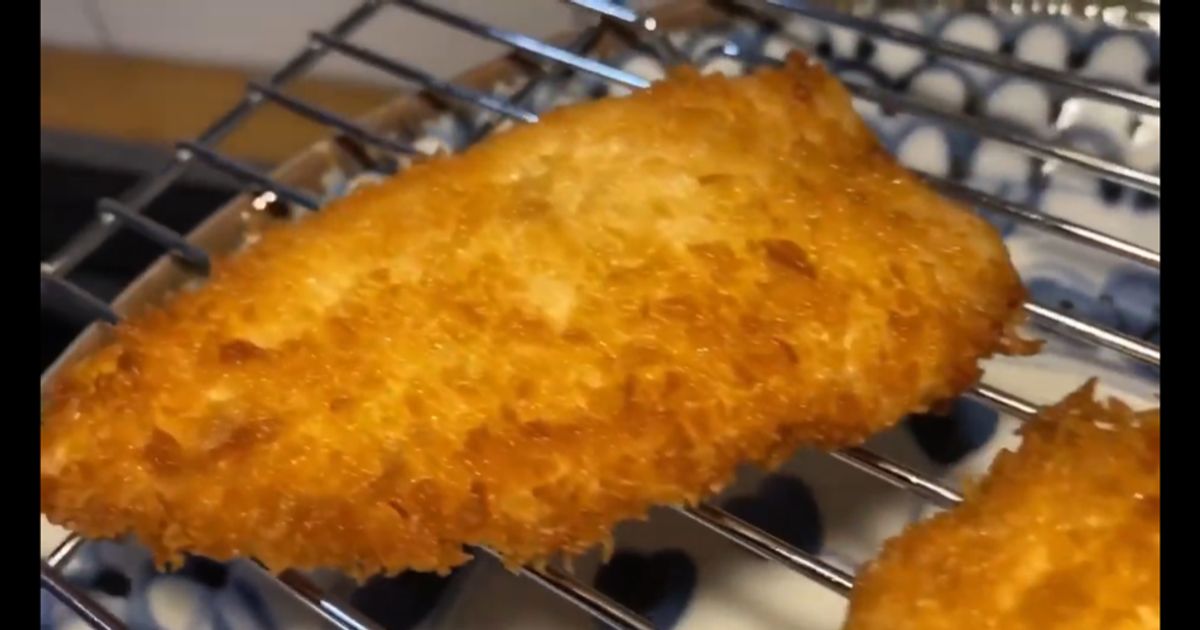
When the oil is hot, slide two of the katsu into the oil. With a fine-mesh strainer, immediately scoop up the loose panko bits that float to the surface of the oil. Adjust the heat to maintain the oil temperature at approximately 310°F and fry for 2 minutes. Using tongs or chopsticks, turn the katsu over and fry for another 2 minutes on the other side. Continue cooking, flipping very 2 minutes, until the katsu has cooked for 7 to 8 minutes. When the katsu is nearly cooked, it will start to sit higher in the oil, the bubbles surrounding it will become smaller, and the panko will turn golden brown. Using the tongs, remove the tonkatsu from the oil and set it on the wire rack to drain. Allow the oil to return to temperature and repeat with the remaining katsu.
-
11
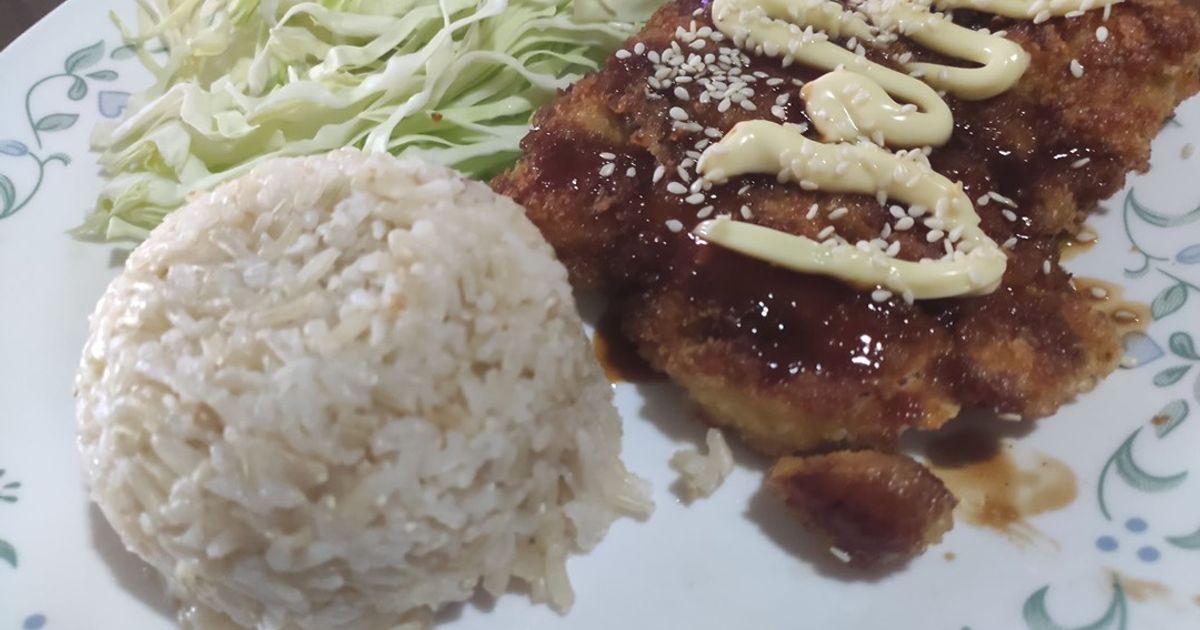
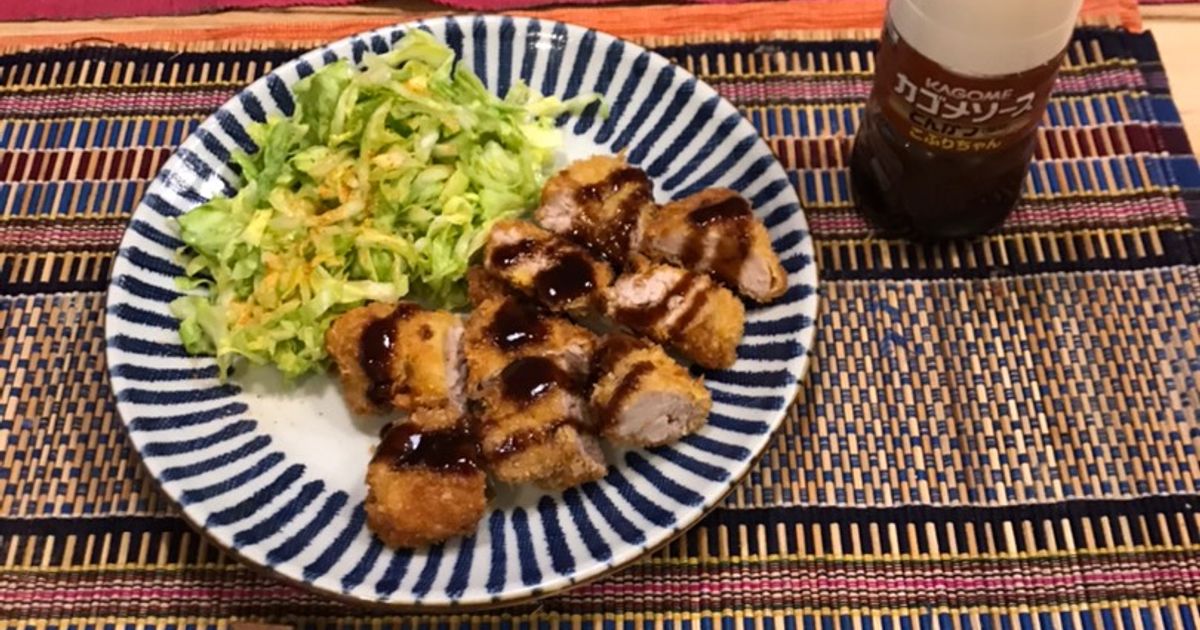
To serve, cut the tonkatsu in six to eight slices and serve with the snowy cabbage, tonkatsu sauce, and hot Japanese mustard alongside.
More about this recipe
Nutrition
1 of 16 servings · about 280 g Whole recipe · about 4477 g · servings estimated · High confidence
| % DV* | ||
|---|---|---|
| Total Fat | 120 g | 154% |
| Saturated Fat | 11.9 g | 60% |
| Trans Fat | 0.44 g | |
| Cholesterol | 42 mg | 14% |
| Sodium | 305 mg | 13% |
| Total Carbohydrate | 32.2 g | 12% |
| Dietary Fiber | 3.5 g | 13% |
| Total Sugars | 5.2 g | |
| Protein | 13.5 g | 27% |
| Vitamin D | 0.062 mcg | 0% |
| Calcium | 111 mg | 9% |
| Iron | 2.7 mg | 15% |
| Potassium | 330 mg | 7% |
* % Daily Value is based on a 2,000-calorie diet.
- Carbs 10%
- Fat 86%
- Protein 4%
Vitamins & minerals
| Vitamin A | 9.8 mcg | 1% |
|---|---|---|
| Vitamin C | 28.8 mg | 32% |
| Vitamin D | 0.062 mcg | 0% |
| Vitamin E | 19.3 mg | 128% |
| Vitamin K | 138 mcg | 115% |
| Thiamin (B1) | 0.69 mg | 57% |
| Riboflavin (B2) | 0.29 mg | 22% |
| Niacin (B3) | 4.6 mg | 29% |
| Pantothenic acid (B5) | 0.75 mg | 15% |
| Vitamin B6 | 0.31 mg | 18% |
| Folate | 119 mcg DFE | 30% |
| Vitamin B12 | 0.38 mcg | 16% |
| Choline | 25 mg | 4% |
| Calcium | 111 mg | 9% |
| Iron | 2.7 mg | 15% |
| Potassium | 330 mg | 7% |
| Magnesium | 32 mg | 8% |
| Phosphorus | 159 mg | 13% |
| Zinc | 1.6 mg | 14% |
| Copper | 0.11 mg | 12% |
| Manganese | 0.45 mg | 20% |
| Selenium | 22.8 mcg | 41% |
Fats & carbs in detail
| Monounsaturated fat | 73.5 g | |
|---|---|---|
| Polyunsaturated fat | 32.4 g | |
| Omega-3 | 10.1 g | 629% |
| Omega-6 | 21.9 g | 129% |
| Starch | 20.6 g | |
| Net carbs | 28.7 g | |
| Omega-6 : Omega-3 ratio | 2.2 : 1 |
Amino acids (protein building blocks)
| Histidine | 0.37 g | |
|---|---|---|
| Isoleucine | 0.48 g | |
| Leucine | 0.82 g | |
| Lysine | 0.79 g | |
| Methionine | 0.25 g | |
| Cystine | 0.16 g | |
| Phenylalanine | 0.45 g | |
| Tyrosine | 0.35 g | |
| Threonine | 0.45 g | |
| Tryptophan | 0.13 g | |
| Valine | 0.56 g |
How we calculated this
| Ingredient | Counted as | g | kcal |
|---|---|---|---|
| 1 (1-lb.) loaf soft white bread, such as pain de mie or sandwich bread | Bread, white, commercially prepared (includes soft bread crumbs) | 454 | 1207 |
| 1 head green cabbage | Cabbage, raw | 1248 | 312 |
| 2 quarts canola or other neutral oil, for frying | Oil, canola | 1744 | 15417 |
| 1 boneless pork loin (about 1½ lb.) | Pork, fresh, ground, raw | 680 | 1789 |
| Sea salt | Not counted — no amount (to taste / garnish) | ||
| 1 garlic clove | Spices, cloves, ground | 0 | 0 |
| ¼ cup all-purpose flour | Wheat flour, white, all-purpose, enriched, bleached | 31 | 114 |
| 1 large egg, beaten | Egg, whole, raw, fresh | 50 | 72 |
| 2½ cups Nama Panko | Bread, crumbs, dry, grated, plain | 270 | 1066 |
| Snowy cabbage | Not counted — no amount (to taste / garnish) | ||
| Tonkatsu sauce | Not counted — no amount (to taste / garnish) | ||
| Japanese mustard | Not counted — no amount (to taste / garnish) |
Matched to the USDA FoodData Central database (SR Legacy). Amounts are converted with USDA portion weights where they exist, otherwise typical sizes. Open in the analyzer to adjust a match →
Estimated from the ingredient list — brands, exact sizes and cooking losses vary. Not medical advice.
Allergens
-
Egg
In: 1 large egg, beaten
Whole eggs, yolks, whites and egg-based sauces like mayonnaise, aioli and hollandaise.
-
Onion & garlic family › Garlic
In: 1 garlic clove
Onions, shallots, garlic, leeks, scallions and chives, including powders.
-
Mustard
In: Japanese mustard
Mustard seeds, powder, prepared mustard and mustard greens.
-
Red meat (alpha-gal) › Pork
In: 1 boneless pork loin (about 1½ lb.)
Mammalian meat and by-products. Alpha-gal syndrome, often from a tick bite, causes delayed reactions to beef, pork, lamb and gelatin; some people also react to dairy.
-
Gluten › Wheat
In: 1 (1-lb.) loaf soft white bread, such as pain de mie or sandwich bread; ¼ cup all-purpose flour; 2½ cups Nama Panko
Wheat, barley, rye and oats (oats are often cross-contaminated). Celiac disease and wheat allergy are different — pick just Wheat if only wheat is the problem.
Found by reading the ingredient names. Brands and "may contain" warnings vary, so always check the label.
My notes
Log in to keep private notes on recipes.
Learn while you cook
Learn library →- Grilling & Barbecue · 5 min read Doneness & Thermometers Time, colour and touch lie; a thermometer doesn't. Buy a fast digital instant-read, insert it into the thickest part, p…
- Why It Works · 4 min read Browning: Maillard vs. Caramelization Browning is two different reactions — Maillard (proteins plus sugars, from about 280°F) and caramelization (sugar alone…
- Ingredient Deep-Dives · 8 min read Xanthan Gum & Lecithin: The Missing Pieces Xanthan gum thickens a sauce and keeps it from separating, lecithin ties fat to water and keeps baked goods soft, and y…
Words in this recipe
- Dredge
- To coat food lightly in flour, starch or crumbs before frying or browning. Shake off the excess.
Handy for this recipe Safe Cooking TemperaturesMeasurements & ConversionsSubstitution Finder