

Ultimate Vegan Ramen
Printed from nanasfogon.com/recipe/vegan-ramen · Original: https://www.bonappetit.com/recipe/vegan-ramen
- Total
- About 7 hr 35 min
One of 2 versions. Compare them →
Ingredients
- 1 cup (266 g) baking soda About baking soda →
- 4 cups (500 g) all-purpose flour About all-purpose flour →
- 1½ tsp. Diamond Crystal or ¾ tsp. Morton kosher salt About kosher salt →
- 2 cups (256 g) potato starch or cornstarch About potato starch →
- 5 dried shiitake mushrooms About shiitake mushrooms →
- 1 5x2" piece dried kombu Can't find it? 2 or 3 dried shiitake mushrooms per 4-inch piece of kombu
- 1 leek About leek →
- 2 medium onions, quartered About yellow onion →
- 5 garlic cloves, smashed About garlic →
- 2 medium tomatoes, quartered
- 2 medium carrots, peeled, cut into 2" lengths
- 1 Tbsp. toasted sesame oil, plus more for serving About toasted sesame oil →
- 1 2" piece ginger, scrubbed, sliced ¼" thick About fresh ginger →
- ½ tsp. black peppercorns About black pepper →
- 1 16-oz. block firm tofu
- ¼ cup potato starch or cornstarch About potato starch →
- ½ cup peanut oil or vegetable oil About neutral oil →
- 1½ tsp. red chile powder Hot (15,000–50,000 SHU). Swap: Cayenne, ¾ as much
- Kosher salt About kosher salt →
- 6 oz. king trumpet mushrooms, cut lengthwise into ¼"-thick planks
- 1 cup soy sauce (preferably usukuchi) About soy sauce →
- ¼ cup mirin (preferably hon mirin) About mirin →
- 1 tsp. (or more) doubanjiang (Sichuan-style fermented chili bean paste; optional) Can't find it? 1 tbsp miso plus 1 tsp sriracha or chili garlic sauce for each 1 tbsp doubanjiang
- 6 tsp. toasted sesame oil About toasted sesame oil →
- Bite-size pieces blanched seasonal vegetables (such as peas, snow peas, spinach, kale, asparagus, and/or fava beans; for serving; optional)
- Thinly sliced scallions; toasted nori sheets, cut into squares; and toasted sesame seeds (for serving) About scallion →
- A pasta maker About dried pasta →
Out of something?
- Baking soda
- for 1 tsp, use 3 tsp baking powder. Last resort. The batter's acid is left unneutralized, so results are tangier, paler and less browned, and can taste of powder. It can't be done the other way without adding acid.
- Flour
- For thickening: for 1 tbsp, use 1/2 tbsp potato starch or cornstarch, mixed into cold liquid first. Clearer, glossier sauce. Add at the end and don't boil long: starches thin out if overcooked.
- For dredging: for 1 cup, use 1 cup potato starch, rice flour or matzo cake meal. Starch gives a thinner, crisper coating; matzo cake meal browns like flour. Rice is kitniyot for Ashkenazim.
- Potato starch
- for 1 tbsp, use 1 tbsp cornstarch or arrowroot. Fine year-round. On Passover, cornstarch is kitniyot for Ashkenazim.
- Leek
- for 1 large, use 1 medium yellow onion + a handful of sliced scallion greens. Sharper and less silky than leeks.
- Onion
- for 1 medium, use 1 tbsp dried minced onion or 1 tsp onion powder. Flavor only, no texture or sweetness from browning.
- Garlic
- for 1 clove, use 1/8 tsp garlic powder, or 1/2 tsp jarred minced garlic. Powder is mellow and toasty, not pungent; fine in rubs and soups, poor in aioli or garlic bread.
- Tomato
- for 28-oz can, use About 2 1/2 lb ripe fresh tomatoes, peeled and chopped. Only worth it in high summer; out of season, canned is better.
- Ginger
- for 1 tbsp grated, use 1/4 tsp ground ginger. Warm and dusty, not bright and juicy. Fine in baking and braises; weak in stir-fries.
Prep first
Get these done before you turn on the heat. Cooks call it mise en place.
Steps
-
1
Noodles
-
2
Preheat oven to 250°. Spread 1 cup (266 g) baking soda out evenly on a parchment-lined baking sheet and bake 1 hour (baking soda will look exactly the same). Let cool.
-
3
Place 4 cups (500 g) all-purpose flour in the bowl of a stand mixer. Whisk 2 tsp. baked baking soda, 1½ tsp. Diamond Crystal or ¾ tsp. Morton kosher salt, and 1¼ cups water until baking soda and salt are dissolved. Add to flour in three equal additions, mixing to incorporate with a wooden spoon after each addition. Mix until dough resembles a shaggy ball; knead in bowl just to bring dough together. Cover with plastic wrap and let sit at room temperature 30 minutes. (The dough will look a bit dry, but it will relax and hydrate with time.)
-
4
Turn dough out onto a surface and knead until smooth and bouncy, about 5 minutes. Return to bowl and cover with plastic wrap or place in an airtight container. Let rest at room temperature at least 3 hours, or chill up to 12 hours. (If chilling, let dough come to room temperature before making noodles.)
-
5
Cut dough into 6 equal strips (about 123 g each). Working one at a time, flatten strips with your hands until just slightly narrower than the width of the pasta maker. Dust dough evenly and generously on both sides with some of 2 cups (256 g) potato starch or cornstarch to prevent dough from sticking. Roll dough through pasta maker 2 times per setting, starting with the widest setting and narrowing until ⅛" thick. (The dough may feel dry and break apart in the beginning, but don’t get discouraged. Simply fold it onto itself and pass it through the machine again.) Cut sheets of rolled dough into 1-ft.-long pieces.
-
6
Dust sheets of dough with a generous amount of starch and run each through pasta maker on spaghetti setting, gently wrapping noodles around your hand to form a loose bundle as they exit. Carefully set bundles on a parchment-lined baking sheet and sprinkle with more starch to keep noodles from sticking together. Do ahead: Baking soda can be baked 1 year ahead; transfer to a jar with a tight-fitting lid and store in a cool place. Noodles can be made 2 days ahead; tightly wrap and chill.
-
7
Broth
-
8
Combine 5 dried shiitake mushrooms, one 5x2" piece dried kombu, and 4 quarts water in a stockpot. Let sit at room temperature at least 1 hour and up to 12 hours.
-
9
When mushrooms and kombu are almost done soaking, heat broiler with a rack 5" from heat element. Remove dark green tops from 1 leek and cut into 2" pieces; set remaining leek aside. Place leek greens, 2 medium onions, quartered, 5 garlic cloves, smashed, 2 medium tomatoes, quartered, and 2 medium carrots, peeled, cut into 2" lengths, on a foil-lined rimmed baking sheet. Drizzle with 1 Tbsp. toasted sesame oil and toss to coat. Turn onions and tomatoes cut side up and broil, rotating baking sheet as needed for even browning, until deeply browned across tops, 10–15 minutes. Keep a close eye on the garlic and push to the edges or remove early if starting to get too dark.
-
10
Set stockpot over medium heat and heat until water is just about to come to a simmer. Remove kombu and discard (or reuse to make another round of dashi). Add broiled vegetables, one 2" piece ginger, scrubbed, sliced ¼" thick, and ½ tsp. black peppercorns to pot and bring to a simmer. Cover and continue to cook at a gentle simmer at least 1 hour and up to 3 hours. (One hour of simmering will result in a lighter, clearer broth, better for spring and summer months. Going longer will result in a deeper, rounder broth, best for fall and winter months.) Strain broth into another large pot; discard solids. (You don’t want the broth to reduce to less than 3 quarts after straining. If your broth reduces too much, add water as needed.) Do ahead: Broth can be made 5 days ahead. Let cool; transfer to an airtight container and chill.
-
11
Assembly
-
12
Drain one 16-oz. block firm tofu and wrap in a kitchen towel or paper towels; place on a baking sheet. Place a small cutting board or other flat object on top of tofu and let sit 20 minutes. (This will removes excess moisture from tofu before frying.)
-
13
Unpack tofu and cut into 2" cubes. Place ¼ cup potato starch or cornstarch in a medium bowl. Add tofu and toss to evenly, lightly coat on all sides. Heat ½ cup peanut oil or vegetable oil in a medium skillet with a lid over medium. (Break off a small piece of tofu and drop it in the pan; if it sizzles and makes a crackling sound, you’re ready to fry.) Working in 2 batches, fry tofu, turning occasionally, until golden and crisp, 6–8 minutes per batch. Transfer to a kitchen towel or paper towels on a flat surface and let drain. Sprinkle with 1½ tsp. red chile powder and kosher salt. Set skillet aside.
-
14
Halve and thinly slice reserved white and light green part of leek. Pour off all but 2 Tbsp. oil from reserved skillet and set over medium-low heat. Add leek and a pinch of salt. Cook, stirring occasionally, until softened and lightly brown in spots, about 2 minutes. Reduce heat to low, arrange 6 oz. king trumpet mushrooms, cut lengthwise into ¼"-thick planks, on top of leek. Partially cover skillet and cook 1 minute. Remove lid, increase heat to medium, and cook, tossing, until mushrooms are tender and browned in spots, about 4 minutes. Remove from heat.
-
15
Combine 1 cup soy sauce (preferably usukuchi) and ¼ cup mirin (preferably hon mirin) in a small nonreactive bowl to make shoyu tare.
-
16
Bring broth to a boil. Add 1 cup shoyu tare and 1 tsp. doubanjiang (Sichuan-style fermented chili bean paste) if using. Stir thoroughly, taste, and add up to ¼ more shoyu tare as needed. Taste again and season with more salt and doubanjiang if desired. The broth should be boldly seasoned but drinkable on its own.
-
17
Meanwhile, working in 2 batches, cook noodles in a large pot of rapidly boiling water (no need to salt), spreading out with chopsticks or a spider to avoid clumping, until al dente, about 1 minute.
-
18
To serve, drizzle 1 tsp. of 6 tsp. toasted sesame oil into each bowl. Carefully ladle 1½–2 cups hot broth into each bowl and stir to combine. Using a mesh sieve, scoop noodles from pot and divide among bowls. Top with tofu, leeks, and mushrooms, then bite-size pieces blanched seasonal vegetables (such as peas, snow peas, spinach, kale, asparagus, and/or fava beans) if using. Scatter some thinly sliced scallions over and tuck a square of toasted nori sheet into each bowl. Serve with toasted sesame seeds alongside for topping if desired.
Flavor map
How Nana pairs flavors →This one is savory, garlicky and earthy.
Goes well with
 Serve it with
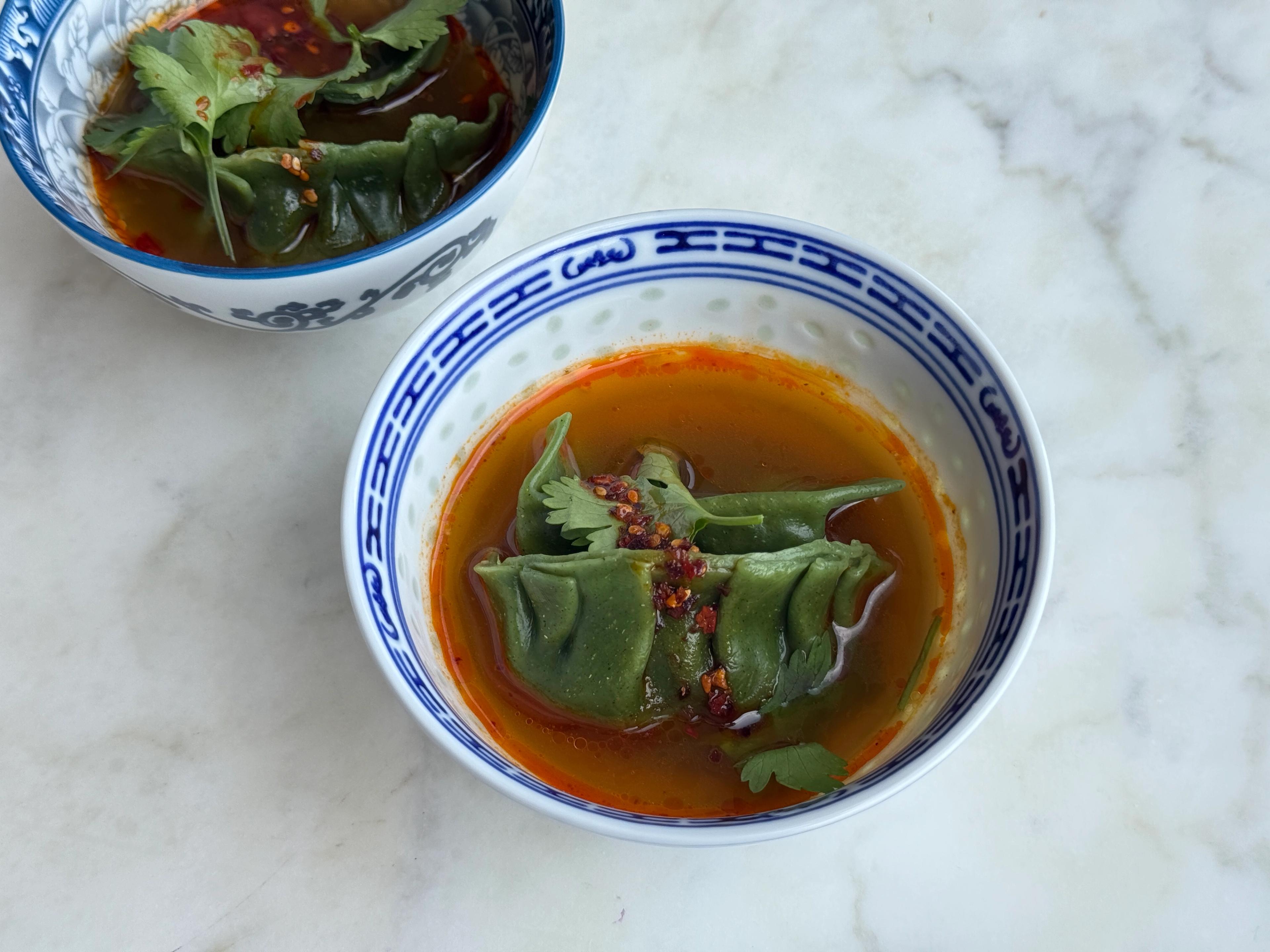
Caramelized Mushroom and Cabbage Dumplings
82% flavor match
Wood ear mushroom and shiitake mushroom are a classic pair; both lean on shiitake mushroom and mushroom.
 Serve it with
Bang Bang King Oyster Mushrooms
81% flavor match
They share scallion and ginger; sichuan peppercorn with doubanjiang is a natural match.
 Then
Ding Ding Chao Mian (丁丁炒面, Fried Noodles in Lamb Tomato Sauce)
92% flavor match
Same Chinese roots; sichuan peppercorn with doubanjiang is a natural match.
 Then
Chinese Spring Rolls
90% flavor match
Shaoxing wine with sesame oil is a natural match; they share shiitake mushroom and sesame oil.
 Finish with
Coconut-Sweet Potato Pie With Spiced Crust
71% flavor match
A light meal leaves room for something rich; coconut milk suits a Chinese meal.
Log in to tell Nana which pairings are good. Your votes improve the map.
More about this recipe
Nutrition
1 of 6 servings · about 446 g Whole recipe · about 2675 g · High confidence
| % DV* | ||
|---|---|---|
| Total Fat | 28.8 g | 37% |
| Saturated Fat | 4.7 g | 24% |
| Trans Fat | 0 g | |
| Cholesterol | 0 mg | 0% |
| Sodium | 13073 mg | 568% |
| Total Carbohydrate | 130 g | 47% |
| Dietary Fiber | 9.2 g | 33% |
| Total Sugars | 7.5 g | |
| Protein | 23.3 g | 47% |
| Vitamin D | 0.03 mcg | 0% |
| Calcium | 208 mg | 16% |
| Iron | 7.1 mg | 39% |
| Potassium | 1276 mg | 27% |
* % Daily Value is based on a 2,000-calorie diet.
- Carbs 60%
- Fat 30%
- Protein 11%
Vitamins & minerals
| Vitamin A | 209 mcg | 23% |
|---|---|---|
| Vitamin C | 14.1 mg | 16% |
| Vitamin D | 0.03 mcg | 0% |
| Vitamin E | 3.9 mg | 26% |
| Vitamin K | 16.8 mcg | 14% |
| Thiamin (B1) | 0.94 mg | 78% |
| Riboflavin (B2) | 0.66 mg | 51% |
| Niacin (B3) | 9.4 mg | 59% |
| Pantothenic acid (B5) | 1.2 mg | 25% |
| Vitamin B6 | 0.78 mg | 46% |
| Folate | 316 mcg DFE | 79% |
| Vitamin B12 | 0.006 mcg | 0% |
| Choline | 67 mg | 12% |
| Calcium | 208 mg | 16% |
| Iron | 7.1 mg | 39% |
| Potassium | 1276 mg | 27% |
| Magnesium | 129 mg | 31% |
| Phosphorus | 382 mg | 31% |
| Zinc | 2.1 mg | 19% |
| Copper | 0.51 mg | 56% |
| Manganese | 1.9 mg | 80% |
| Selenium | 38.7 mcg | 70% |
Fats & carbs in detail
| Monounsaturated fat | 11.8 g | |
|---|---|---|
| Polyunsaturated fat | 10.2 g | |
| Omega-3 | 0.19 g | 12% |
| Omega-6 | 10 g | 59% |
| Starch | 2.4 g | |
| Net carbs | 121 g | |
| Omega-6 : Omega-3 ratio | 52.6 : 1 |
Amino acids (protein building blocks)
| Histidine | 0.53 g | |
|---|---|---|
| Isoleucine | 0.92 g | |
| Leucine | 1.6 g | |
| Lysine | 0.94 g | |
| Methionine | 0.34 g | |
| Cystine | 0.33 g | |
| Phenylalanine | 1.1 g | |
| Tyrosine | 0.74 g | |
| Threonine | 0.84 g | |
| Tryptophan | 0.31 g | |
| Valine | 1 g |
How we calculated this
| Ingredient | Counted as | g | kcal |
|---|---|---|---|
| 1 cup (266 g) baking soda | Leavening agents, baking soda | 221 | 0 |
| 4 cups (500 g) all-purpose flour | Wheat flour, white, all-purpose, enriched, bleached | 500 | 1820 |
| 1½ tsp. Diamond Crystal or ¾ tsp. Morton kosher salt | Salt, table | 9 | 0 |
| 2 cups (256 g) potato starch or cornstarch | Potato flour | 320 | 1142 |
| 5 dried shiitake mushrooms | Mushrooms, white, raw | 90 | 20 |
| 1 5x2" piece dried kombu | Not found — couldn't tell how much | ||
| 1 leek | Leeks, (bulb and lower leaf-portion), raw | 89 | 54 |
| 2 medium onions, quartered | Onions, raw | 220 | 88 |
| 5 garlic cloves, smashed | Spices, cloves, ground | 0 | 1 |
| 2 medium tomatoes, quartered | Tomatoes, red, ripe, raw, year round average | 246 | 44 |
| 2 medium carrots, peeled, cut into 2" lengths | Carrots, raw | 122 | 50 |
| 1 Tbsp. toasted sesame oil, plus more for serving | Oil, sesame, salad or cooking | 14 | 120 |
| 1 2" piece ginger, scrubbed, sliced ¼" thick | Ginger root, raw | 6 | 5 |
| ½ tsp. black peppercorns | Spices, pepper, black | 1 | 3 |
| 1 16-oz. block firm tofu | Tofu, firm, prepared with calcium sulfate and magnesium chloride (nigari) | 324 | 253 |
| ¼ cup potato starch or cornstarch | Potato flour | 40 | 143 |
| ½ cup peanut oil or vegetable oil | Oil, peanut, salad or cooking | 108 | 955 |
| 1½ tsp. red chile powder | Spices, chili powder | 4 | 11 |
| Kosher salt | Not counted — no amount (to taste / garnish) | ||
| 6 oz. king trumpet mushrooms, cut lengthwise into ¼"-thick planks | Not counted — kitchen equipment | ||
| 1 cup soy sauce (preferably usukuchi) | Soy sauce made from soy and wheat (shoyu) | 255 | 135 |
| ¼ cup mirin (preferably hon mirin) | Alcoholic beverage, rice (sake) | 58 | 78 |
| 1 tsp. (or more) doubanjiang (Sichuan-style fermented chili bean paste; optional) | Not found — no matching food | ||
| 6 tsp. toasted sesame oil | Oil, sesame, salad or cooking | 27 | 241 |
| Bite-size pieces blanched seasonal vegetables (such as peas, snow peas, spinach, kale, asparagus, and/or fava beans; for serving; optional) | Not counted — no amount (to taste / garnish) | ||
| Thinly sliced scallions; toasted nori sheets, cut into squares; and toasted sesame seeds (for serving) | Not counted — no amount (to taste / garnish) | ||
| A pasta maker | Pasta, dry, enriched | 20 | 74 |
Matched to the USDA FoodData Central database (SR Legacy). Amounts are converted with USDA portion weights where they exist, otherwise typical sizes. Open in the analyzer to adjust a match →
Estimated from the ingredient list — brands, exact sizes and cooking losses vary. Not medical advice.
Allergens
-
Alcohol
In: ¼ cup mirin (preferably hon mirin)
Not a true allergy, but listed for people who must avoid it.
-
Black & white pepper
In: ½ tsp. black peppercorns
-
Carrot
In: 2 medium carrots, peeled, cut into 2" lengths
-
Nightshades › Hot chili peppers
In: 1½ tsp. red chile powder; 1 tsp. (or more) doubanjiang (Sichuan-style fermented chili bean paste; optional)
Tomato, potato, peppers (sweet and hot), eggplant, tomatillo and goji. Sweet potatoes are not nightshades.
-
Corn
In: 2 cups (256 g) potato starch or cornstarch; ¼ cup potato starch or cornstarch
Corn and corn products: cornstarch, corn syrup, cornmeal, polenta, masa, corn oil.
-
Legumes › Fava / broad bean
In: Bite-size pieces blanched seasonal vegetables (such as peas, snow peas, spinach, kale, asparagus, and/or fava beans; for serving; optional)
Some people (with G6PD deficiency) must avoid fava beans for medical reasons.
-
Onion & garlic family › Garlic
In: 5 garlic cloves, smashed
Onions, shallots, garlic, leeks, scallions and chives, including powders.
-
Ginger
In: 1 2" piece ginger, scrubbed, sliced ¼" thick
-
Onion & garlic family › Leek, scallion & chives
In: 1 leek; Thinly sliced scallions; toasted nori sheets, cut into squares; and toasted sesame seeds (for serving)
Onions, shallots, garlic, leeks, scallions and chives, including powders.
-
Mushrooms & fungi
In: 5 dried shiitake mushrooms; 6 oz. king trumpet mushrooms, cut lengthwise into ¼"-thick planks
-
Onion & garlic family › Onion & shallot
In: 2 medium onions, quartered
Onions, shallots, garlic, leeks, scallions and chives, including powders.
-
Legumes › Pea & pea protein
In: Bite-size pieces blanched seasonal vegetables (such as peas, snow peas, spinach, kale, asparagus, and/or fava beans; for serving; optional)
Beans, peas, lentils, chickpeas and their relatives, including lupin, fenugreek and guar gum. Peanut and soy are legumes too: checking the whole family avoids them as well.
-
Peanut
In: ½ cup peanut oil or vegetable oil
Peanuts are legumes, not tree nuts. Satay sauce and many "mixed nuts" contain them.
-
Nightshades › Potato
In: 2 cups (256 g) potato starch or cornstarch; ¼ cup potato starch or cornstarch
Tomato, potato, peppers (sweet and hot), eggplant, tomatillo and goji. Sweet potatoes are not nightshades.
-
Sesame
In: 1 Tbsp. toasted sesame oil, plus more for serving; 6 tsp. toasted sesame oil; Thinly sliced scallions; toasted nori sheets, cut into squares; and toasted sesame seeds (for serving)
Sesame seeds and oil, tahini, halva; za'atar and furikake usually contain sesame.
-
Soy › Miso & fermented soybean pastes
In: 1 tsp. (or more) doubanjiang (Sichuan-style fermented chili bean paste; optional)
Fermented pastes: miso, doenjang, gochujang, hoisin, black bean sauce.
-
Soy › Soy protein: tofu, edamame, soy milk, TVP
In: 1 16-oz. block firm tofu
Whole soybeans and foods that keep their protein intact.
-
Soy › Soy sauce & tamari (brewed)
In: 1 cup soy sauce (preferably usukuchi)
Fermented soy sauces. Much of the protein is broken down in brewing.
-
Nightshades › Tomato
In: 2 medium tomatoes, quartered
Tomato, potato, peppers (sweet and hot), eggplant, tomatillo and goji. Sweet potatoes are not nightshades.
-
Gluten › Wheat
In: 4 cups (500 g) all-purpose flour; 1 cup soy sauce (preferably usukuchi); A pasta maker
Wheat, barley, rye and oats (oats are often cross-contaminated). Celiac disease and wheat allergy are different — pick just Wheat if only wheat is the problem.
Found by reading the ingredient names. Brands and "may contain" warnings vary, so always check the label.
Questions about this recipe
- Can I make the ramen noodles and broth in advance?
- Yes, the broth can be made up to 5 days ahead and stored in an airtight container in the fridge. The noodles can be prepared 2 days in advance and kept chilled.
- How do I store the leftover ramen?
- Store the broth and noodles separately in airtight containers in the refrigerator to prevent the noodles from becoming mushy.
- What can I use if I don't have potato starch or cornstarch?
- Since these are used for dusting and coating, you can use a small amount of all-purpose flour, though the tofu will not be as crispy.
- How do I know when the broth has reached the desired depth?
- Simmer for 1 hour for a lighter, clearer spring/summer broth, or up to 3 hours for a deeper, rounder winter-style broth.
- What are the best sides or toppings to serve with this vegan ramen?
- Serve with blanched seasonal vegetables (like peas or asparagus), sliced scallions, toasted nori squares, and toasted sesame seeds.
My notes
Log in to keep private notes on recipes.
Learn while you cook
Learn library →- Ingredient Deep-Dives · 8 min read The Onion Family Yellow onions for cooking, red for raw, shallots for sauces; the finer you cut garlic or onion, the stronger it gets, a…
- Why It Works · 5 min read Gluten & Kneading Two wheat proteins plus water make gluten, a stretchy net that traps gas; kneading and time build it for chewy bread, w…
- Why It Works · 4 min read Baking Soda vs. Baking Powder Baking soda is a base that needs an acid in the recipe to work; baking powder is soda with its acid already mixed in — …
Words in this recipe
- Knead
- To work dough by pressing, folding and turning, developing gluten for structure and chew. Learn more
- Rest
- To let food sit after cooking (meat) or mixing (dough, batter) so juices redistribute or gluten relaxes. Learn more
- Fold
- To combine a light, airy mixture (whipped cream, egg whites) into a heavier one with gentle cutting and turning strokes, keeping as much air as possible. Learn more
- Simmer
- Liquid just below a boil, about 185 to 205°F, with small bubbles rising gently.
Handy for this recipe Measurements & ConversionsSubstitution Finder


