Rosh Hashanah, the Jewish New Year, is two days of festive meals (in Israel and the diaspora alike), and the food carries a message: may the year be sweet. That means honey on nearly everything, round challah, and a set of symbolic foods called simanim, each eaten with a short wish. It’s also a holiday where you can cook almost the whole menu in advance.
The simanim (symbolic foods)
The Talmud mentions eating certain foods at the start of the year as good omens, and later communities added their own. Each is paired with a short prayer that plays on its name, usually in Hebrew or Aramaic. Many families eat them at the first night’s meal, after kiddush and challah; Sephardi families often hold a full seder of simanim.
| Food | The wish | How to serve it |
|---|---|---|
| Apple dipped in honey | A good and sweet year | Sliced tart-sweet apples (Honeycrisp, Pink Lady) and a bowl of Honey |
| Pomegranate | That our merits be as many as its seeds | Seeds on their own, or scattered over salads and rice |
| Dates | That enemies be finished (tamar / yitamu) | Medjool dates, or Silan (date syrup) (date syrup) drizzled on challah |
| Leeks | That enemies be cut off (karti / yikartu) | Leek fritters (Sephardi keftes de prasa), braised leeks — see Leek |
| Beets or beet greens | That adversaries depart (silka / yistalku) | Roasted beets, beet salad, sautéed greens |
| Gourd / squash | That bad decrees be torn up and merits read out (k’ra) | Roast squash, pumpkin soup, squash pastries |
| Black-eyed peas or fenugreek | That merits increase (rubia / yirbu) | Stewed black-eyed peas (a Sephardi favorite) |
| Fish head (or ram’s head) | That we be “the head and not the tail” | A whole fish, a fish head on the plate, or head of lettuce or garlic as a stand-in |
| Carrots | Increase (Yiddish mern, “carrots” and “more”); coins (round slices) | Tzimmes, honey-glazed carrot coins |
Customs vary a great deal; families choose the ones they grew up with, and some add playful modern ones. A plate of five or six simanim is plenty.
Kitniyot don't apply
Rosh Hashanah has no grain restrictions, so rice, beans and black-eyed peas are fine for everyone. That’s Passover.
Round challah

On Rosh Hashanah, the braided Shabbat loaf becomes a round spiral, for the cycle of the year (and some say, a crown). Many families add raisins for sweetness and dip it in honey instead of salt from Rosh Hashanah through the holidays that follow.
To shape one: roll a single long rope of dough, thicker at one end; coil it from the thick end outward like a snail, and tuck the thin end under. Proof, egg-wash and bake as usual (see Cooking for Shabbat for the basics), adding a few minutes for the dense center: aim for about 190°F (88°C) inside. A sprinkle of sugar or a brush of honey near the end gives a lacquered top.
Try it: recipes with honey
See all →


Apples and honey, and other sweet things
- Apples: cut them just before serving, or toss with lemon juice so they don’t brown. A mix of red and green looks generous.
- Honey: a light floral honey for dipping, darker buckwheat or wildflower for baking. Honey browns fast in the oven, so tent honey-glazed dishes with foil if they darken early. See Sugars & Sweeteners.
- Honey cake (lekach): a dark, spiced cake, usually with coffee or tea in the batter. It improves after a day or two, so bake it well ahead.
- Silan and Pomegranate molasses give the same sweet-tart depth to glazes for chicken or vegetables.
New fruit on the second night

On the second night, many families place a new fruit — one they haven’t eaten yet this season — on the table and say the shehecheyanu blessing over it, so the blessing covers both. Good choices: pomegranate, star fruit, dragon fruit, lychee, persimmon, figs, passion fruit. It’s a nice job for kids to pick one at the market.
What some families avoid
Many customs keep anything with a “bitter” or “sour” connotation off the table, to avoid an unpleasant omen:
- Sour and bitter foods: some skip vinegar, pickles, horseradish and very sharp dishes, or swap lemon for a sweeter dressing.
- Nuts: many Ashkenazim avoid them, since the numerical value of the Hebrew word for nut (egoz) is close to that of “sin” (chet), and because nuts were thought to increase phlegm during the long prayers.
- Dark foods: some Sephardi families avoid black grapes, olives or eggplant on the first night.
These are customs, not law, and they differ by family. If you’re hosting, a sweet-leaning menu with nut-free dishes keeps everyone comfortable.
Menu ideas
Ashkenazi classic
- Chicken soup with matzo balls or kreplach
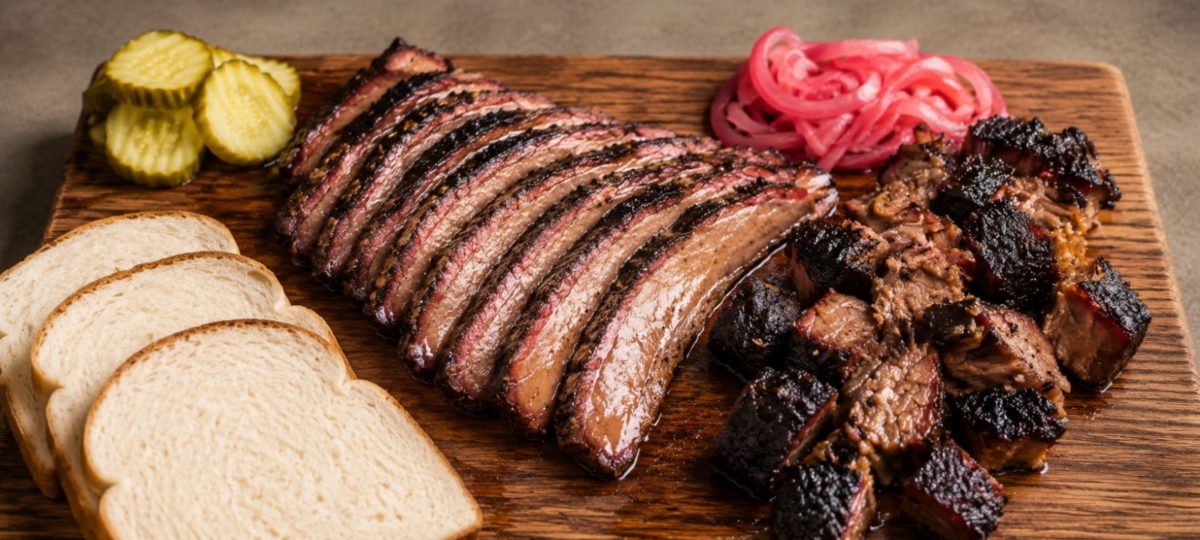
- Brisket braised with onions and honey, or a pot roast
- Tzimmes (carrots, sweet potatoes and prunes stewed with honey)
- Potato or noodle kugel
- Green beans or roasted squash
- Honey cake and apple cake
Sephardi and Israeli
- A plate of simanim: leek fritters, roasted beets, squash, black-eyed peas, dates
- Fish in a sweet tomato or saffron sauce
- Chicken with quince, apricots or dates, or lamb with pomegranate
- Rice with vermicelli, or couscous with vegetables
- Fresh fruit, tishpishti (a syrup-soaked semolina or nut cake), date-filled cookies
Lighter or newer
- Roast salmon with honey-mustard glaze
- Chicken thighs with silan and za’atar
- Farro or wild rice salad with pomegranate seeds and herbs
- Roast carrots with tahini
- Apple crisp with an oat-and-oil topping (parve)
Rosh Hashanah meals are usually meat, so keep desserts parve: oil-based cakes, fruit, sorbet. See Kosher Basics.
Try it: recipes with pomegranate seeds
See all →


The make-ahead plan
Rosh Hashanah is a Yom Tov: many observant families cook on the holiday itself only for that day, from an existing flame, and don’t cook on the first day for the second. When the holiday runs into Shabbat, an eruv tavshilin is made beforehand to allow cooking for Shabbat. These rules have details — ask your rabbi. Either way, cooking ahead takes the pressure off.
| When | What |
|---|---|
| 2–3 weeks out | Plan menus for two or more meals. Bake and freeze honey cake, round challahs and cookies |
| 1 week out | Make and freeze soup, matzo balls, kugels. Braise the brisket and freeze it in its sauce, or refrigerate if within 3–4 days |
| 2–3 days out | Shop for fresh produce. Make tzimmes, dips and dressings. Thaw the brisket in the fridge |
| Day before | Slice the cold brisket and return it to the sauce. Prep the simanim, wash herbs and greens. Set the table |
| Day of | Reheat, roast chicken or fish if fresh, slice apples last |
Nana's tip
Brisket slices far more neatly cold. Cook it, chill it overnight in the liquid, lift off the hardened fat, slice against the grain, then reheat the slices covered in the sauce at 325°F (165°C) until hot through, 30–45 minutes. It tastes better too.
Food safety
Leftover cooked dishes keep 3–4 days in the fridge (USDA). Over a two-day holiday plus Shabbat, that clock runs out quickly. Freeze what you won’t eat by day three, and reheat leftovers to 165°F (74°C).