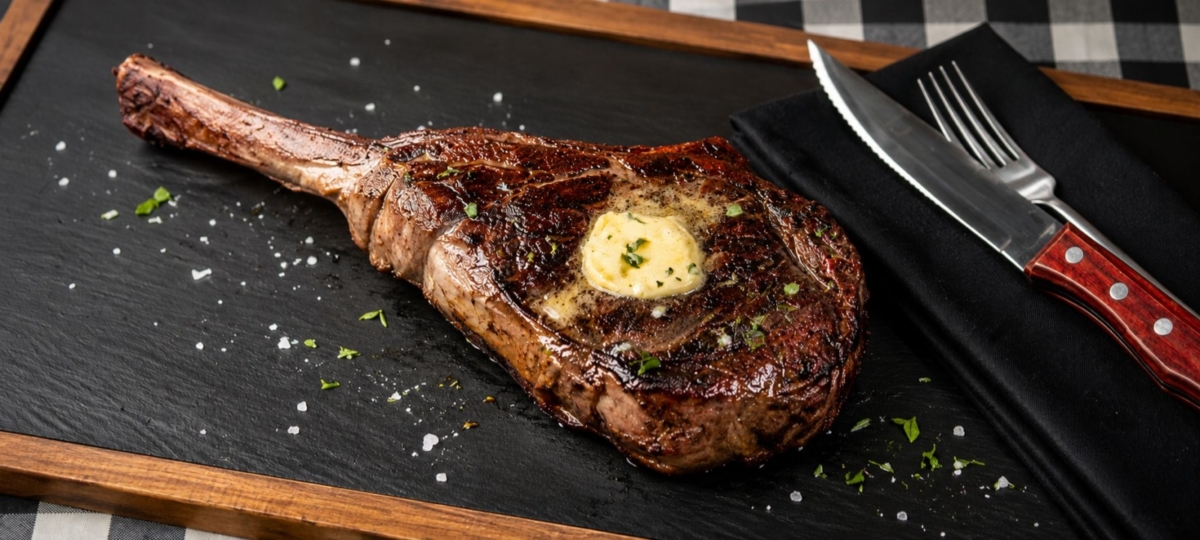
Ȟaŋté úŋ Pté Lolóbyapi (Cedar-Braised Bison)
Printed from nanasfogon.com/recipe/ate-u-pte-lolobyapi-cedar-braised-bison · Original: https://www.epicurious.com/recipes/food/views/ate-u-pte-lolobyapi-cedar-braised-bison
- Total
- About 4 hr 30 min
Ingredients
- 2 to 3 pounds bison chuck roast
- 1 tablespoon coarse salt About kosher salt →
- 6 teaspoons maple sugar, divided
- 3 tablespoons sunflower oil About neutral oil →
- 2 to 4 cups Wild Rice or Corn Stock (see note) or vegetable broth About rice →
- Several sprigs sage
- 1 sprig cedar
- 2 cups dried hominy, soaked overnight and drained About hominy →
- 1 tablespoon sumac About sumac →
- ½ cup maple syrup About maple syrup →
Out of something?
- Sumac
- for 1 tsp, use 1/2 tsp finely grated lemon zest + pinch of salt. Gets the tartness; loses the deep red color and berry note.
- Maple syrup
- for 1 cup, use 1 cup honey thinned with 2 tbsp water, or 1 cup brown sugar + 1/4 cup water simmered. No maple flavor. Add 1/2 tsp maple extract if you have it.
Steps
-
1
Preheat the oven to 250°F. Season the bison with the salt and 2 tsp maple sugar. Film a Dutch oven or large flame-proof baking dish with the oil and set over high heat. Sear the bison on all sides until dark and crusty, about 10 minutes. Remove the bison and set aside. Stir in the stock, sage, and cedar, scraping up any of the crusty bits that form on the bottom of the baking dish. Add the remaining maple sugar, hominy, sumac, and maple syrup and return the meat to the baking dish. Cover the Dutch oven or the baking dish tightly. (Use aluminum foil, if necessary.) Place the bison in the oven and cook until so tender it falls from the bone, about 3 hours.
-
2
Remove from the oven. Tent the meat with foil to keep warm. Strain the remaining stock into a saucepan and reserve the hominy. Set the stock over high heat, bring to a boil, and reduce the liquid by half. Taste and adjust the seasoning. Carve the bison and serve over the hominy with the sauce drizzled over the meat.
-
3
To make Corn Stock (Wagmíza Haŋpí): Save the corncobs after you’ve enjoyed boiled or roasted corn on the cob or you’ve cut the kernels for use in a recipe. Put the corncobs into a pot and cover with water by about 1 inch. Bring to a boil and partially cover. Reduce the heat and simmer until the stock tastes “corny,” about 1 hour. Discard the cobs. Store the stock in a covered container in the refrigerator or freezer.
-
4
To make Wild Rice Stock (Psíŋ Haŋpí): Do not discard wild rice cooking water. It makes an excellent cooking stock for soups, stews, and sauces.
Flavor map
How Nana pairs flavors →This one is sweet, bright and tangy and savory.
Goes well with
 Serve it with
Vegan Apple Cinnamon Scones (No Oil, Low Fat)
54% flavor match
Non dairy milk and maple syrup are a classic pair; they share maple syrup.
 Serve it with
Vegan Cornbread Stuffing
54% flavor match
Both lean on sage and maple syrup; non dairy milk and maple syrup are a classic pair.
 Start with
Carrot-Tahini Soup With Coriander, Turmeric and Lemon
63% flavor match
Sumac loves pita bread.
 Finish with
Vegan Pumpkin Cheesecake
62% flavor match
Both taste like winter; a fresh banana finish.
 Pour
Spiced Cranberry-Plum Sparkler
64% flavor match
Crisp and fruity next to dinner; both taste like winter.
Log in to tell Nana which pairings are good. Your votes improve the map.
More about this recipe
Nutrition
1 of 6 servings · about 323 g Whole recipe · about 1937 g · Good estimate
| % DV* | ||
|---|---|---|
| Total Fat | 42.7 g | 55% |
| Saturated Fat | 15 g | 75% |
| Trans Fat | 0 g | |
| Cholesterol | 168 mg | 56% |
| Sodium | 1306 mg | 57% |
| Total Carbohydrate | 96.3 g | 35% |
| Dietary Fiber | 1.7 g | 6% |
| Total Sugars | 20.2 g | |
| Protein | 42.9 g | 86% |
| Vitamin D | 0 mcg | 0% |
| Calcium | 89 mg | 7% |
| Iron | 7.5 mg | 42% |
| Potassium | 722 mg | 15% |
* % Daily Value is based on a 2,000-calorie diet.
- Carbs 41%
- Fat 41%
- Protein 18%
Vitamins & minerals
| Vitamin A | 0.01 mcg | 0% |
|---|---|---|
| Vitamin C | 0.007 mg | 0% |
| Vitamin D | 0 mcg | 0% |
| Vitamin E | 3.9 mg | 26% |
| Vitamin K | 4.5 mcg | 4% |
| Thiamin (B1) | 0.67 mg | 56% |
| Riboflavin (B2) | 0.65 mg | 50% |
| Niacin (B3) | 12.1 mg | 76% |
| Pantothenic acid (B5) | 2 mg | 40% |
| Vitamin B6 | 0.96 mg | 56% |
| Folate | 377 mcg DFE | 94% |
| Vitamin B12 | 3.4 mcg | 141% |
| Choline | 157 mg | 29% |
| Calcium | 89 mg | 7% |
| Iron | 7.5 mg | 42% |
| Potassium | 722 mg | 15% |
| Magnesium | 67 mg | 16% |
| Phosphorus | 434 mg | 35% |
| Zinc | 10.1 mg | 91% |
| Copper | 0.38 mg | 42% |
| Manganese | 1.9 mg | 82% |
| Selenium | 52.2 mcg | 95% |
Fats & carbs in detail
| Monounsaturated fat | 18.4 g | |
|---|---|---|
| Polyunsaturated fat | 4.3 g | |
| Omega-3 | 0.46 g | 29% |
| Omega-6 | 3.8 g | 22% |
| Starch | 0 g | |
| Net carbs | 94.5 g | |
| Omega-6 : Omega-3 ratio | 8.2 : 1 |
Amino acids (protein building blocks)
| Histidine | 1.3 g | |
|---|---|---|
| Isoleucine | 1.9 g | |
| Leucine | 3.4 g | |
| Lysine | 3.2 g | |
| Methionine | 1.1 g | |
| Cystine | 0.59 g | |
| Phenylalanine | 1.8 g | |
| Tyrosine | 1.4 g | |
| Threonine | 1.6 g | |
| Tryptophan | 0.31 g | |
| Valine | 2.2 g |
How we calculated this
| Ingredient | Counted as | g | kcal |
|---|---|---|---|
| 2 to 3 pounds bison chuck roast | Beef, chuck, arm pot roast, separable lean and fat, trimmed to 1/8" fat, choice, raw | 1134 | 2824 |
| 1 tablespoon coarse salt | Salt, table | 18 | 0 |
| 6 teaspoons maple sugar, divided | Sugars, granulated | 25 | 97 |
| 3 tablespoons sunflower oil | Oil, sunflower, linoleic (less than 60%) | 41 | 361 |
| 2 to 4 cups Wild Rice or Corn Stock (see note) or vegetable broth | Rice, white, long-grain, regular, raw, enriched | 555 | 2026 |
| Several sprigs sage | Not counted — no amount (to taste / garnish) | ||
| 1 sprig cedar | Not found — no matching food | ||
| 2 cups dried hominy, soaked overnight and drained | Not found — no matching food | ||
| 1 tablespoon sumac | Spices, curry powder | 6 | 20 |
| ½ cup maple syrup | Syrups, maple | 158 | 410 |
Matched to the USDA FoodData Central database (SR Legacy). Amounts are converted with USDA portion weights where they exist, otherwise typical sizes. Open in the analyzer to adjust a match →
Estimated from the ingredient list — brands, exact sizes and cooking losses vary. Not medical advice.
Allergens
-
Red meat (alpha-gal) › Beef & veal
In: 2 to 3 pounds bison chuck roast
Mammalian meat and by-products. Alpha-gal syndrome, often from a tick bite, causes delayed reactions to beef, pork, lamb and gelatin; some people also react to dairy.
-
Corn
In: 2 to 4 cups Wild Rice or Corn Stock (see note) or vegetable broth; 2 cups dried hominy, soaked overnight and drained
Corn and corn products: cornstarch, corn syrup, cornmeal, polenta, masa, corn oil.
-
Red meat (alpha-gal) › Venison, bison & game
In: 2 to 3 pounds bison chuck roast
Mammalian meat and by-products. Alpha-gal syndrome, often from a tick bite, causes delayed reactions to beef, pork, lamb and gelatin; some people also react to dairy.
-
Rice
In: 2 to 4 cups Wild Rice or Corn Stock (see note) or vegetable broth
-
Sunflower seed
In: 3 tablespoons sunflower oil
Found by reading the ingredient names. Brands and "may contain" warnings vary, so always check the label.
Questions about this recipe
- Can I make this ahead of time?
- Yes, the bison can be braised and cooled; simply reheat the meat and hominy gently and reduce the sauce fresh before serving.
- How should I store or freeze the leftovers?
- Store the meat, hominy, and sauce in separate airtight containers in the fridge for up to 4 days, or freeze them for up to 3 months.
- What can I use if I don't have cedar or sumac?
- Use a rosemary sprig as a substitute for cedar, and a squeeze of lemon mixed with a pinch of paprika for the sumac.
- How do I know when the bison is officially done?
- The meat is done when it is 'fork tender,' meaning it easily pulls apart or falls away from the bone with very little pressure.
- What is the best way to serve this dish?
- Serve the carved bison over the reserved hominy, drizzling the reduced stock sauce over the meat; corn cakes also make an excellent side.
My notes
Log in to keep private notes on recipes.
Learn while you cook
Learn library →- Techniques · 6 min read Braising Brown tough, well-marbled meat, half-submerge it in flavorful liquid, cover, and cook low (300–325°F) until a fork slid…
- Techniques · 6 min read Cooking Rice & Grains Rinse most rice, measure water by the grain (white 1:1½, brown 1:2), cook covered on the lowest heat, then rest 10 minu…
- Ingredient Deep-Dives · 7 min read Sugars & Sweeteners Sugar isn't only sweetness; it holds moisture, browns, tenderizes and lifts. Swap sweeteners by weight and by water, an…
Words in this recipe
- Sear
- To brown the surface of food with high, dry heat. Builds flavor; it does not 'seal in juices'. Learn more
- Tent
- To cover food loosely with foil while it rests, keeping heat in without steaming the crust soft. Learn more
- Reduce
- To simmer a liquid so water evaporates, concentrating flavor and thickening it. Learn more
- Simmer
- Liquid just below a boil, about 185 to 205°F, with small bubbles rising gently.
Handy for this recipe Substitution Finder