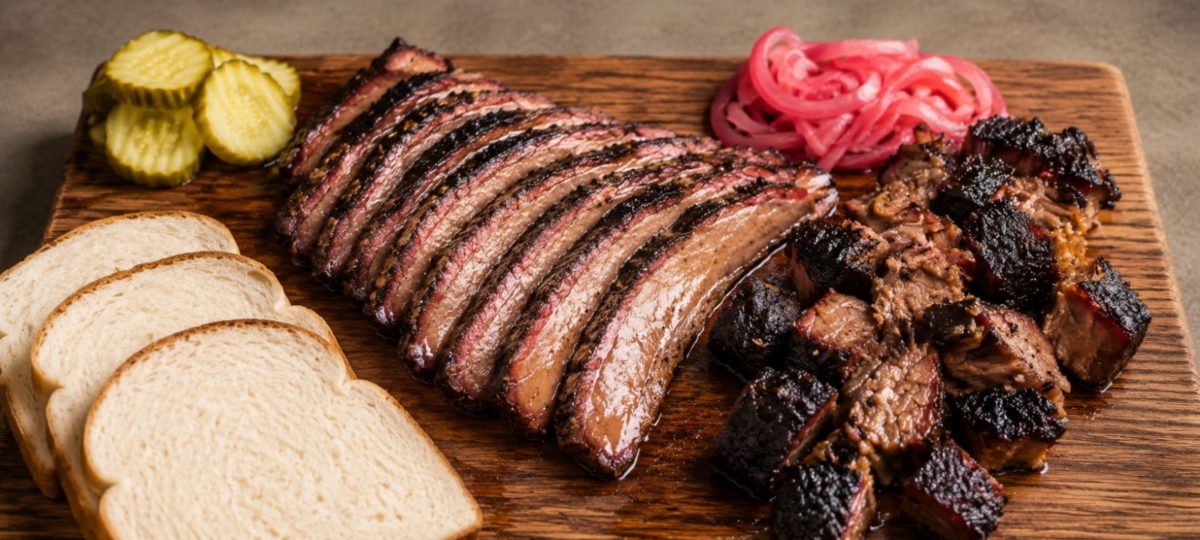
Two things get judged first on smoked meat: the pink ring and the dark crust. The ring is chemistry and tells you almost nothing about taste. The crust, the bark, is where much of the flavour lives, and you can build it on purpose.
The smoke ring
Slice a smoked brisket and you’ll often see a pink band just under the surface. It isn’t raw meat and it isn’t extra smoke flavour.
What's happening
Burning fuel gives off gases, including nitrogen oxides. They dissolve into the moist surface of cold meat and react with myoglobin, the pigment that makes meat red, fixing it in a pink colour that stays pink even after cooking. It’s the same kind of reaction behind the pink of cured ham.
What decides whether you get one:
- It forms early. The surface has to be cool and wet to absorb the gas. Once the outside heats and dries, usually in the first hour or two, the ring stops growing.
- It needs those gases, not heavy smoke. Gas cookers can produce a ring with hardly any smoke flavour, and a smoky fire can leave a thin ring or none.
- Some things exaggerate it: a curing salt in the rub or brine, a very cold, moist surface going in, and a fuel or cooker that makes plenty of those gases, such as charcoal and wood. Cured meats like pastrami show a deep pink all the way through for the curing-salt reason.
What a ring does not tell you
- Doneness. Smoked meat can stay pink even when it’s well past safe temperatures, and pale meat can be undercooked. Use a thermometer. See Doneness & Thermometers.
- Flavour. A missing ring doesn’t mean bad barbecue, and a lovely ring can come with flat-tasting meat.
- Quality of the cook. It’s an extra, not a grade.
Judge by tenderness and taste. A ring is a nice-to-have.
Bark
Bark is the dark, chewy, deeply flavoured crust on slow-cooked meat. It comes from several things working together:
- Drying. The surface loses moisture, concentrating everything on it.
- Browning reactions. Once dry, the surface browns through the reactions in Browning: Maillard vs. Caramelization, making the roasted, savoury notes.
- Rub. Salt, pepper, paprika and other spices form the crust’s body, and they toast and darken.
- Smoke deposits. The smoke adds tint and flavour, and sticks best early, while the surface is moist.
- Rendered fat and juice glaze the surface and help it set.
How to build a good one
- Start with a dry surface. Pat the meat with paper towels. Salting ahead helps; see Salt Timing: Brining, Dry-Brining & Seasoning. Water on the surface must evaporate before anything can brown.
- Use a coarse rub, heavy on salt and pepper. Coarse grains stay on the surface and give texture; fine powders form a paste. A thin binder (a smear of mustard or oil) helps the rub grip, and it won’t flavour the meat.
- Hold steady heat. Swinging temperatures stall the crust.
- Give it airflow. Moving air carries moisture away. A cooker that is sealed and steamy gives a soft, pale crust.
- Don’t wrap too soon. Leave the meat uncovered until the bark is set: dark, dry to the touch, and it doesn’t rub off when you press it with a finger.
- Spritz sparingly. A light mist every hour or so after the first couple of hours can help smoke stick and keep edges from scorching. Too much cools the surface and makes it soggy.
Sugar and heat
Sugar scorches. Brown sugar and honey in a rub start to burn above about 300°F (150°C), and then the bark turns bitter and black instead of mahogany. For long cooks at 225–275°F (107–135°C) a little sugar is fine. For hot, fast grilling, leave it out of the rub and brush a sugary sauce on in the last few minutes, or use less.
Wrapping, and getting the crust back
Wrapping tightly in foil or paper traps steam. That speeds the cook and keeps meat moist, but it softens bark. Foil softens it most; butcher paper breathes and keeps more of the crust.
To re-firm a wrapped cut: unwrap it for the last 20–45 minutes at the cooker’s normal heat, or finish it on a hot grill for a few minutes. Wait until the surface dries and tightens again. Rest it afterward as normal; see Why We Rest Meat & Dough.
Bark or burnt?
| Good bark | Burnt | |
|---|---|---|
| Colour | Deep mahogany to nearly black, even | Black in patches, ashy gray, or shiny black tar |
| Feel | Dry, set, chewy; slices cleanly | Brittle and crumbly, or tacky and sticky |
| Smell | Roasted, savoury, spicy | Acrid, like a burnt pan |
| Taste | Salty, savoury, slightly sweet | Bitter, sour, harsh |
Black alone isn’t burnt: a pepper-and-salt brisket is nearly black and sweet. It’s the bitter taste and carbon flakes that mean trouble.
Troubleshooting
| Problem | Why | Fix |
|---|---|---|
| Mushy bark | Wet surface, wrapped too early, or a steamy, sealed cooker | Pat dry; wait until the bark is set before wrapping; open the vents; unwrap near the end |
| Bitter bark | Dirty smoke, too much sugar, or a rub scorched in a hot spot | Burn the fire cleanly (see Smoke & Wood); less sugar; shield hot spots |
| Pale bark | Too cool, too moist, too little rub, or too short a cook | Dry the surface; more rub; raise the heat 25°F (14°C); cook longer before wrapping |
| Bark too hard | Cooked too long uncovered, too much spritzing and drying, or too much sugar | Wrap for the last stretch; rest wrapped in a towel in a cooler; slice thin |
If the cut ends up tough rather than just crusty, it’s likely not cooked long enough, not that the bark is wrong; see Dry, Tough & Underdone Meat.